Academic Studies Press Forlag
-
Tangle of Matter & Ghost: Leonard Cohen's Post-Secular Songbook of Mysticism(s) Jewish & Beyond (Bog, Hardback, Engelsk)
A sophisticated but accessible fusion of theory and critical popular culture of Leonard Cohen’s mystical songbook... Læs mere
Levering: Skaffevare (forvent 14 - 30 hverdage) -
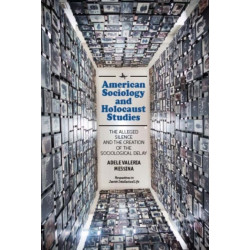
American Sociology and Holocaust Studies: The Alleged Silence and the Creation of the Sociological Delay (Bog, Hardback, Engelsk)
The first résumé in English of up-to-date research on post-Holocaust Sociology. A single volume full of relevant tips to help a wide audience rethink the genocide in sociological tools and investigate the history of the same Sociology.
Levering: Skaffevare (forvent 14 - 30 hverdage) -
Complicating the Female Subject: Gender, National Myths, and Genre in Polish Women's Inter-War Drama (Bog, Hardback, Engelsk)
In the 1930s, seven plays by Polish women writers created a flurry of excitement and condemnation as these women dared to question national myths, reinterpret the definition of subject, and subvert genre expectations. This study interrogates the feminism of these shocking dramas.
Levering: Skaffevare (forvent 14 - 30 hverdage) -
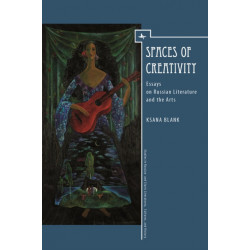
Spaces of Creativity (ENG): Essays on Russian Literature and the Arts (Bog, Hardback, Engelsk)
Blank demonstrates that the borders of authorial creativity are not stable and absolute, that talented artists often transcend the... Læs mere
Levering: Skaffevare (forvent 14 - 30 hverdage) -
Reflections on Identity: The Jewish Case (Bog, Hardback, Engelsk)
The book deals with identity in general and with Jewish identity in particular. The book rejects rigid and one-sided notions of Jewish identity and offers a historical-cultural analysis of the identity discourse.
Levering: Skaffevare (forvent 14 - 30 hverdage) -
Spatial Concepts of Lithuania in the Long Nineteenth Century (Bog, Hardback, Engelsk)
This book deals with the spatial concepts of Lithuania and other geo-images that either “competed” in the nineteenth century with the term... Læs mere
Levering: Skaffevare (forvent 14 - 30 hverdage) -
Broken Heart / Broken Wholeness: The Post-Holocaust Plea for Jewish Reconstruction of the Soviet Yiddish Writer Der Nister (Bog, Hardback, Engelsk)
The book examines the Soviet Yiddish writer Der Nister's (Pinkhas Kahanovitsh, 1884–1950) vision of a post-Holocaust Jewish reconstruction, challenging the Jewish “homelessness” in the Diaspora.
Levering: Skaffevare (forvent 14 - 30 hverdage) -
Nostalgia for a Foreign Land: Studies in Russian-Language Literature in Israel (Bog, Hardback, Engelsk)
This volume focuses on several Russian authors among many who immigrated to Israel with the “big wave” of 1990s or later, and whose largest part of the works was written in Israel: Dina Rubina, Nekod Singer, Elizaveta Mikhailichenko and Yury Nesis, and Mikhail Yudson.
Levering: Skaffevare (forvent 14 - 30 hverdage) -
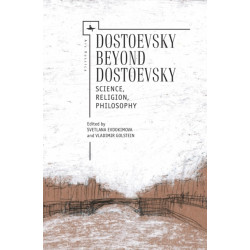
Dostoevsky Beyond Dostoevsky: Science, Religion, Philosophy (Bog, Hardback, Engelsk)
This volume deals with Dostoevsky’s wide-ranging interests and engagement with philosophical, religious, political, economic, and scientific discourses of his time. It includes contributions by prominent Dostoevsky scholars, social scientists, scholars of religion and philosophy.
Levering: Skaffevare (forvent 14 - 30 hverdage) -
The Creation of National Spaces in a Pluricultural Region: The Case of Prussian Lithuania (Bog, Hardback, Engelsk)
This book deals with the spatial concepts that two erstwhile neighboring cultures, Lithuanian and German,... Læs mere
Levering: Skaffevare (forvent 14 - 30 hverdage) -
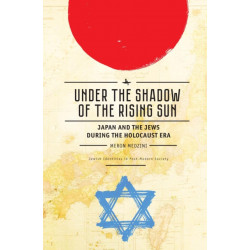
Under the Shadow of the Rising Sun: Japan and the Jews during the Holocaust Era (Lectures from the "Broadcast University" of Israel Army Radio) (Bog, Hardback, Engelsk)
Japan was a party to the Axis Alliance with Nazi Germany and Fascist Italy. However, it ignored repeated German demands to... Læs mere
Levering: Skaffevare (forvent 14 - 30 hverdage) -
This Was from God: A Contemporary Theology of Torah and History (Bog, Hardback, Engelsk)
Gellman provides an "old-fashioned" Jewish theology for accepting the contemporary critique of Torah and history. The thesis of the book is that for centuries Divine Providence has been guiding toward a non-literal understanding of the Torah. This was from God.
Levering: Skaffevare (forvent 14 - 30 hverdage)