Archaeopress Forlag
-
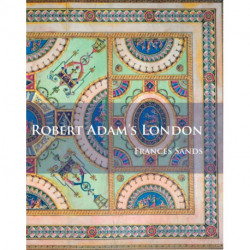
Robert Adam’s London (Bog, Paperback / softback, Engelsk)
The iconic eighteenth-century architect Robert Adam was based in London for more than half of his life and made more designs for this one city than anywhere else in the world. This... Læs mere
Levering: 6 - 9 hverdage -
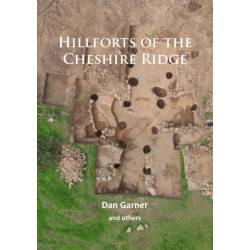
Hillforts of the Cheshire Ridge (Bog, Paperback / softback, Engelsk)
The Habitats and Hillforts of Cheshire’s Sandstone Ridge Landscape Partnership Project was focussed on six of Cheshire hillforts and their surrounding habitats and... Læs mere
Levering: 6 - 9 hverdage -
An Urban Geography of the Roman World, 100 BC to AD 300 (Bog, Paperback / softback, Engelsk)
This book provides a new account of the urbanism of the Roman world between 100 BC and AD 300. To do so, it draws on a combination of textual... Læs mere
Levering: 6 - 9 hverdage -
Parcours d’Orient: Recueil de textes offert a Christine Kepinski (Bog, Paperback / softback, Fransk)
This volume contains 23 articles written by 26 authors in order to express the extent of their respect and friendship for Christine... Læs mere
Levering: 6 - 9 hverdage -
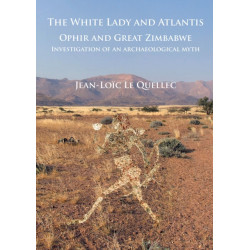
The White Lady and Atlantis: Ophir and Great Zimbabwe: Investigation of an archaeological myth (Bog, Paperback / softback, Engelsk)
This meticulous investigation, based around a famous rock image, the ‘White Lady’, makes it possible to take stock of the mythical presuppositions that infuse a great deal of scientific research, especially in the case of rock art studies.
Levering: 6 - 9 hverdage -
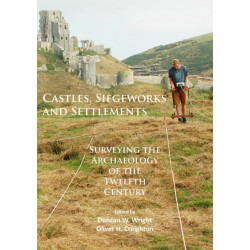
Castles, Siegeworks and Settlements: Surveying the Archaeology of the Twelfth Century (Bog, Paperback / softback, Engelsk)
This volume comprises thirteen reports detailing fieldwork undertaken by a research project which sought to assess the archaeological evidence of the period of conflict that took place in mid-twelfth-century England popularly known as ‘the Anarchy’.
Levering: 6 - 9 hverdage -
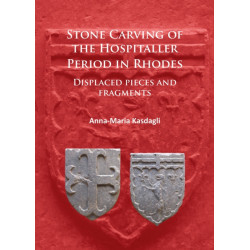
Stone Carving of the Hospitaller Period in Rhodes: Displaced pieces and fragments (Bog, Paperback / softback, Engelsk)
The work presents 230 stone carvings of the Hospitaller period in Rhodes (1309-1522), which for various reasons are no longer in their original setting.
Levering: 6 - 9 hverdage -
Disponibilidad y explotacion de materias primas liticas en la costa de Norpatagonia (Argentina): Un enfoque regional (Bog, Paperback / softback, Spansk)
The present book aims to study the use of lithic raw materials on the coast of the San Matías gulf (Río Negro, Argentina) during the middle and late Holocene.
Levering: 6 - 9 hverdage -
Forensic Archaeology: The Application of Comparative Excavation Methods and Recording Systems (Bog, Paperback / softback, Engelsk)
This book evaluates current archaeological excavation methods and recording systems in relation to their use in providing forensic evidence, and their ability to satisfy the admissibility tests introduced by the Law Commission, and other internationally recognised bodies.
Levering: 6 - 9 hverdage -
Archaeology with Art (Bog, Paperback / softback, Engelsk)
Based on a 2013 Theoretical Archaeology Group (TAG) conference session, this book aims to merge the perspectives of artists and archaeologists on making art. It explores the... Læs mere
Levering: 6 - 9 hverdage -
Les sepultures mesolithiques de Teviec et Hoedic: revisions bioarcheologiques (Bog, Paperback / softback, Fransk)
This book presents the long lacking bioarchaeological review study of the Teviec and Hoedic graves, located in Brittany and excavated from 1928 to 1934 by Marthe and Saint-Just Péquart.
Levering: 6 - 9 hverdage -
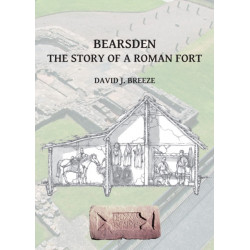
Bearsden: The Story of a Roman Fort (Bog, Paperback / softback, Engelsk)
This accessible account of the discoveries at the Roman fort at Bearsden examines the process of archaeological excavation, the life of the soldiers at the fort based on the results of the excavation as well as material from elsewhere in the Roman Empire.
Levering: 6 - 9 hverdage