Channel View Publications Ltd Forlag
-
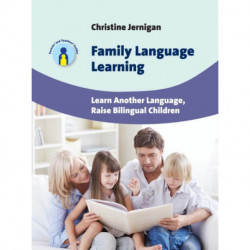
Family Language Learning: Learn Another Language, Raise Bilingual Children (Bog, Paperback / softback, Engelsk)
Family Language Learning is a practical guide designed to support, advise and encourage any parents who are hoping to raise their children bilingually. It is unique in that it focuses on parents who are not native speakers of a foreign language.
Levering: Skaffevare (forvent 14 - 30 hverdage) -
Ethnic and Minority Cultures as Tourist Attractions (Bog, Paperback / softback, Engelsk)
This book focuses on ethnic and minority communities in urban contexts and the ways in which their cultures are represented in tourism development. It... Læs mere
Levering: Skaffevare (forvent 14 - 30 hverdage) -
The Tourism Imaginary and Pilgrimages to the Edges of the World (Bog, Hardback, Engelsk)
This book examines how the growth of tourism in locations that have historically been considered geographically remote plays a major role in the consolidation and transformation of often longstanding and powerful cultural imaginaries about ‘the edges of the world’.
Levering: Skaffevare (forvent 14 - 30 hverdage) -
Cognate Vocabulary in Language Acquisition and Use: Attitudes, Awareness, Activation (Bog, Paperback / softback, Engelsk)
This book brings together linguistic, psycholinguistic and educational perspectives on the phenomenon of cognate... Læs mere
Levering: Skaffevare (forvent 14 - 30 hverdage) -
The Tourism Area Life Cycle, Vol.2: Conceptual and Theoretical Issues (Bog, Paperback / softback, Engelsk)
This book comprises chapters by leading researchers who have reviewed the original model in the light of their own and other conceptual... Læs mere
Levering: Skaffevare (forvent 14 - 30 hverdage) -
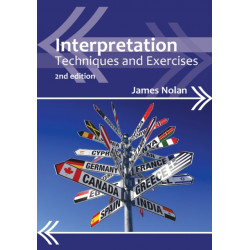
Interpretation: Techniques and Exercises (Bog, Paperback / softback, Engelsk)
This book provides a syllabus, overview and exercises in the main aspects of interpretation. It can serve as a practical guide for interpreters and as a... Læs mere
Levering: Skaffevare (forvent 14 - 30 hverdage) -
Living and Studying Abroad: Research and Practice (Bog, Paperback / softback, Engelsk)
Studies of students who travel to other countries for study. It includes students travelling within Europe, from Europe and America to East Asia and... Læs mere
Levering: Skaffevare (forvent 14 - 30 hverdage) -
Bilingual Education: An Introductory Reader (Bog, Paperback / softback, Engelsk)
The book contains a comprehensive selection of outstanding and influential articles on bilingual education in the United States and the rest of the world. It... Læs mere
Levering: Skaffevare (forvent 14 - 30 hverdage) -
Tourism and Transport: Modes, Networks and Flows (Bog, Paperback / softback, Engelsk)
This book investigates the complex relationship between transport provision and tourism. While focusing on the various modes and types of transport... Læs mere
Levering: Skaffevare (forvent 14 - 30 hverdage) -
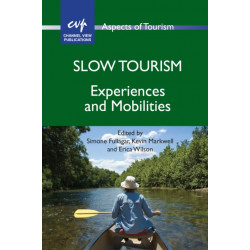
Slow Tourism: Experiences and Mobilities (Bog, Paperback / softback, Engelsk)
This book examines the emerging phenomenon of slow tourism, addressing growing consumer concerns with quality leisure time, environmental and cultural... Læs mere
Levering: Skaffevare (forvent 14 - 30 hverdage) -
Collaborative Writing in L2 Classrooms (Bog, Paperback / softback, Engelsk)
In this first book-length treatment of collaborative writing in second language (L2) classrooms, Neomy Storch provides a theoretical, pedagogical and empirical... Læs mere
Levering: 6 - 9 hverdage -
Self and Identity in Adolescent Foreign Language Learning (Bog, Paperback / softback, Engelsk)
This book explores the role of identity in adolescent foreign language learning. It presents both qualitative and quantitative research, as well as a new model of identity, to support the claim that discrepancy in the display of the self can affect achievement in education.
Levering: Skaffevare (forvent 14 - 30 hverdage)