Duke University Press Forlag
-
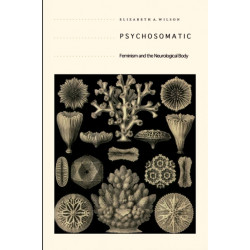
Psychosomatic: Feminism and the Neurological Body (Bog, Paperback / softback, Engelsk)
Explores the ways in neuroscientific research bears on the relation between psyche and the body.
Levering: Skaffevare (forvent 14 - 30 hverdage) -
Theft Is Property!: Dispossession and Critical Theory (Bog, Paperback / softback, Engelsk)
Robert Nichols reconstructs the concept of dispossession as a means of explaining how shifting configurations of law, property, race, and rights have functioned as modes of governance, both historically and in the present.
Levering: 6 - 9 hverdage -
Influx and Efflux: Writing Up with Walt Whitman (Bog, Paperback / softback, Engelsk)
Exploring the question of human agency amidst a world teeming with powerful nonhuman influences, Jane Bennett draws upon Whitman, Thoreau, Caillois,... Læs mere
Levering: 6 - 9 hverdage -
New Materialisms: Ontology, Agency, and Politics (Bog, Paperback / softback, Engelsk)
Leading cultural and political theorists argue that any account of experience, agency, and political action demands attention to the urgent issues of our own material existence and environment.
Levering: 6 - 9 hverdage -
Women, War, and the Making of Bangladesh: Remembering 1971 (Bog, Paperback / softback, Engelsk)
Bangladeshi women recall the sexualized violence of the war of 1971, fought between India and what was then East and West Pakistan.
Levering: 6 - 9 hverdage -
The Moral Triangle: Germans, Israelis, Palestinians (Bog, Paperback / softback, Engelsk)
Sa’ed Atshan and Katharina Galor draw on ethnographic fieldwork and interviews to explore the asymmetric relationships between Germans and Israeli and... Læs mere
Levering: 6 - 9 hverdage -
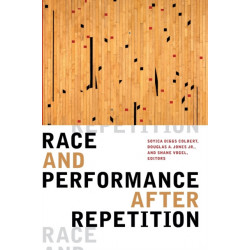
Race and Performance After Repetition (Bog, Paperback / softback, Engelsk)
Examining theater, performance art, music, sports, dance, and photography, the contributors to Race and Performance after Repetition explore how theater and performance studies account for the complex relationship between race and time.
Levering: 6 - 9 hverdage -
Hegel and the Freedom of Moderns (Bog, Paperback / softback, Engelsk)
Translated into English for the first time, this work portrays a different side of Hegel -- not just as a philosopher preoccupied with abstract ideas but a man deeply enmeshed and active in the pressing, concrete political issues of his time
Levering: 6 - 9 hverdage -
The Cinema of Naruse Mikio: Women and Japanese Modernity (Bog, Paperback / softback, Engelsk)
One of the most prolific and respected directors of the Japanese cinema, Naruse Mikio (1905-69) made eighty-nine films between 1930 and 1967. This book illuminates Naruse's contributions to Japanese and world cinema.
Levering: 6 - 9 hverdage -
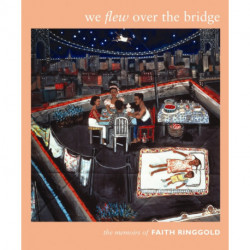
We Flew Over the Bridge: The Memoirs of Faith Ringgold (Bog, Paperback / softback, Engelsk)
African American artist Faith Ringgold narrates the events of her life from her childhood in 1930s Harlem to her stellar careers as both a best-selling children's writer and well-respected artist whose "story quilts" are displayed in museums worldwide.
Levering: 6 - 9 hverdage -
The Argentina Reader: History, Culture, Politics (Bog, Paperback / softback, Engelsk)
An interdisciplinary anthology that includes many primary materials never before published in English.
Levering: 6 - 9 hverdage -
Relations: An Anthropological Account (Bog, Paperback / softback, Engelsk)
Marilyn Strathern provides a critical account of anthropology's key concept of relation and its usage and significance in the English-speaking world, showing how its evolving use over the last three centuries reflects changing thinking about knowledge-making and kin-making.
Levering: 6 - 9 hverdage