Duke University Press Forlag
-
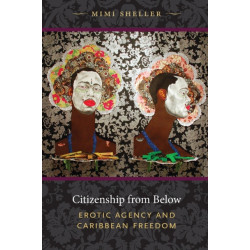
Citizenship from Below: Erotic Agency and Caribbean Freedom (Bog, Paperback / softback, Engelsk)
A comparative feminist work that starts with a substantial historical account of the different ways that freedom, race and gender were... Læs mere
Levering: Skaffevare (forvent 14 - 30 hverdage) -
Animals and Women: Feminist Theoretical Explorations (Bog, Paperback / softback, Engelsk)Levering: 6 - 9 hverdage
-
Dub: Finding Ceremony (Bog, Paperback / softback, Engelsk)
The concluding volume in a poetic triptych, Alexis Pauline Gumbs's Dub: Finding Ceremony takes inspiration from theorist Sylvia Wynter, dub poetry, and ocean life to offer a catalog of possible methods for remembering, healing, listening, and living otherwise.
Levering: 6 - 9 hverdage -
Queer Korea (Bog, Paperback / softback, Engelsk)
Contributors of this volume offer interdisciplinary analyses of non-normative sexuality and gender nonconformity in Korea, extending individualized notions of queer neoliberalism beyond those set in Western queer theory.
Levering: 6 - 9 hverdage -
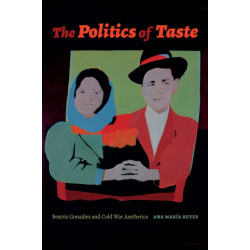
The Politics of Taste: Beatriz Gonzalez and Cold War Aesthetics (Bog, Paperback / softback, Engelsk)
Ana María Reyes examines how the polarizing art of Beatriz González disrupted Cold War aesthetic discourses and the politics of class and modernization in 1960s Colombia.
Levering: 6 - 9 hverdage -
Mimesis Across Empires: Artworks and Networks in India, 1765-1860 (Bog, Paperback / softback, Engelsk)
Natasha Eaton theorizes the relationship between art and empire through analysis of the interconnected visual cultures of British and Mughal empires in eighteenth- and nineteenth-century India.
Levering: Skaffevare (forvent 14 - 30 hverdage) -
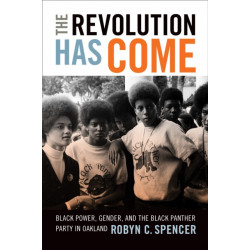
The Revolution Has Come: Black Power, Gender, and the Black Panther Party in Oakland (Bog, Paperback / softback, Engelsk)
In The Revolution Has Come Robyn C. Spencer traces the Black Panther Party's organizational evolution in Oakland,... Læs mere
Levering: 6 - 9 hverdage -
Omens of Adversity: Tragedy, Time, Memory, Justice (Bog, Paperback / softback, Engelsk)
Omens of Adversity is a profound critique of postcolonial temporality. David Scott argues that the palpable sense of the present as time stalled, without hope for emancipatory futures, has had far-reaching effects on how we think about justice and the nature of political action.
Levering: Skaffevare (forvent 14 - 30 hverdage) -
Mohawk Interruptus: Political Life Across the Borders of Settler States (Bog, Paperback / softback, Engelsk)
Combining political theory with ethnographic research among the Mohawks of Kahnawake, a reserve community in what is now southwestern Quebec, this book examines their struggles to articulate and maintain political sovereignty through centuries of settler colonialism.
Levering: 6 - 9 hverdage -
The Structure of World History: From Modes of Production to Modes of Exchange (Bog, Paperback / softback, Engelsk)
Seeks to understand both Capital-Nation-State, the interlocking system that is the dominant form of modern global society, and the possibilities for superseding it.
Levering: 6 - 9 hverdage -
Professing Selves: Transsexuality and Same-Sex Desire in Contemporary Iran (Bog, Paperback / softback, Engelsk)
The Islamic Republic of Iran permits, and even partially subsidizes, sex reassignment surgery. Based on historical and ethnographic research, Afsaneh Najmabadi examines what transsexuality means in postrevolutionary Iran.
Levering: 6 - 9 hverdage -
Nature As Event: The Lure of the Possible (Bog, Paperback / softback, Engelsk)
Didier Debaise brings Alfred North Whitehead's philosophies of nature to bear on the Anthropocene, creating a new theory of nature that does not recognize a divide between the human and nonhuman, a theory in which all organisms have the power to unleash potential into the world.
Levering: 6 - 9 hverdage