Harvard University Press Forlag
-
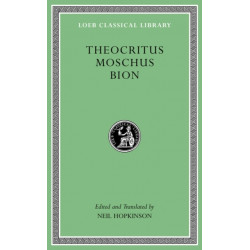
Theocritus. Moschus. Bion (Bog, Hardback, Engelsk)
Theocritus (early third century BC) was the inventor of the bucolic genre, also known as pastoral. The present edition of his work, along with that of his successors Moschus (fl.... Læs mere
Levering: 6 - 9 hverdage -
The Apostolic Fathers, Volume I: I Clement. II Clement. Ignatius. Polycarp. Didache (Bog, Hardback, Engelsk)
The writings of the Apostolic Fathers (first and second centuries AD) give a rich and diverse picture of Christian life and thought in the period immediately after New Testament times. Some were accorded almost Scriptural authority in the early Church.
Levering: 6 - 9 hverdage -
Discourses, Books 3–4. Fragments. The Encheiridion (Bog, Hardback, Engelsk)
Epictetus was a crippled Greek slave of Phrygia during Nero’s reign who heard lectures by the Stoic Musonius before he was freed. He is the author of Discourses and a smaller Encheiridion, a handbook that encapsulates the doctrines of the longer work.
Levering: 6 - 9 hverdage -
Dynamism: The Values That Drive Innovation, Job Satisfaction, and Economic Growth (Bog, Hardback, Engelsk)
Nobel Laureate Edmund Phelps argues that the high level of innovation in the West was not a result of scientific... Læs mere
Levering: 6 - 9 hverdage -
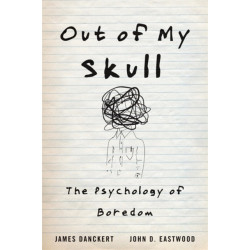
Out of My Skull: The Psychology of Boredom (Bog, Hardback, Engelsk)
Usually when we’re bored, we try to distract ourselves. But soon enough, boredom returns. James Danckert and John Eastwood argue that we can learn to handle... Læs mere
Levering: 6 - 9 hverdage -
Platonic Theology: Books I-IV (Bog, Hardback, Engelsk)
Platonic Theology is the visionary and philosophical masterpiece of Marsilio Ficino (1433–1499), the Florentine scholar-philosopher-magus largely responsible for the... Læs mere
Levering: 6 - 9 hverdage -
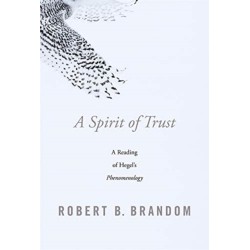
A Spirit of Trust: A Reading of Hegel’s Phenomenology (Bog, Hardback, Engelsk)
In a new retelling of the romantic rationalist adventure of ideas that is Hegel’s classic The Phenomenology of Spirit, Robert Brandom argues that... Læs mere
Levering: 6 - 9 hverdage -
Japan at the Crossroads: Conflict and Compromise after Anpo (Bog, Hardback, Engelsk)
In 1960, when Japan revised the postwar treaty that allows a U.S. military presence in Japan, the popular backlash changed the evolution of... Læs mere
Levering: 6 - 9 hverdage -
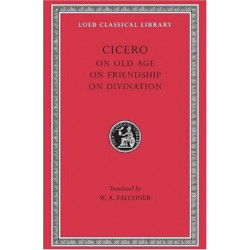
On Old Age. On Friendship. On Divination (Bog, Hardback, Engelsk)
We know more of Marcus Tullius Cicero (106–43 BC), lawyer, orator, politician and philosopher, than of any other Roman. Besides much else, his work conveys the... Læs mere
Levering: 6 - 9 hverdage -
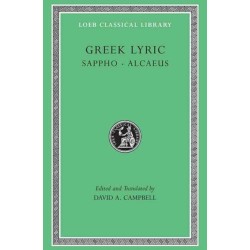
Greek Lyric, Volume I: Sappho. Alcaeus (Bog, Hardback, Engelsk)
Sappho, the most famous woman poet of antiquity, whose main theme was love, and Alcaeus, poet of wine, war, and politics, were two illustrious singers of sixth-century BC Lesbos.
Levering: 6 - 9 hverdage -
Metamorphoses, Volume I: Books 1–8 (Bog, Hardback, Engelsk)
In his most influential work, the Metamorphoses, Ovid (43 BC–AD 17) weaves a hexametric whole from a huge range of myths, which are connected by the theme of change and ingeniously linked as the narrative proceeds from earliest creation to transformation in Ovid’s own time.
Levering: 6 - 9 hverdage -
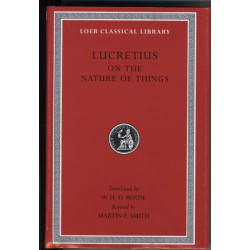
On the Nature of Things (Bog, Hardback, Engelsk)
Lucretius lived ca. 99–ca. 55 BC, but the details of his career are unknown. In his didactic poem De Rerum Natura (On the Nature of Things) he expounds Epicurean philosophy so as to dispel fear of the gods and death, and promote spiritual tranquility.
Levering: 6 - 9 hverdage