Harvard University Press Forlag
-
Thebaid, Volume II: Books 8–12. Achilleid (Bog, Hardback, Engelsk)
Greek literary education and Roman political reality are evident in the poetry of Statius. His Silvae are thirty-two occasional poems. His masterpiece, the epic... Læs mere
Levering: Skaffevare (forvent 14 - 30 hverdage) -
Plutarch (ca. AD 45–120) wrote on many subjects. His extant works other... Læs mere
Levering: Skaffevare (forvent 14 - 30 hverdage) -
On Sophistical Refutations. On Coming-To-Be and Passing Away. On the Cosmos (Bog, Hardback, Engelsk)
Nearly all the works Aristotle (384–322 BC) prepared for publication are lost; the priceless ones extant are lecture-materials, notes, and memoranda (some are spurious). They can be categorized as practical; logical; physical; metaphysical; on art; other; fragments.
Levering: 6 - 9 hverdage -
The The Vulgate Bible: Volume II The Historical Books: Douay-Rheims Translation (Bog, Hardback, Engelsk)
This second volume of a projected six-volume set of the complete Vulgate Bible presents the Historical Books of the... Læs mere
Levering: 6 - 9 hverdage -
Casina. The Casket Comedy. Curculio. Epidicus. The Two Menaechmuses (Bog, Hardback, Engelsk)
The comedies of Plautus, who brilliantly adapted Greek plays for Roman audiences ca. 205–184 BC, are the earliest Latin works to survive... Læs mere
Levering: 6 - 9 hverdage -
Art of Rhetoric (Bog, Hardback, Engelsk)
Aristotle (384–322 BC), the great Greek thinker, researcher, and educator, ranks among the most important and influential figures in the history of philosophy, theology, and science.... Læs mere
Levering: 6 - 9 hverdage -
Select Letters (Bog, Hardback, Engelsk)
The letters of Jerome (ca. AD 345–420) are an essential source for our knowledge of Christian life in the fourth and fifth centuries AD; they also provide insight into one of the most striking and complex personalities of the time.
Levering: 6 - 9 hverdage -
On the Heavens (Bog, Hardback, Engelsk)
Nearly all the works Aristotle (384–322 BC) prepared for publication are lost; the priceless ones extant are lecture-materials, notes, and memoranda (some are spurious). They can be categorized as practical; logical; physical; metaphysical; on art; other; fragments.
Levering: 6 - 9 hverdage -
The The Vulgate Bible: Douay-Rheims Translation (Bog, Hardback, Engelsk)
Volume V of a projected six-volume Vulgate Bible presents the twelve minor prophetical books of the Old... Læs mere
Levering: 6 - 9 hverdage -
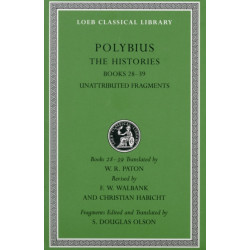
The Histories, Volume VI: Books 28–39. Unattributed Fragments (Bog, Hardback, Engelsk)
For this six-volume edition of The Histories, W. R. Paton’s 1922 translation has been thoroughly revised, the Büttner-Wobst Greek text corrected, and... Læs mere
Levering: 6 - 9 hverdage -
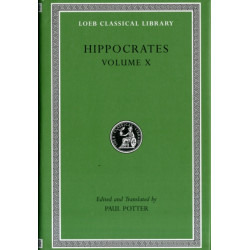
Hippocrates, Volume X: Generation. Nature of the Child. Diseases 4. Nature of Women. Barrenness (Bog, Hardback, Engelsk)
This volume, the tenth of Hippocrates’ invaluable texts on the practice of medicine in antiquity, provides essential information... Læs mere
Levering: 6 - 9 hverdage