Harvard University Press Forlag
-
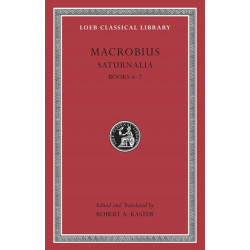
Saturnalia, Volume III: Books 6–7 (Bog, Hardback, Engelsk)
Saturnalia has been prized since the Renaissance as a treasure trove of otherwise unattested lore.
Levering: 6 - 9 hverdage -
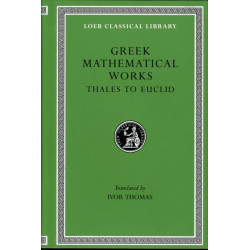
Greek Mathematical Works, Volume I: Thales to Euclid (Bog, Hardback, Engelsk)
Greek mathematics from the sixth century BC to the fourth century AD is represented by works of Pythagoras, Proclus, Thales, Democritus, Hippocrates of... Læs mere
Levering: 6 - 9 hverdage -
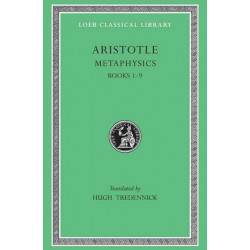
Metaphysics, Volume I: Books 1–9 (Bog, Hardback, Engelsk)
Nearly all the works Aristotle (384–322 BC) prepared for publication are lost; the priceless ones extant are lecture-materials, notes, and memoranda (some are spurious). They can be categorized as practical; logical; physical; metaphysical; on art; other; fragments.
Levering: 6 - 9 hverdage -
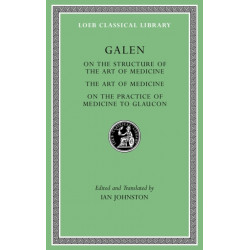
On the Constitution of the Art of Medicine. The Art of Medicine. A Method of Medicine to Glaucon (Bog, Hardback, Engelsk)
In the three works in this volume, On the Constitution of the Art of Medicine, The Art of Medicine, and A... Læs mere
Levering: 6 - 9 hverdage -
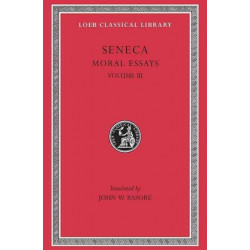
Moral Essays, Volume III: De Beneficiis (Bog, Hardback, Engelsk)
In Moral Essays, Seneca expresses his Stoic philosophy on providence, steadfastness, anger, forgiveness, consolation, the happy life, leisure, tranquility, the brevity of life, and gift-giving.
Levering: 6 - 9 hverdage -
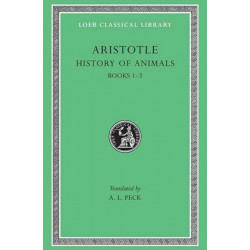
History of Animals, Volume I: Books 1–3 (Bog, Hardback, Engelsk)
Nearly all the works Aristotle (384–322 BC) prepared for publication are lost; the priceless ones extant are lecture-materials, notes, and memoranda (some are spurious). They can be categorized as practical; logical; physical; metaphysical; on art; other; fragments.
Levering: 6 - 9 hverdage -
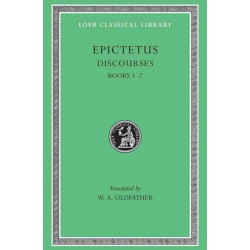
Discourses, Books 1–2 (Bog, Hardback, Engelsk)
Epictetus was a crippled Greek slave of Phrygia during Nero’s reign who heard lectures by the Stoic Musonius before he was freed. He is the author of Discourses and a smaller Enceiridion, a handbook that encapsulates the doctrines of the larger work.
Levering: 6 - 9 hverdage -
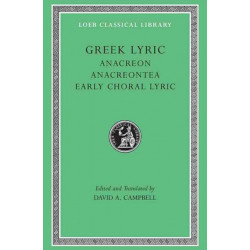
Greek Lyric, Volume II: Anacreon, Anacreontea, Choral Lyric from Olympus to Alcman (Bog, Hardback, Engelsk)
Anacreon was a composer of solo song. The Anacreonta are poems attributed to him in antiquity that are no longer considered genuine. Notable among the earliest writers of choral poetry are the seventh-century BC Spartans Alcman and Terpander.
Levering: 6 - 9 hverdage -
Natural History, Volume I: Books 1–2 (Bog, Hardback, Engelsk)
Pliny the Elder produced in his Natural History a vast compendium of Roman knowledge. Topics included are the mathematics and metrology of the universe; world... Læs mere
Levering: 6 - 9 hverdage -
Minor Latin Poets, Volume II: Florus. Hadrian. Nemesianus. Reposianus. Tiberianus. Dicta Catonis. Phoenix. Avianus. Rutilius Namatianus. Others (Bog, Hardback, Engelsk)
An anthology of Latin poetry produced during a period of four and a half centuries.
Levering: 6 - 9 hverdage -
Natural Questions, Volume I: Books 1–3 (Bog, Hardback, Engelsk)
Seneca devotes most of his Naturales Quaestiones to celestial phenomena. In Book 1 he discusses fires in the atmosphere; in 2, lightning and thunder; in 3, bodies of... Læs mere
Levering: 6 - 9 hverdage -
Fragmentary Republican Latin, Volume II: Ennius: Dramatic Fragments. Minor Works (Bog, Hardback, Engelsk)
Quintus Ennius (239–169 BC), widely regarded as the father of Roman literature, was instrumental in creating a new Roman... Læs mere
Levering: 6 - 9 hverdage