Harvard University Press Forlag
-
The Library, Volume I: Books 1–3.9 (Bog, Hardback, Engelsk)
Attributed to Apollodorus of Athens (born ca. 180 BC) but probably composed in the first or second century AD, the Library provides an expansive summary of Greek myths and heroic legends about the origin and early history of the world.
Levering: 6 - 9 hverdage -
Pro Lege Manilia. Pro Caecina. Pro Cluentio. Pro Rabirio Perduellionis Reo (Bog, Hardback, Engelsk)
We know more of Marcus Tullius Cicero (106–43 BC), lawyer, orator, politician and philosopher, than of any other Roman. Besides... Læs mere
Levering: 6 - 9 hverdage -
Metamorphoses (The Golden Ass), Volume I: Books 1–6 (Bog, Hardback, Engelsk)
The Metamorphoses (Golden Ass) of Apuleius is a romance combining realism and magic. Lucius wants the sensations of a bird, but by pharmaceutical accident... Læs mere
Levering: 6 - 9 hverdage -
Platonic Theology: Books V-VIII (Bog, Hardback, Engelsk)
Platonic Theology is the visionary and philosophical masterpiece of Marsilio Ficino (1433–1499), the Florentine scholar-philosopher-magus largely responsible for... Læs mere
Levering: 6 - 9 hverdage -
Lives of the Popes (Bog, Hardback, Engelsk)
Imprisoned for conspiring against Pope Paul II, Platina (1421–1481) returned to favor under Pope Sixtus IV, and composed this biographical compendium of the Roman... Læs mere
Levering: 6 - 9 hverdage -
The Persian Wars, Volume I: Books 1–2 (Bog, Hardback, Engelsk)
After personal inquiry and study of hearsay and other evidence, Herodotus (born ca. 484 BC) gives us in his famous history of warfare between the Greeks and the Persians a not uncritical estimate of the best that he could find.
Levering: 6 - 9 hverdage -
Recognizing Public Value (Bog, Hardback, Engelsk)
Moore’s classic Creating Public Value offered advice to managers about how to create public value, but left unresolved the question how one could recognize when public value had... Læs mere
Levering: 6 - 9 hverdage -
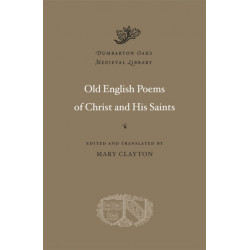
Old English Poems of Christ and His Saints (Bog, Hardback, Engelsk)
Religious piety has rarely been animated as vigorously as in Old English Poems of Christ and His Saints. Ranging from lyrical to dramatic to narrative and... Læs mere
Levering: 6 - 9 hverdage -
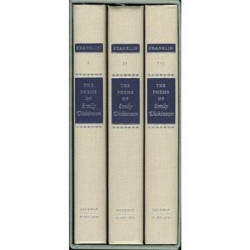
The Poems of Emily Dickinson: Variorum Edition (Bog, Hardback, Engelsk)
This comprehensive edition contains the largest number of Dickinson’s poems ever assembled, arranged chronologically and drawn from a range of archives. The... Læs mere
Levering: 6 - 9 hverdage -
Early Greek Philosophy, Volume IV: Western Greek Thinkers, Part 1 (Bog, Hardback, Engelsk)
Volume IV of the nine-volume Loeb edition of Early Greek Philosophy presents Pythagoras and the Pythagorean School, including Hippasus, Philolaus, Eurytus, Archytas, Hicetas, and Ecphantus, along with chapters on doctrines not attributed by name and reception.
Levering: 6 - 9 hverdage