Left Coast Press Inc Forlag
Visning: Type : Alle | Sprog : Alle | Format : Alle
-
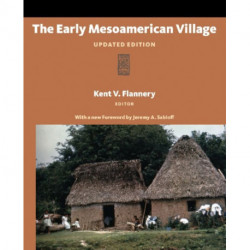
The Early Mesoamerican Village: Updated Edition (Bog, Paperback / softback, Engelsk)
This is a seminal tract on scientific method in archaeology and a series of studies on formative Mesoamerica that has influenced generations of archaeologist. A new Foreword by Jeremy Sabloff is featured in this edition.
Levering: Skaffevare (forvent 14 - 30 hverdage) -
Prehistoric Hunter-Gatherers of the High Plains and Rockies: Third Edition (Bog, Hardback, Engelsk)
A comprehensive revision of the classic prehistory of the North American high plains.
Levering: Skaffevare (forvent 14 - 30 hverdage) -
Histories of Maize: Multidisciplinary Approaches to the Prehistory, Linguistics, Biogeography, Domestication, and Evolution of Maize (Bog, Hardback, Engelsk)
Histories of Maize is the most comprehensive reference source on the botanical, genetic, archaeological, and anthropological aspects of ancient maize published to date.
Levering: Skaffevare (forvent 14 - 30 hverdage) -
Maritime Archaeology: A Technical Handbook, Second Edition (Bog, Hardback, Engelsk)
Jeremy Green's systematic overview of maritime archaeology offers a step-by-step description of this fast-growing field.
Levering: Skaffevare (forvent 14 - 30 hverdage) -
The Flocks of the Wamani: A Study of Llama Herders on the Punas of Ayacucho, Peru (Bog, Paperback / softback, Engelsk)
In this volume, the authors present an original ethnographic study of five llama herding communities in Ayacucho, Peru.
Levering: Skaffevare (forvent 14 - 30 hverdage) -
Paleoanthropology and Paleolithic Archaeology in the People's Republic of China (Bog, Paperback / softback, Engelsk)
This volume is the first comprehensive attempt to bring to western scholarship the advances made in Paleolithic archaeology and palaeoanthropology in the People’s Republic of China.
Levering: Skaffevare (forvent 14 - 30 hverdage) -
Past and Present in Hunter Gatherer Studies (Bog, Hardback, Engelsk)
This volume shows how hunter gatherer societies maintain their traditional lifeways in the face of interaction with neighboring herders, farmers, and traders.
Levering: Skaffevare (forvent 14 - 30 hverdage) -
Debating Archaeology: Updated Edition (Bog, Paperback / softback, Engelsk)
In this volume, the founder of processual archaeology, Lewis R. Binford collects and comments on the twenty-eight substantive papers published in the 1980's, the third in his set of collected papers. A 2009 Foreword allows for further reflections on this work.
Levering: Skaffevare (forvent 14 - 30 hverdage) -
The Archaeology of Slavery and Plantation Life (Bog, Hardback, Engelsk)
This volume represented a compilation of interdisciplinary research being done throughout the American South and the Caribbean by historians, archaeologists, architects, anthropologists, and other scholars on the topic of slavery and plantations.
Levering: Skaffevare (forvent 14 - 30 hverdage) -
The Aztecs, Maya, and their Predecessors: Archaeology of Mesoamerica, Third Edition (Bog, Paperback / softback, Engelsk)
This textbook provides full coverage of archaeology in the Aztec and Maya areas, and refocuses ideas on writing, architecture, murals, and the Olmec.
Levering: Skaffevare (forvent 14 - 30 hverdage) -
Archaeology of the Lower Ohio River Valley (Bog, Paperback / softback, Engelsk)
This volume describes the archaeology of the Lower Ohio River Valley region.
Levering: Skaffevare (forvent 14 - 30 hverdage) -
Bioarchaeology: The Contextual Analysis of Human Remains (Bog, Hardback, Engelsk)
This book explores the nuances of the field of "bioarchaeology," emphasizing the reconstruction of human histories through anthropological problem solving and the integration of archaeological data.
Levering: Skaffevare (forvent 14 - 30 hverdage)