Macat International Limited Forlag
-
The Republic (Bog, Hardback, Engelsk)
What is justice? How should an individual and a society behave justly? And how do they learn how to do so? These are just some of the core questions explored in The Republic, considered by many to be Plato’s most important work.
Levering: Skaffevare (forvent 14 - 30 hverdage) -
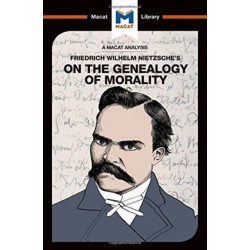
An Analysis of Friedrich Nietzsche's On the Genealogy of Morality (Bog, Hardback, Engelsk)
Written in 1887, when Nietzsche was at the height of his powers as a philosopher and writer, On the Genealogy of Morality criticizes the idea that there is just one acceptable moral code.
Levering: Skaffevare (forvent 14 - 30 hverdage) -
An Meditations (Bog, Hardback, Engelsk)
Most likely written between 170 and 180, Meditations is a remarkable work, a unique insight into one of the most conscientious and able Roman emperors, Marcus Aurelius, who ruled at the apex of the empire’s power.
Levering: Skaffevare (forvent 14 - 30 hverdage) -
An Analysis of Alasdair MacIntyre's After Virtue (Bog, Hardback, Engelsk)
Alasdair MacIntyre’s 1981 After Virtue was a ground-breaking contribution to modern moral philosophy. Dissatisfied with the major trends in the moral philosophy of his time, MacIntyre argued that modern moral discourse had no real rational basis.
Levering: Skaffevare (forvent 14 - 30 hverdage) -
An Analysis of C.S. Lewis's The Abolition of Man (Bog, Hardback, Engelsk)
C.S. Lewis’s 1943 The Abolition of Man is subtitled `Reflections on Education With Special Reference to the Teaching of English in the Upper Forms of Schools.’
Levering: Skaffevare (forvent 14 - 30 hverdage) -
An Fear and Trembling (Bog, Hardback, Engelsk)
What is the nature of our personal relationship with God? That’s the core question of Fear and Trembling, published in 1843. If God asks us to do something we instinctively feel is unethical, must we obey and have faith that He knows best?
Levering: Skaffevare (forvent 14 - 30 hverdage) -
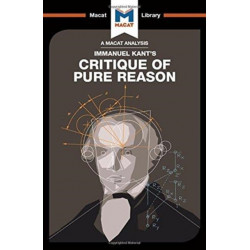
An Analysis of Immanuel Kant's Critique of Pure Reason (Bog, Hardback, Engelsk)
Immanuel Kant’s Critique of Pure Reason is one of the most influential works in the history of philosophy – not to mention one of the most... Læs mere
Levering: Skaffevare (forvent 14 - 30 hverdage) -
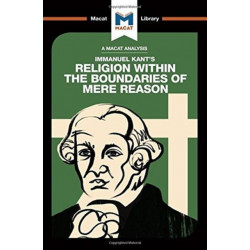
An Analysis of Immanuel Kant's Religion within the Boundaries of Mere Reason: Religion within the Boundaries of Mere Reason (Bog, Hardback, Engelsk)
Do we need religion to be good people? When Immanuel Kant tackled this question in 1793, he produced a book that remains a key text in the shaping of Western religious thought.
Levering: Skaffevare (forvent 14 - 30 hverdage) -
An Analysis of Edmund Gettier's Is Justified True Belief Knowledge? (Bog, Hardback, Engelsk)
How do we know what knowledge is? In his remarkable 1963 article, Gettier proves that Plato’s 2000-year-old definition of knowledge is flawed—in just 930 words.
Levering: Skaffevare (forvent 14 - 30 hverdage) -
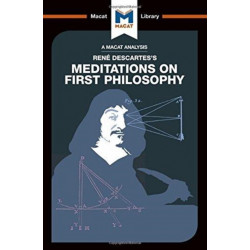
An Analysis of Rene Descartes's Meditations on First Philosophy (Bog, Hardback, Engelsk)
René Descartes posed questions about the nature of knowledge and the nature of being that philosophers still debate today.
Levering: Skaffevare (forvent 14 - 30 hverdage) -
An Analysis of Aristotle's Metaphysics (Bog, Hardback, Engelsk)
How many books can claim to be so influential as to inspire the development of a whole school of thought? Metaphysics did exactly that, laying the foundations for a new branch of philosophy concerned with the cause and nature of being.
Levering: Skaffevare (forvent 14 - 30 hverdage) -
An Modern Moral Philosophy (Bog, Hardback, Engelsk)
Anscombe’s 1958 paper challenged the very foundations of moral philosophy, the discipline that tries to understand and differentiate between actions, right and wrong. It... Læs mere
Levering: Skaffevare (forvent 14 - 30 hverdage)