SAGE Publications Ltd Forlag
-
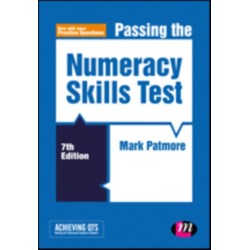
Passing the Numeracy Skills Test (Bog, Hardback, Engelsk)
This popular and widely recommended book outlines all the requirements of the Numeracy Skills Test. Written by one of the authors of the skills test itself, it explains the essential subject knowledge candidates need and includes practice questions for test preparation.
Levering: Skaffevare (forvent 14 - 30 hverdage) -
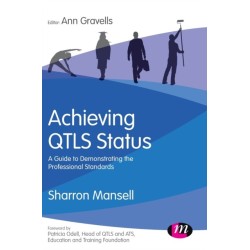
Achieving QTLS status: A guide to demonstrating the Professional Standards (Bog, Hardback, Engelsk)
This new text is a user friendly and clear guide to achieving QTLS status and is linked to the Professional Standards for Teachers and Trainers.
Levering: Print on Demand (forvent 14 - 30 hverdage) -
Safeguarding Adults in Nursing Practice (Bog, Hardback, Engelsk)
A clear and accessible introduction to safeguarding adults in nursing practice with a range of clients and across different settings.
Levering: Print on Demand (forvent 14 - 30 hverdage) -
Targeted Teaching: Strategies for secondary teaching (Bog, Hardback, Engelsk)
For teachers wanting to find out what works best for their class, this text shows how to harness the power of small or large scale research to help them find the answer.
Levering: Print on Demand (forvent 14 - 30 hverdage) -
Teaching Computational Thinking and Coding in Primary Schools (Bog, Hardback, Engelsk)
This core text for trainee primary teachers is a guide to the teaching of computing and coding, and provides an exploration of how children develop their computational thinking.
Levering: Print on Demand (forvent 14 - 30 hverdage) -
Myths and Legends of Mastery in the Mathematics Curriculum (Bog, Hardback, Engelsk)
This book supports trainee and beginning teachers to understand what 'mastery' is and how to effectively integrate it into class teaching. It explores how 'mastery' is viewed and supported in other countries and encourages a critical examination of this topical theme.
Levering: Print on Demand (forvent 14 - 30 hverdage) -
Understanding Mental Health Practice (Bog, Hardback, Engelsk)
This books is packed full of ‘need-to-know' information that will help students understand what is meant by mental health and wellbeing, and become aware of the common mental health problems as well as the typical interventions and treatment options available.
Levering: Skaffevare (forvent 14 - 30 hverdage) -
Research Methods in Sport (Bog, Hardback, Engelsk)
First edition published 2010 in series Active learning in sport.
Levering: Print on Demand (forvent 14 - 30 hverdage) -
Primary Professional Studies (Bog, Hardback, Engelsk)
The fourth edition of this popular book supports trainee teachers working towards primary QTS while taking account of the diverse professional issues in teaching.
Levering: Print on Demand (forvent 14 - 30 hverdage) -
The Early Years Teacher's Book: Achieving Early Years Teacher Status (Bog, Hardback, Engelsk)
This is a clear, comprehensive, systematic and practical guide to achieving Early Years Teacher Status and meeting the EYT Standards and requirements.
Levering: Print on Demand (forvent 14 - 30 hverdage) -
Reasons to Reason in Primary Maths and Science (Bog, Hardback, Engelsk)
This book explores what reasoning is and what it is not. It includes background theory and a rationale for primary teachers alongside examples of how reasoning in primary mathematics and science classes can develop.
Levering: Print on Demand (forvent 14 - 30 hverdage) -
Putting Professional Leadership into Practice in Social Work (Bog, Hardback, Engelsk)
This comprehensive textbook engages in the essential discussion of what professional leadership means in the context of contemporary social work and why this is considered to be important for the future of the profession.
Levering: Print on Demand (forvent 14 - 30 hverdage)