Der er 7+ underkategorier
Filosofi: logik
Visning: Type : Alle | Sprog : Alle | Format : Alle

-
Bemærk: Kan ikke leveres før jul.
Philosophical Studies: Essays in memory of L. Susan Stebbing (Bog, Paperback / softback, Engelsk)First published in 1948, Philosophical Studies presents a collection of essays written by friends and colleagues of Professor L. Susan Stebbing... Læs mere
Levering: Skaffevare (forvent 14 - 30 hverdage) -
Bemærk: Kan ikke leveres før jul.
The Vienna Circle: The Story of Logical Empiricism (Bog, Paperback / softback, Engelsk)Sarkar tells the philosophical story of 100 years of Logical Empiricism, from its inception in 1924 to its legacy today. A superb evocation of one of... Læs mere
Levering: 6 - 9 hverdage -
Bemærk: Kan ikke leveres før jul.
The Vienna Circle: The Story of Logical Empiricism (Bog, Hardback, Engelsk)Sarkar tells the philosophical story of 100 years of Logical Empiricism, from its inception in 1924 to its legacy today. A superb evocation of one of... Læs mere
Levering: Skaffevare (forvent 14 - 30 hverdage) -
Bemærk: Kan ikke leveres før jul.
The Ways of Knowing: Or The Methods of Philosophy (Bog, Hardback, Engelsk)The Ways of Knowing (1925) examines the ways of attaining knowledge and verifying it, looking at the six methods of logic. It is also concerned with the epistemological problem of interpreting the relation of truth to the mind.
Levering: Skaffevare (forvent 14 - 30 hverdage) -
Bemærk: Kan ikke leveres før jul.
Contemporary Debates in African and Western Philosophy: Analytic and Intercultural Approaches (Bog, Hardback, Engelsk)The first volume to combine African and Western philosophical approaches to current issues in language, logic, metaphysics and ethics.
Levering: Print on Demand (forvent 14 - 30 hverdage) -
Bemærk: Kan ikke leveres før jul.
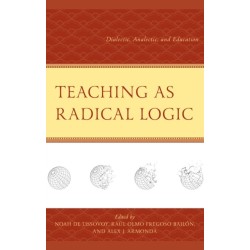
Teaching as Radical Logic: Dialectic, Analectic, and Education (Bog, Hardback, Engelsk)This volume offers original analyses of capitalism and coloniality while proposing new critical and decolonizing approaches to education.... Læs mere
Levering: Print on Demand (forvent 14 - 30 hverdage) -
Bemærk: Kan ikke leveres før jul.
Byzantine and Renaissance Philosophy: A History of Philosophy Without Any Gaps, Volume 6 (Bog, Paperback / softback, Engelsk)Peter Adamson explores the rich intellectual history of the Byzantine Empire and the Italian Renaissance in this engaging book.
Levering: 6 - 9 hverdage -
Bemærk: Kan ikke leveres før jul.
The Creative Argument: Rhetoric in the Real World, with Readings (Bog, Paperback / softback, Engelsk)Levering: 6 - 9 hverdage -
Bemærk: Kan ikke leveres før jul.
Susan Stebbing: Philosophical Papers (Bog, Hardback, Engelsk)This volume is the first published selection of the writings of Susan Stebbing (1885-1943, an important figure in the development of analytic philosophy. Siobhan... Læs mere
Levering: Skaffevare (forvent 14 - 30 hverdage) -
Bemærk: Kan ikke leveres før jul.
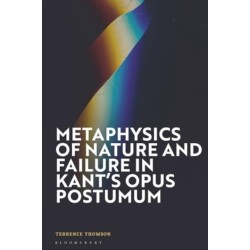
Metaphysics of Nature and Failure in Kant's Opus postumum (Bog, Hardback, Engelsk)Levering: Print on Demand (forvent 14 - 30 hverdage) -
Bemærk: Kan ikke leveres før jul.
New Perspectives on Epistemic Closure (Bog, Paperback / softback, Engelsk)This volume features new perspectives on the topic of epistemic closure. It connects epistemic closure principles to related themes in epistemology such as scepticism, dogmatism, evidentialism, epistemic logic, and modal epistemology.
Levering: Skaffevare (forvent 14 - 30 hverdage) -
Bemærk: Kan ikke leveres før jul.
The Philosophy of Exemplarity: Singularity, Particularity, and Self-Reference (Bog, Paperback / softback, Engelsk)This book offers an original philosophical perspective on exemplarity. Inspired by Wittgenstein’s later work and Derrida’s theory of deconstruction, it argues that examples are not static entities but rather oscillate between singular and universal moments.
Levering: Skaffevare (forvent 14 - 30 hverdage)