for at udvide
kategorilisten.
for at udvide
kategorilisten.
Historie: teori og metoder

-
Africa, Empire and World Disorder: Historical Essays (Bog, Hardback, Engelsk)
This volume brings together fifteen important articles from the Cambridge historian A. G. Hopkins and reflect the enlargement and evolution of historical studies during the last half century, covering four of the principal historiographical developments of the period.
Levering: Skaffevare (forvent 14 - 30 hverdage) -
History of the Arab Invasions: The Conquest of the Lands: A New Translation of al-Baladhuri's Futuh al-Buldan (Bog, Hardback, Engelsk)Levering: Print on Demand (forvent 14 - 30 hverdage)
-
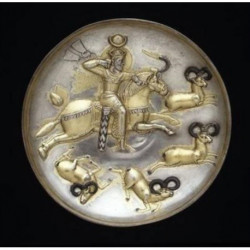
Memory and Identity in Sasanian Persia: Sacred History and the Historiography of Ancient Iran (Bog, Hardback, Engelsk)
The Sasanian Empire was one of the most significant empires of late antiquity. As the dominant force in the Middle East, spanning Egypt, India and Mesopotamia, the Sasanian kings from Ardashir I (224CE) ruled an imperial, centrally administrated, multi-lingual state.
Levering: Kan forudbestilles (Forventes d. 25-06-2026) -
The Dutch Empire between Ideas and Practice, 1600–2000 (Bog, Hardback, Engelsk)
This volume explores the intellectual history of the Dutch Empire from a long-term and global perspective, analysing how ideas and visions of empire took shape in imperial practice from the seventeenth century to the present day.
Levering: Skaffevare (forvent 14 - 30 hverdage) -
A Post-Nationalist History of Television in Ireland (Bog, Hardback, Engelsk)
By shifting the focus away from the default national lens and instead turning to audience memories as a key source, A Post-Nationalist History of... Læs mere
Levering: Skaffevare (forvent 14 - 30 hverdage) -
The Best American History Essays 2007 (Bog, Hardback, Engelsk)
This second annual volume from the Organization of American Historians, containing the best American history articles published between the summers of 2005 and... Læs mere
Levering: Skaffevare (forvent 14 - 30 hverdage) -
Those Who Come After: Postmemory, Acknowledgement and Forgiveness (Bog, Hardback, Engelsk)
This book explores the legacies of suffering in relation to ‘those who come after’ – the descendants of victims, survivors and perpetrators of traumatic events.
Levering: Skaffevare (forvent 14 - 30 hverdage) -
The Security Society: History, Patriarchy, Protection (Bog, Hardback, Engelsk)
This book develops a ‘critical history’ of security: a thematic analysis of debates about security and aspects of the security society which puts contemporary arguments and practices in dialogue with the texts and practices of the past.
Levering: Skaffevare (forvent 14 - 30 hverdage) -
The Jews, the Holocaust, and the Public: The Legacies of David Cesarani (Bog, Hardback, Engelsk)
This book explores the work and legacy of Professor David Cesarani OBE, a leading British scholar and expert on Jewish history who helped to shape Holocaust research, remembrance and education in the UK.
Levering: Skaffevare (forvent 14 - 30 hverdage) -
Shaping Parliamentary Democracy: Collected Memories from the European Parliament (Bog, Hardback, Engelsk)
This book analyses nearly 100 original interviews with Members of the European Parliament from across the European Union who were active between 1979 and 2019.
Levering: Skaffevare (forvent 14 - 30 hverdage) -
The Italian War on the Eastern Front, 1941–1943: Operations, Myths and Memories (Bog, Hardback, Engelsk)
Mining Italian, German and Russian sources, he examines the history of the Italian campaign in the East between 1941 and 1943, as well as how the campaign was remembered and memorialized in the domestic and international arena during the Cold War.
Levering: Skaffevare (forvent 14 - 30 hverdage) -
The Politics of Public Memories of Forced Migration and Bordering in Europe (Bog, Hardback, Engelsk)
Established scholars in fields such as history, anthropology, literary studies, media studies, migration and border studies, arts, and cultural studies offer important contributions to the so-called “European refugee crisis”.
Levering: Skaffevare (forvent 14 - 30 hverdage)