Der er 1 underkategori
 for at udvide
kategorilisten.
for at udvide
kategorilisten.
Filippinerne
Visning: Type : Alle | Sprog : Alle | Format : Alle

-
Bemærk: Kan ikke leveres før jul.
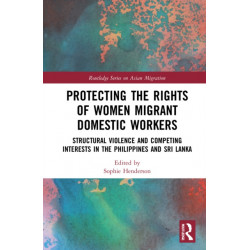
Protecting the Rights of Women Migrant Domestic Workers: Structural Violence and Competing Interests in the Philippines and Sri Lanka (Bog, Hardback, Engelsk)This book uses the cases of the Philippines and Sri Lanka to develop a... Læs mere
Levering: Skaffevare (forvent 14 - 30 hverdage) -
Bemærk: Kan ikke leveres før jul.
Education and Language in the Philippines (Bog, Hardback, Engelsk)This book critically discusses the development of education and language policies in the Philippines. It highlights the economic, social, and political factors... Læs mere
Levering: Print on Demand (forvent 14 - 30 hverdage) -
Bemærk: Kan ikke leveres før jul.
Sacrifice and Sharing in the Philippine Highlands: Religion and Society among the Buid of Mindoro (Bog, Hardback, Engelsk)Sacrifice and Sharing in the Philippine Highlands
Levering: Skaffevare (forvent 14 - 30 hverdage) -
Bemærk: Kan ikke leveres før jul.
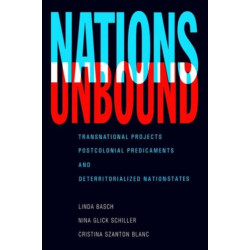
Nations Unbound: Transnational Projects, Postcolonial Predicaments and Deterritorialized Nation-States (Bog, Paperback / softback, Engelsk)This work examines the increasing trend in transnationalism. Through ethnographic studies of... Læs mere
Levering: Skaffevare (forvent 14 - 30 hverdage) -
Bemærk: Kan ikke leveres før jul.
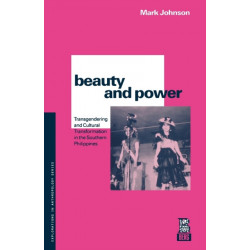
Beauty and Power: Transgendering and Cultural Transformation in the Southern Philippines (Bog, Paperback / softback, Engelsk)This compelling study of gender and sexual diversity in the Southern Philippines addresses general questions about... Læs mere
Levering: Skaffevare (forvent 14 - 30 hverdage) -
Bemærk: Kan ikke leveres før jul.
Ethnographies of Development and Globalization in the Philippines: Emergent Socialities and the Governing of Precarity (Bog, Hardback, Engelsk)The contributors to this volume examine the actual workings and on-the-ground effects of contemporary political economic shifts in the Global South, and implications for reconfiguring social networks, conceptions and practices of governance, and burgeoning social movements.
Levering: Skaffevare (forvent 14 - 30 hverdage) -
Bemærk: Kan ikke leveres før jul.
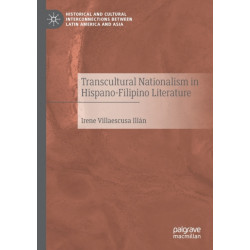
Transcultural Nationalism in Hispano-Filipino Literature (Bog, Paperback / softback, Engelsk)Levering: Skaffevare (forvent 14 - 30 hverdage) -
Bemærk: Kan ikke leveres før jul.
International Studies in the Philippines: Mapping New Frontiers in Theory and Practice (Bog, Hardback, Engelsk)This book outline a Philippine model of IR rooted in the Global South, and in local customs and practice. Examining... Læs mere
Levering: Skaffevare (forvent 14 - 30 hverdage) -
Bemærk: Kan ikke leveres før jul.
The Politics of NGOs in Southeast Asia: Participation and Protest in the Philippines (Bog, Hardback, Engelsk)The Politics of NGOs in Southeast Asia traces the emergence of NGOs in the Philippines and southeast Asia and the political factors which encouraged this, including the complex relations between NGOs and other actors.
Levering: Skaffevare (forvent 14 - 30 hverdage) -
Bemærk: Kan ikke leveres før jul.
Coming of Age: Women's Colleges in the Philippines During the Post-Marcos Era (Bog, Hardback, Engelsk)In view of the increasing number of Third World countries considering the establishment of women's colleges to meet the demand for the higher education of women, presenting a case study of two key women's colleges in the Philippines.
Levering: Skaffevare (forvent 14 - 30 hverdage) -
Bemærk: Kan ikke leveres før jul.
Struggling With Development: The Politics Of Hunger And Gender In The Philippines (Bog, Paperback / softback, Engelsk)Struggling with Development is a study of the complex relationships among international development, hunger, and gender in the context of political violence in the Philippines.
Levering: Skaffevare (forvent 14 - 30 hverdage) -
Bemærk: Kan ikke leveres før jul.
Elections and Democratization in the Philippines (Bog, Hardback, Engelsk)This study shows how legitimate elections held under centralized authoritarian conditions before 1986, though not democratic, still contributed to democratization by creating the political space needed for democratic opposition to arise.
Levering: Skaffevare (forvent 14 - 30 hverdage)