Der er 6+ underkategorier
 for at udvide
kategorilisten.
for at udvide
kategorilisten.
-
1500 til i dag
- 1392 til 1910 (det koreanske Joeson-dynasti)
- 16. århundrede, 1500 til 1599
- 17. århundrede, 1600 til 1699
- 18. århundrede, 1700 til 1799
- 19. århundrede, 1800 til 1899
- 20. århundrede, 1900 til 1999
- 21. århundrede, 2000 til 2100
- c 1600 to 1867 (Japanese Edo period)
- Early Modern Egypt (c 1517 to c 1914)
- Spain: Modern history (1492–1808)
- 1–1500
- c 2100 onwards
- Forhistorisk tid
- Før vor tidsregning
- Geological time
Kvalifikatorer: tidsperiode

-
This four-volume, reset collection takes as its starting point the earliest substantial descriptions of tea as a commodity in the mid-seventeenth... Læs mere
Levering: Skaffevare (forvent 14 - 30 hverdage) -
Of the 16 WWI poets memorialized in Westminster Abbey, two were destined to become lifelong friends. Although both served on the... Læs mere
Levering: 6 - 9 hverdage -
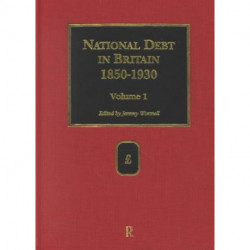
National Debt in Britain 1850-1930 (Engelsk)
Charts the history of British debt from the Crimea War to the end of the 1st World War, combining previously published materials with extremely rare archival texts, for instance, from the Bank of England.
Levering: Skaffevare (forvent 14 - 30 hverdage) -
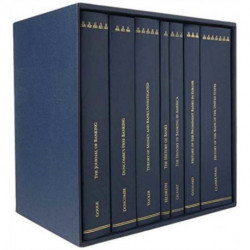
Origins of American Banking (Engelsk)
The set is significant both in the development of the theory of banking and in terms of documenting the history of banking in the United States.
Levering: Skaffevare (forvent 14 - 30 hverdage) -
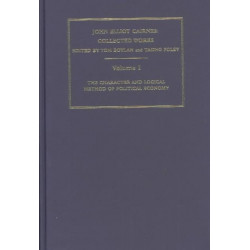
John Elliot Cairnes: Collected Works (Engelsk)
This six-volume set contains virtually all of the published work of Cairnes; it brings together, for the first time, all of his major works and almost all of his uncollested articles, pamphlets, and published letters.
Levering: Skaffevare (forvent 14 - 30 hverdage) -
James Mill's History of British India (Engelsk)
In this work James Mill exhibits the character, history, religion, arts, literature and laws of the people of India. One of the great history books of the last century, it will interest social and political historians of the British Empire.
Levering: Skaffevare (forvent 14 - 30 hverdage) -
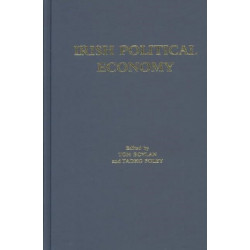
Irish Political Economy (Engelsk)
Organized thematically and covering all major fields within economics, this set collects together the most significant writings produced in nineteenth century Ireland.
Levering: Skaffevare (forvent 14 - 30 hverdage) -
Topics included in this set of particular importance are those on the origin of speech, the validity of the Biblical account of language, the identity and nature of the language Adam spoke, and the relation between language and thought.
Levering: Skaffevare (forvent 14 - 30 hverdage) -
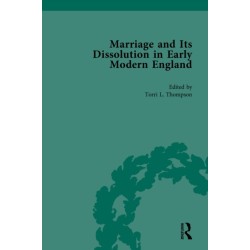
Addresses Early Modern representations of chastity and adultery, as well as matrimony and its dissolution in both the private and public realms, including the most well known marital dissolution, that of Henry VIII and Catherine of Aragon.
Levering: Skaffevare (forvent 14 - 30 hverdage) -
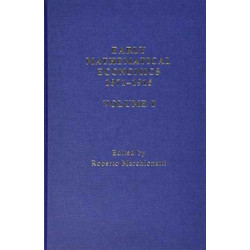
Early Mathematical Economics, 1871-1915 (Engelsk)
This collection traces this long revolution over a fifty-year period for the first time, from William Stanley Jevons' The Theory of Political Economy (1871), to Eugen Slutsky's On the Theory of the Budget of the Consumer (1915)
Levering: Skaffevare (forvent 14 - 30 hverdage) -
The Economic Review (1891-1914) (Engelsk)
In view of present controversies over the uses of economic theory, the issues dealt with in the Economic Review have an important contemporary relevance.
Levering: Skaffevare (forvent 14 - 30 hverdage) -
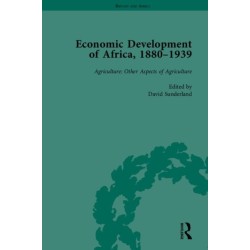
One of the main motives for British imperialism in Africa was economic gain. This collection examines the ways in which Britain developed Africa, and, in so doing, benefited her own economy.
Levering: Skaffevare (forvent 14 - 30 hverdage)