Der er 7+ underkategorier
 for at udvide
kategorilisten.
for at udvide
kategorilisten.
-
1000 til 1500
- 11. århundrede, 1000 til 1099
- 12. århundrede, 1100 til 1199
- 13. århundrede, 1200 til 1299
- 14. århundrede, 1300 til 1399
- 15. århundrede, 1400 til 1499
- 918 til 1392 (den koreanske Goryeo-periode)
- c 1242 to c 1502 (Period of the Golden Horde)
- Italy: Communes, ‘Signorie’ (c 1000 to c 1400)
- Norman Conquest & Norman period (1066–1154)
- Norman Ireland (1169 to c 1350)
- Period of the Piast dynasty 960–1370
- Sweden: Middle Ages (c 1050 to c 1520)
- The Plantagenet & medieval period (1154–1485)
-
1–500
- 1. århundrede, 1 til 99
- 2. århundrede, 100 til 199
- 3. århundrede, 200 til 299
- 4. århundrede, 300 til 399
- 5. århundrede, 400 til 499
- 57 f.Kr. til 668 f.Kr. (De tidlige tre kongedømmer i Korea)
- c 300 CE to 591 (Japanese Kofun period)
- Egypt: Classical Antiquity (c 332 BCE to c 630 CE)
- Roman Britain (c 43 BCE to c 410 CE)
-
500 til 1000
- 10. århundrede, 900 til 999
- 6. århundrede, 500 til 599
- 668 til 935 (den koreanske forenede Silla-periode)
- 698 til 926 (koreansk Balhae-periode)
- 7. århundrede, 600 til 699
- 8. århundrede, 700 til 799
- 800 til 1050 (vikingetiden)
- 9. århundrede, 800 til 899
- Anglo-Saxon period (c 400 to c 1066)
- c 785 to c 1068 (Japanese Early and Middle Heian period)
- c 862 to c 1240 (Period of Kyivan Rusʹ / Kievan Rusʹ)
- Danmark: Vikingetid (fra slutningen af 700-tallet til midten af 1000-tallet)
- Early Christian Ireland (c 400 to c 800)
- Italy: from Germanic Kingdoms to Franks (c 500 to c 1000)
- Medieval Egypt (c 630 to c 1517)
- Spain: Germanic and visigothic invasions (c 400 to c 600)
- Sweden: the Viking Age (c 800 to c 1050)
- Viking Ireland (c 800 to c 1014)
- Italy: c 500 BCE to c 1500 CE
- Spain: Arab presence (711–1492)
- Spain: Middle Ages (c 400 to c 1492)
- Spain: ‘Reconquista’ (711–1492)
1–1500

-
Rooted in the Earth, Rooted in the Sky: Hildegard of Bingen and Premodern Medicine (Bog, Hardback, Engelsk)
Contextualizing Hildegard's work with primary and secondary historical sources, unedited manuscripts, anthropological and... Læs mere
Levering: Skaffevare (forvent 14 - 30 hverdage) -
Conflict and Compromise in the Late Medieval Countryside: Lords and Peasants in Durham, 1349-1400 (Bog, Hardback, Engelsk)
Filling a major gap in medieval English history, whilst grappling with major theories of change, this book examines the changing relations between lords and peasants in post-Black Death Durham.
Levering: Skaffevare (forvent 14 - 30 hverdage) -
Body and Sacred Place in Medieval Europe, 1100-1389 (Bog, Hardback, Engelsk)
Body and Sacred Place in Medieval Europe investigates the medieval understanding of sacred place, arguing for the centrality of bodies and bodily metaphors to the establishment, function, use, and power of medieval churches.
Levering: Skaffevare (forvent 14 - 30 hverdage) -
Across the Religious Divide: Women, Property, and Law in the Wider Mediterranean (ca. 1300-1800) (Bog, Hardback, Engelsk)
This volume introduces a unique comparative perspective to the complexities of gender relations in Muslim, Jewish, and Christian communities by examining women's property rights in different societies across the entire medieval and early modern Mediterranean.
Levering: Skaffevare (forvent 14 - 30 hverdage) -
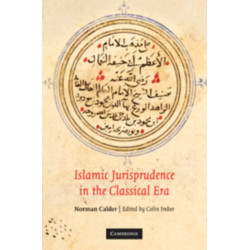
Islamic Jurisprudence in the Classical Era (Bog, Hardback, Engelsk)
In this book, Colin Imber has put together and edited four previously unpublished essays in the field of Islamic law by Norman Calder.
Levering: Print on Demand (forvent 14 - 30 hverdage) -
Writing to the King: Nation, Kingship and Literature in England, 1250–1350 (Bog, Hardback, Engelsk)
In this book David Matthews explores political critique - in Anglo-Latin, Anglo-Norman, and Middle English - in the century before... Læs mere
Levering: Print on Demand (forvent 14 - 30 hverdage) -
Episcopal Power and Ecclesiastical Reform in the German Empire: Tithes, Lordship, and Community, 950–1150 (Bog, Hardback, Engelsk)
This book explores a key economic institution, the medieval tithe, as a social and political... Læs mere
Levering: Print on Demand (forvent 14 - 30 hverdage) -
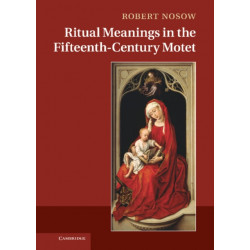
Ritual Meanings in the Fifteenth-Century Motet (Bog, Hardback, Engelsk)
Presenting the first full-length study of how motets were used in the fifteenth century, this book dispels the mystery surrounding these outstanding works... Læs mere
Levering: Print on Demand (forvent 14 - 30 hverdage) -
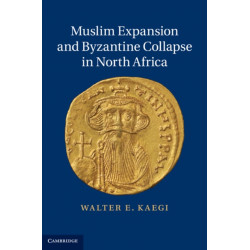
Muslim Expansion and Byzantine Collapse in North Africa (Bog, Hardback, Engelsk)
Who 'lost' Christian North Africa? Who won and how? Walter Kaegi examines these perennial questions, with maps and on-site observations, in this... Læs mere
Levering: Skaffevare (forvent 14 - 30 hverdage) -
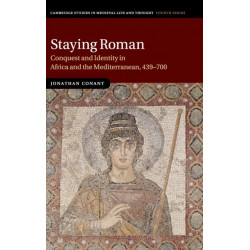
Staying Roman: Conquest and Identity in Africa and the Mediterranean, 439–700 (Bog, Hardback, Engelsk)
What did it mean to be Roman once the Empire had collapsed in the West? This is the first systematic study of the changing nature of Roman identity in post-Roman North Africa, revealing the value and flexibility of the notion of 'Romanness' across the Mediterranean.
Levering: Print on Demand (forvent 14 - 30 hverdage) -
The Jew, the Cathedral and the Medieval City: Synagoga and Ecclesia in the Thirteenth Century (Bog, Hardback, Engelsk)
This book examines the Synagoga-Ecclesia motif in the thirteenth century and argues that the figures conveyed a political message of Christian ascendancy and Jewish submission.
Levering: Print on Demand (forvent 14 - 30 hverdage) -
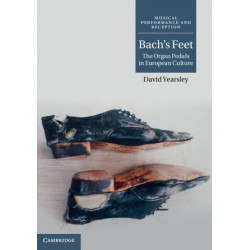
Bach's Feet: The Organ Pedals in European Culture (Bog, Hardback, Engelsk)
From 1500, the independent use of the feet in musical performance at the organ was unique to Germany and vital to its cultural standing in Europe.... Læs mere
Levering: Print on Demand (forvent 14 - 30 hverdage)