for at udvide
kategorilisten.
for at udvide
kategorilisten.
-
1000 til 1500
- 11. århundrede, 1000 til 1099
- 12. århundrede, 1100 til 1199
- 13. århundrede, 1200 til 1299
- 14. århundrede, 1300 til 1399
- 15. århundrede, 1400 til 1499
- 918 til 1392 (den koreanske Goryeo-periode)
- c 1242 to c 1502 (Period of the Golden Horde)
- Italy: Communes, ‘Signorie’ (c 1000 to c 1400)
- Norman Conquest & Norman period (1066–1154)
- Norman Ireland (1169 to c 1350)
- Period of the Piast dynasty 960–1370
- Sweden: Middle Ages (c 1050 to c 1520)
- The Plantagenet & medieval period (1154–1485)
-
1–500
- 1. århundrede, 1 til 99
- 2. århundrede, 100 til 199
- 3. århundrede, 200 til 299
- 4. århundrede, 300 til 399
- 5. århundrede, 400 til 499
- 57 f.Kr. til 668 f.Kr. (De tidlige tre kongedømmer i Korea)
- c 300 CE to 591 (Japanese Kofun period)
- Egypt: Classical Antiquity (c 332 BCE to c 630 CE)
- Roman Britain (c 43 BCE to c 410 CE)
-
500 til 1000
- 10. århundrede, 900 til 999
- 6. århundrede, 500 til 599
- 668 til 935 (den koreanske forenede Silla-periode)
- 698 til 926 (koreansk Balhae-periode)
- 7. århundrede, 600 til 699
- 8. århundrede, 700 til 799
- 800 til 1050 (vikingetiden)
- 9. århundrede, 800 til 899
- Anglo-Saxon period (c 400 to c 1066)
- c 785 to c 1068 (Japanese Early and Middle Heian period)
- c 862 to c 1240 (Period of Kyivan Rusʹ / Kievan Rusʹ)
- Danmark: Vikingetid (fra slutningen af 700-tallet til midten af 1000-tallet)
- Early Christian Ireland (c 400 to c 800)
- Italy: from Germanic Kingdoms to Franks (c 500 to c 1000)
- Medieval Egypt (c 630 to c 1517)
- Spain: Germanic and visigothic invasions (c 400 to c 600)
- Sweden: the Viking Age (c 800 to c 1050)
- Viking Ireland (c 800 to c 1014)
- Italy: c 500 BCE to c 1500 CE
- Spain: Arab presence (711–1492)
- Spain: Middle Ages (c 400 to c 1492)
- Spain: ‘Reconquista’ (711–1492)
1–1500

-
Institutional Change and Property Rights before the Industrial Revolution: Wardship in Britain, 1485–1660 (Bog, Hardback, Engelsk)
An important study of institutional change pre-industrialisation, Bottomley examines wardship, the... Læs mere
Levering: Print on Demand (forvent 14 - 30 hverdage) -
Sailing Away from Byzantium Toward East Roman History (Bog, Hardback, Engelsk)
By exploring the intellectual legacies of 'Byzantium,' and the benefits of conceptualizing Roman history as an unsevered whole, this Element exhorts scholars to let go of the 'Byzantine' misnomer.
Levering: 6 - 9 hverdage -
Debating Papal History, c. 250–c. 1300: Responsive Government and the Medieval Papacy (Bog, Hardback, Engelsk)
Through a series of case studies with translated supporting documents, D.L. d'Avray offers a fresh reinterpretation of... Læs mere
Levering: Print on Demand (forvent 14 - 30 hverdage) -
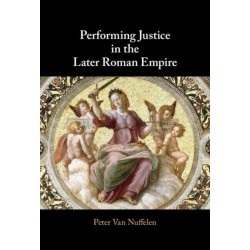
Performing Justice in the Later Roman Empire (Bog, Hardback, Engelsk)
In the Later Roman Empire (AD 300–650), power seems to manifest itself mostly through legislation, bureaucracy, and an increasingly distant emperor. This... Læs mere
Levering: Print on Demand (forvent 14 - 30 hverdage) -
Family, Vocation, and Humanism in the Italian Renaissance (Bog, Hardback, Engelsk)
By examining the letters, autobiographies, dialogues, polemics, and fictional works of the early Italian humanists, such as Petrarch, Boccaccio,... Læs mere
Levering: 6 - 9 hverdage -
Margins and Peripheries in Christian History: Volume 61 (Bog, Hardback, Engelsk)
This volume explores Christianity's past by considering it in relation to, and from the perspective of, a variety of aspects that have been... Læs mere
Levering: 6 - 9 hverdage -
Gulistan Illustrated: The Rose Garden: 13th Century Persian Poems and Stories (Bog, Hardback, Engelsk)
Considered the most influential work from the classical age of Persian literature, Sa'di's Gulistan (‘The Rose Garden’)... Læs mere
Levering: 6 - 9 hverdage -
Mantle of the Sufi Kings: Political Sufism and the Rise of Early Modern Iran (Bog, Hardback, Engelsk)
Explores how loyalty, social cohesion, and political Sufism shaped the rise of early modern Iran, revealing an empire's... Læs mere
Levering: Print on Demand (forvent 14 - 30 hverdage) -
The Humanity of Christ as Instrument of Salvation: A Study in Thomistic Christology (Bog, Hardback, Engelsk)
How can God use his own human actions and sufferings to bring about those things that he causes through divine power? To answer that question, J. David Moser here explores St. Thomas Aquinas's teaching that Christ's humanity is an instrument of the divinity.
Levering: Print on Demand (forvent 14 - 30 hverdage) -
Children of Perdition: The Bitter Fate of Simon de Montfort’s Children (Bog, Hardback, Engelsk)
Explore the revealing story of how Simon de Montfort’s legacy played out among his banished children.
Levering: Kan forudbestilles (Forventes d. 15-04-2028) -
Henry I: In the Shadow of the Conqueror (Bog, Hardback, Engelsk)
Asley Mantle places a man who is so often peripheral to historical accounts front and centre. Henry I deserves to be better known.
Levering: Kan forudbestilles (Forventes d. 15-10-2027) -
After Agincourt: The French Campaigns of Henry V (Bog, Hardback, Engelsk)
Agincourt took place in 1415. But what happened next? Specifically over the next seven years? Why didn't Henry V become King of France?
Levering: 6 - 9 hverdage