Der er 7+ underkategorier
 for at udvide
kategorilisten.
for at udvide
kategorilisten.
-
1000 til 1500
- 11. århundrede, 1000 til 1099
- 12. århundrede, 1100 til 1199
- 13. århundrede, 1200 til 1299
- 14. århundrede, 1300 til 1399
- 15. århundrede, 1400 til 1499
- 918 til 1392 (den koreanske Goryeo-periode)
- c 1242 to c 1502 (Period of the Golden Horde)
- Italy: Communes, ‘Signorie’ (c 1000 to c 1400)
- Norman Conquest & Norman period (1066–1154)
- Norman Ireland (1169 to c 1350)
- Period of the Piast dynasty 960–1370
- Sweden: Middle Ages (c 1050 to c 1520)
- The Plantagenet & medieval period (1154–1485)
-
1–500
- 1. århundrede, 1 til 99
- 2. århundrede, 100 til 199
- 3. århundrede, 200 til 299
- 4. århundrede, 300 til 399
- 5. århundrede, 400 til 499
- 57 f.Kr. til 668 f.Kr. (De tidlige tre kongedømmer i Korea)
- c 300 CE to 591 (Japanese Kofun period)
- Egypt: Classical Antiquity (c 332 BCE to c 630 CE)
- Roman Britain (c 43 BCE to c 410 CE)
-
500 til 1000
- 10. århundrede, 900 til 999
- 6. århundrede, 500 til 599
- 668 til 935 (den koreanske forenede Silla-periode)
- 698 til 926 (koreansk Balhae-periode)
- 7. århundrede, 600 til 699
- 8. århundrede, 700 til 799
- 800 til 1050 (vikingetiden)
- 9. århundrede, 800 til 899
- Anglo-Saxon period (c 400 to c 1066)
- c 785 to c 1068 (Japanese Early and Middle Heian period)
- c 862 to c 1240 (Period of Kyivan Rusʹ / Kievan Rusʹ)
- Danmark: Vikingetid (fra slutningen af 700-tallet til midten af 1000-tallet)
- Early Christian Ireland (c 400 to c 800)
- Italy: from Germanic Kingdoms to Franks (c 500 to c 1000)
- Medieval Egypt (c 630 to c 1517)
- Spain: Germanic and visigothic invasions (c 400 to c 600)
- Sweden: the Viking Age (c 800 to c 1050)
- Viking Ireland (c 800 to c 1014)
- Italy: c 500 BCE to c 1500 CE
- Spain: Arab presence (711–1492)
- Spain: Middle Ages (c 400 to c 1492)
- Spain: ‘Reconquista’ (711–1492)
1–1500

-
Converting the Saxons: A Study of Violence and Religion in Early Medieval Germany (Bog, Hardback, Engelsk)
This book provides a scholarly and accessible resource for students and researchers interested in transhistorical methods of conversion, the history of Christianity, Early Medieval paganism, colonial religious encounters, and the nature of religious conversion.
Levering: Skaffevare (forvent 14 - 30 hverdage) -
Sufi Rituals and Practices: Experiences from South Asia, 1200-1450 (Bog, Hardback, Engelsk)
This book explores the institution of Sufism, the most dynamic face of Islam in the Indian subcontinent, as it sets out to study the mystical rituals and devotional practices that characterize Sufism's beliefs and traditions.
Levering: Skaffevare (forvent 14 - 30 hverdage) -
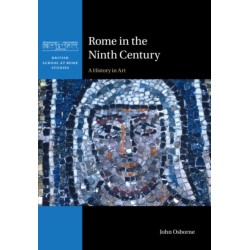
Rome in the Ninth Century: A History in Art (Bog, Hardback, Engelsk)
Integrates the evidence for ninth-century Rome derived from standing remains and their decorations, objects in museum and library collections, contemporaneous... Læs mere
Levering: Skaffevare (forvent 14 - 30 hverdage) -
The Marriage Exchange: Property, Social Place, and Gender in Cities of the Low Countries, 1300-1550 (Bog, Hardback, Engelsk)
Medieval Douai left an enormous archive of documents. This text reveals how these documents were produced... Læs mere
Levering: 6 - 9 hverdage -
The Nag Hammadi Codices and their Ancient Readers: Exploring Textual Materiality and Reading Practice (Bog, Hardback, Engelsk)
Since their discovery in 1945, the Nag Hammadi Codices have generated scholarly debate as to their... Læs mere
Levering: Print on Demand (forvent 14 - 30 hverdage) -
What is Better than a Good Woman?: Alice Chaucer, Commoner and Yorkist Matriarch (Bog, Hardback, Engelsk)
Granddaughter of Jeoffrey and grandmother to three Yorkist claimants to the throne, Alice Chaucer is one of the most important female figures of the 15th century. It is remarkable that there has not been a biography of her to-date.
Levering: 6 - 9 hverdage -
The Trojan Kings of Britain: Myth or History? (Bog, Hardback, Engelsk)
Caleb Howells, author King Arthur: The Man Who Conquered Europe, argues that the legend of Brutus is based on real historical events. Constructing a compelling argument based on a re-examination of original sources, the book offers a fresh perspective on the history of Britain.
Levering: 6 - 9 hverdage -
Finis Britanniae: A Military History of Late Roman Britain and the Saxon Conquest (Bog, Hardback, Engelsk)
This analysis of the evidence shows that the end of the Roman era and birth of Anglo-Saxon rule was a drawn out process - much of the nuances has been lost over time. This insight into a neglected time in Britain's history offers an important re-evaluation of the period.
Levering: 6 - 9 hverdage -
The Long Millennium: Affluence, Architecture and Its Dark Matter Economy (Bog, Hardback, Engelsk)
This history of the ‘long’ first millennium CE, from the period of the Roman Empire to the beginning of the Colonial Age, takes a peripheral-centric approach, arguing that the rising chiefdoms of this period were key partners to urban-based civilizations.
Levering: Skaffevare (forvent 14 - 30 hverdage) -
Emotions and Architecture: Forging Mediterranean Cities Between the Middle Ages and Early Modern Time (Bog, Hardback, Engelsk)
Emotions and Architecture explores architecture as a medium to arouse or conceal emotions, to build consensus through shared values, or to reconnect the urban community to its alleged ancestry.
Levering: Skaffevare (forvent 14 - 30 hverdage) -
Masculine Ideals and Alexander the Great: An Exemplary Man in the Roman and Medieval World (Bog, Hardback, Engelsk)
This work breaks new ground by considering the ancient and medieval reception of Alexander the Great from a gender studies perspective.
Levering: Skaffevare (forvent 14 - 30 hverdage) -
The Visual Rhetoric of the Married Laity in Late Antiquity: Iconography, the Christianization of Marriage, and Alternatives to the Ascetic Ideal (Bog, Hardback, Engelsk)
This study examines third- and fourth-century portraits of married Christians and associated images, reading them as visual rhetoric in early Christian conversations about marriage and celibacy, and recovering lay perspectives underrepresented in literary sources.
Levering: Skaffevare (forvent 14 - 30 hverdage)