Der er 7+ underkategorier
 for at udvide
kategorilisten.
for at udvide
kategorilisten.
-
1000 til 1500
- 11. århundrede, 1000 til 1099
- 12. århundrede, 1100 til 1199
- 13. århundrede, 1200 til 1299
- 14. århundrede, 1300 til 1399
- 15. århundrede, 1400 til 1499
- 918 til 1392 (den koreanske Goryeo-periode)
- c 1242 to c 1502 (Period of the Golden Horde)
- Italy: Communes, ‘Signorie’ (c 1000 to c 1400)
- Norman Conquest & Norman period (1066–1154)
- Norman Ireland (1169 to c 1350)
- Period of the Piast dynasty 960–1370
- Sweden: Middle Ages (c 1050 to c 1520)
- The Plantagenet & medieval period (1154–1485)
-
1–500
- 1. århundrede, 1 til 99
- 2. århundrede, 100 til 199
- 3. århundrede, 200 til 299
- 4. århundrede, 300 til 399
- 5. århundrede, 400 til 499
- 57 f.Kr. til 668 f.Kr. (De tidlige tre kongedømmer i Korea)
- c 300 CE to 591 (Japanese Kofun period)
- Egypt: Classical Antiquity (c 332 BCE to c 630 CE)
- Roman Britain (c 43 BCE to c 410 CE)
-
500 til 1000
- 10. århundrede, 900 til 999
- 6. århundrede, 500 til 599
- 668 til 935 (den koreanske forenede Silla-periode)
- 698 til 926 (koreansk Balhae-periode)
- 7. århundrede, 600 til 699
- 8. århundrede, 700 til 799
- 800 til 1050 (vikingetiden)
- 9. århundrede, 800 til 899
- Anglo-Saxon period (c 400 to c 1066)
- c 785 to c 1068 (Japanese Early and Middle Heian period)
- c 862 to c 1240 (Period of Kyivan Rusʹ / Kievan Rusʹ)
- Danmark: Vikingetid (fra slutningen af 700-tallet til midten af 1000-tallet)
- Early Christian Ireland (c 400 to c 800)
- Italy: from Germanic Kingdoms to Franks (c 500 to c 1000)
- Medieval Egypt (c 630 to c 1517)
- Spain: Germanic and visigothic invasions (c 400 to c 600)
- Sweden: the Viking Age (c 800 to c 1050)
- Viking Ireland (c 800 to c 1014)
- Italy: c 500 BCE to c 1500 CE
- Spain: Arab presence (711–1492)
- Spain: Middle Ages (c 400 to c 1492)
- Spain: ‘Reconquista’ (711–1492)
1–1500

-
Hegel: Religion, Economics, and the Politics of Spirit, 1770–1807 (Bog, Paperback / softback, Engelsk)
This major study of Hegel's intellectual development up to the writing of The Phenomonology of Spirit argues that his work is best understood in the context of the liberalisation of German Protestantism in the eighteenth century.
Levering: Print on Demand (forvent 14 - 30 hverdage) -
Frege's Theory of Sense and Reference: Its Origin and Scope (Bog, Paperback / softback, Engelsk)
Gottlob Frege has exerted an enormous influence on the evolution of twentieth-century philosophy, yet the real significance of that influence... Læs mere
Levering: Print on Demand (forvent 14 - 30 hverdage) -
The Pastons and their England: Studies in an Age of Transition (Bog, Paperback / softback, Engelsk)
This account of the Pastons' England reveals an age of historical transition as it was played out in the daily challenges of individual lives.
Levering: Print on Demand (forvent 14 - 30 hverdage) -
Carolingian Culture: Emulation and Innovation (Bog, Paperback / softback, Engelsk)
This volume of specially-commissioned essays takes as its theme the legacy of Rome in Carolingian culture in eighth- and ninth-century Europe. No such... Læs mere
Levering: Print on Demand (forvent 14 - 30 hverdage) -
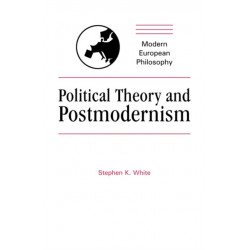
Political Theory and Postmodernism (Bog, Paperback / softback, Engelsk)
In Political Theory and Postmodernism, Stephen K. White outlines a path through the postmodern problematic by distinguishing two distinct ways of thinking about the meaning of responsibility, one prevalent in modern and the other in postmodern perspectives.
Levering: Print on Demand (forvent 14 - 30 hverdage) -
An Introduction to Nietzsche as Political Thinker: The Perfect Nihilist (Bog, Paperback / softback, Engelsk)
This is a lively introduction to the contentious topic of Nietzsche's politics, confronting directly his appropriation by the... Læs mere
Levering: Print on Demand (forvent 14 - 30 hverdage) -
Geography, Technology, and War: Studies in the Maritime History of the Mediterranean, 649–1571 (Bog, Paperback / softback, Engelsk)
In this study, the technological limitations of maritime traffic in the Mediterranean are considered in... Læs mere
Levering: Print on Demand (forvent 14 - 30 hverdage) -
The Uses of Literacy in Early Mediaeval Europe (Bog, Paperback / softback, Engelsk)
This book investigates the ways in which literacy was important in early mediaeval Europe, and examines the context of literacy, its uses, levels, and distribution, in a number of different early mediaeval societies between c. 400 and c. 1000.
Levering: Print on Demand (forvent 14 - 30 hverdage) -
A History of Twelfth-Century Western Philosophy (Bog, Paperback / softback, Engelsk)
This is the first comprehensive study of the philosophical achievements of twelfth-century Western Europe. It is the collaboration of fifteen scholars... Læs mere
Levering: Print on Demand (forvent 14 - 30 hverdage) -
Hegel's Social Philosophy: The Project of Reconciliation (Bog, Paperback / softback, Engelsk)
This book provides an authoritative account of Hegel's social philosophy at a level that presupposes no specialised knowledge of the subject. Hegel's social theory is designed to reconcile the individual with the modern social world.
Levering: Print on Demand (forvent 14 - 30 hverdage) -
Corpus Christi: The Eucharist in Late Medieval Culture (Bog, Paperback / softback, Engelsk)
A paperback edition of Miri Rubin's highly successful study of later medieval culture seen through its central symbol, the eucharist.
Levering: Print on Demand (forvent 14 - 30 hverdage) -
The Semantic Tradition from Kant to Carnap: To the Vienna Station (Bog, Paperback / softback, Engelsk)
J. Albert Coffa traces the roots of logical positivism in a semantic tradition that arose in opposition to Kant's theory that a priori knowledge is based on pure intuition.
Levering: Print on Demand (forvent 14 - 30 hverdage)