Der er 7+ underkategorier
 for at udvide
kategorilisten.
for at udvide
kategorilisten.
-
1000 til 1500
- 11. århundrede, 1000 til 1099
- 12. århundrede, 1100 til 1199
- 13. århundrede, 1200 til 1299
- 14. århundrede, 1300 til 1399
- 15. århundrede, 1400 til 1499
- 918 til 1392 (den koreanske Goryeo-periode)
- c 1242 to c 1502 (Period of the Golden Horde)
- Italy: Communes, ‘Signorie’ (c 1000 to c 1400)
- Norman Conquest & Norman period (1066–1154)
- Norman Ireland (1169 to c 1350)
- Period of the Piast dynasty 960–1370
- Sweden: Middle Ages (c 1050 to c 1520)
- The Plantagenet & medieval period (1154–1485)
-
1–500
- 1. århundrede, 1 til 99
- 2. århundrede, 100 til 199
- 3. århundrede, 200 til 299
- 4. århundrede, 300 til 399
- 5. århundrede, 400 til 499
- 57 f.Kr. til 668 f.Kr. (De tidlige tre kongedømmer i Korea)
- c 300 CE to 591 (Japanese Kofun period)
- Egypt: Classical Antiquity (c 332 BCE to c 630 CE)
- Roman Britain (c 43 BCE to c 410 CE)
-
500 til 1000
- 10. århundrede, 900 til 999
- 6. århundrede, 500 til 599
- 668 til 935 (den koreanske forenede Silla-periode)
- 698 til 926 (koreansk Balhae-periode)
- 7. århundrede, 600 til 699
- 8. århundrede, 700 til 799
- 800 til 1050 (vikingetiden)
- 9. århundrede, 800 til 899
- Anglo-Saxon period (c 400 to c 1066)
- c 785 to c 1068 (Japanese Early and Middle Heian period)
- c 862 to c 1240 (Period of Kyivan Rusʹ / Kievan Rusʹ)
- Danmark: Vikingetid (fra slutningen af 700-tallet til midten af 1000-tallet)
- Early Christian Ireland (c 400 to c 800)
- Italy: from Germanic Kingdoms to Franks (c 500 to c 1000)
- Medieval Egypt (c 630 to c 1517)
- Spain: Germanic and visigothic invasions (c 400 to c 600)
- Sweden: the Viking Age (c 800 to c 1050)
- Viking Ireland (c 800 to c 1014)
- Italy: c 500 BCE to c 1500 CE
- Spain: Arab presence (711–1492)
- Spain: Middle Ages (c 400 to c 1492)
- Spain: ‘Reconquista’ (711–1492)
1–1500

-
Early Medieval Britain: The Rebirth of Towns in the Post-Roman West (Bog, Paperback / softback, Engelsk)
This book focuses on what archaeology can tell us about the development of towns in early medieval Britain. Beginning with the decline... Læs mere
Levering: Print on Demand (forvent 14 - 30 hverdage) -
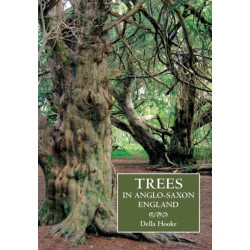
Trees in Anglo-Saxon England: Literature, Lore and Landscape (Bog, Paperback / softback, Engelsk)
A powerful exploration of trees in both the real and the imagined Anglo-Saxon landscape.
Levering: 6 - 9 hverdage -
Norman Rule in Normandy, 911-1144 (Bog, Paperback / softback, Engelsk)
A magisterial survey of Normandy from its origins in the tenth century to its conquest some two hundred years later.
Levering: 6 - 9 hverdage -
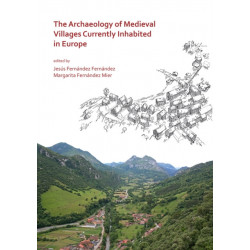
The Archaeology of Medieval Villages Currently Inhabited in Europe (Bog, Paperback / softback, Engelsk)
Archaeological interventions in European rural settlements have largely focussed on villages abandoned during the last millennium. Most... Læs mere
Levering: 6 - 9 hverdage -
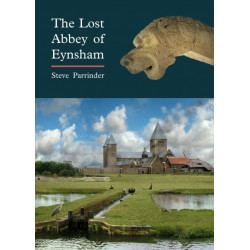
The Lost Abbey of Eynsham (Bog, Paperback / softback, Engelsk)
Eynsham was one of the few religious foundations in England in continuous use from the late Saxon period to the Dissolution. This book aims to rescue this important abbey from... Læs mere
Levering: 6 - 9 hverdage -
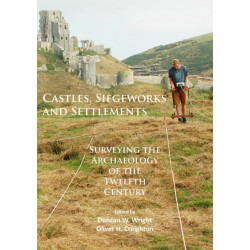
Castles, Siegeworks and Settlements: Surveying the Archaeology of the Twelfth Century (Bog, Paperback / softback, Engelsk)
This volume comprises thirteen reports detailing fieldwork undertaken by a research project which sought to assess the archaeological evidence of the period of conflict that took place in mid-twelfth-century England popularly known as ‘the Anarchy’.
Levering: 6 - 9 hverdage -
Hoards, grave goods, jewellery: Objects in hoards and in burial contexts during the Mongol invasion of Central-Eastern Europe (Bog, Paperback / softback, Engelsk)
This monograph examines one specific hoard horizon, which is connected to the Mongol invasion of Hungary (1241-42). Though this study focuses on hoards connected to the Mongol invasion, it is also relevant beyond this specific context.
Levering: 6 - 9 hverdage -
-
Women of the Twelfth Century, Eve and the Church: Eve and the Church (Bog, Paperback / softback, Engelsk)
Georges Duby is probably the most well-known historian of medieval Europe. This book is the final part of a major three-volume work on women in the... Læs mere
Levering: Skaffevare (forvent 14 - 30 hverdage) -
The Incas (Bog, Paperback / softback, Engelsk)
The Incas is a captivating exploration of one of the greatest civilizations ever seen. Seamlessly drawing on history, archaeology, and ethnography, this thoroughly updated new edition integrates advances made in hundreds of new studies conducted over the last decade.
Levering: 6 - 9 hverdage -
Medieval Heresy: Popular Movements from the Gregorian Reform to the Reformation (Bog, Paperback / softback, Engelsk)
This history of the great heretical movements of the middle ages provides an account of the dissent and protests made against the Medieval churches of Rome and Byzantium. It examines the origins and nature of these heresies, and how medieval churchmen grappled with deviation.
Levering: 6 - 9 hverdage -
History of Pedlars in Europe (Bog, Paperback / softback, Engelsk)
In this, the first sustained account of pedlars and peddling, Laurence Fontaine argues that pedlars and the networks they built up played a crucial role in the birth of the modern European economy.
Levering: Skaffevare (forvent 14 - 30 hverdage)