Der er 9+ underkategorier
 for at udvide
kategorilisten.
for at udvide
kategorilisten.
Før vor tidsregning

-
Greco-Scythian Art and the Birth of Eurasia: From Classical Antiquity to Russian Modernity (Bog, Hardback, Engelsk)
Drawing on evidence from archaeology, art history, and textual sources to contextualize Greco-Scythian metalwork... Læs mere
Levering: Skaffevare (forvent 14 - 30 hverdage) -
Historical and Religious Memory in the Ancient World (Bog, Hardback, Engelsk)
This book presents twelve interdisciplinary studies on memory and how ancient Mediterranean cultures configured their pasts in art, texts, and... Læs mere
Levering: Print on Demand (forvent 14 - 30 hverdage) -
Hellenistic Sanctuaries: Between Greece and Rome (Bog, Hardback, Engelsk)
This edited collection focuses on how the archaeological material of the Hellenistic and Republican periods can further our understanding of the way in which sanctuary spaces, politics, and rituals intersected in the Greek cities of this era.
Levering: Skaffevare (forvent 14 - 30 hverdage) -
Greece on Air: Engagements with Ancient Greece on BBC Radio, 1920s-1960s (Bog, Hardback, Engelsk)
Greece on Air offers the first substantial discussion of the fascinating history of creative and public engagements with ancient Greek literature, history, and thought via the BBC Radio, from the birth of domestic broadcasting in the 1920s up to the 1960s.
Levering: Skaffevare (forvent 14 - 30 hverdage) -
Holy Sites Encircled: The Early Byzantine Concentric Churches of Jerusalem (Bog, Hardback, Engelsk)
This volume explores the architecture of Jerusalem's round and octagonal churches, the perceptions and architectural models that stood behind it, and their impact on both ideas and design in future architecture.
Levering: Skaffevare (forvent 14 - 30 hverdage) -
The Iliad in a Nutshell: Visualizing Epic on the Tabulae Iliacae (Bog, Hardback, Engelsk)
A new, illustrated study of the Iliac tablets, a group of objects inscribed in miniature with epic episodes. Like the tablets themselves,... Læs mere
Levering: Print on Demand (forvent 14 - 30 hverdage) -
Deuteronomy 28 and the Aramaic Curse Tradition (Bog, Hardback, Engelsk)
This study considers the relationship of Deuteronomy 28 to the curse traditions of the ancient Near East. It focuses on the linguistic and cultural means of the transmission of these traditions to the book of Deuteronomy.
Levering: Skaffevare (forvent 14 - 30 hverdage) -
Divine Powers in Late Antiquity (Bog, Hardback, Engelsk)
A collection of original essays on the concept of divine power(s) in Late Antiquity. It investigates how four major figures of Neoplatonism (Plotinus, Porphyry,... Læs mere
Levering: Print on Demand (forvent 14 - 30 hverdage) -
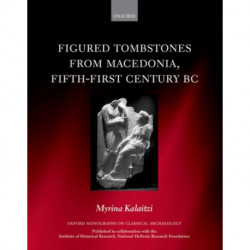
Figured Tombstones from Macedonia, Fifth-First Century BC (Bog, Hardback, Engelsk)
This volume brings together for the first time ancient Macedonian stone funerary monuments, or stelai, which feature figured representations of... Læs mere
Levering: Print on Demand (forvent 14 - 30 hverdage) -
Edward Gibbon and the Shape of History (Bog, Hardback, Engelsk)
Edward Gibbon and the Shape of History offers a detailed examination of Edward Gibbon's History of the Decline and Fall of the Roman Empire as a work of scholarship and of literature.
Levering: Skaffevare (forvent 14 - 30 hverdage) -
Collectors, Scholars, and Forgers in the Ancient World: Object Lessons (Bog, Hardback, Engelsk)
This volume focuses on how ancient Greek and Roman fascination with works of art, texts, and antiquarian objects gave rise to the... Læs mere
Levering: Skaffevare (forvent 14 - 30 hverdage) -
Babatha's Orchard: The Yadin Papyri and an Ancient Jewish Family Tale Retold (Bog, Hardback, Engelsk)
This work considers the story behind papyri discovered in 1961 in the Cave of Letters by the Dead Sea. The archive contains various contracts and deeds entered into by a Jewish woman named Babatha, daughter of a land owner named Shim'on, at the end of the first century.
Levering: Print on Demand (forvent 14 - 30 hverdage)