Der er 5+ underkategorier
 for at udvide
kategorilisten.
for at udvide
kategorilisten.
Forhistorisk tid
Visning: Type : Alle | Sprog : Alle | Format : Alle

-
Between Ecstasy and Truth: Interpretations of Greek Poetics from Homer to Longinus (Bog, Paperback / softback, Engelsk)
This volume's fundamental concern is with how the Greeks conceptualized the experience of poetry and debated the values... Læs mere
Levering: Skaffevare (forvent 14 - 30 hverdage) -
Different Times? Archaeological and Environmental Data from Intra-Site and Off-Site Sequences: Proceedings of the XVIII UISPP World Congress (4-9 June 2018, Paris, France) Volume 4, Session II-8 (Bog, Paperback / softback, Engelsk)
Proceedings from Session II-8 of the XVIII UISPP Congress, Paris, 2018,... Læs mere
Levering: 6 - 9 hverdage -
Stone Age Rampage (Bog, Paperback / softback, Engelsk)
Join Tom on an incredible treasure hunt through time and battle history’s mightiest warriors. The tenth book in an action-packed, time-travelling series – perfect for fans of Beast Quest.
Levering: 6 - 9 hverdage -
KS2 History is Easy: Stone Age to Iron Age (Studies, Activities & Questions) (Bog, Paperback / softback, Engelsk)Levering: 6 - 9 hverdage
-
Prehistoric Life: Dinosaurs (Bog, Hardback, Engelsk)
Discover the 'Age of the Dinosuars' with this highly detailed and accurate book
Levering: 6 - 9 hverdage -
The Neolithic of Mainland Scotland (Bog, Paperback / softback, Engelsk)
Archaeologists show us how the Neolithic human lived in mainland Scotland, with new research, first publication of key datasets and radical reinterpretation of both burial practices and ceramics across 3rd millennium BC mainland Scotland.
Levering: 6 - 9 hverdage -
The Prehistory of Britain and Ireland (Bog, Paperback / softback, Engelsk)
This book brings together the results of fieldwork and academic research to highlight the achievements of prehistoric people who lived in these islands between... Læs mere
Levering: Print on Demand (forvent 14 - 30 hverdage) -
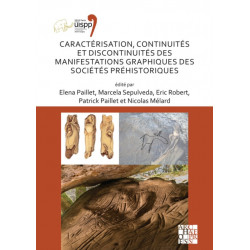
Caracterisation, continuites et discontinuites des manifestations graphiques des societes prehistoriques: Proceedings of the XVIII UISPP World Congress (4-9 June 2018, Paris, France) Volume 3, Session XXVIII-4 (Bog, Paperback / softback, Fransk)
Papers address the question of exchange and mobility in prehistoric... Læs mere
Levering: 6 - 9 hverdage -
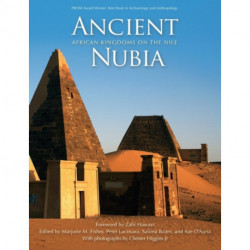
Ancient Nubia: African Kingdoms on the Nile (Bog, Hardback, Engelsk)
Gloriously illustrated and impressive in scope, this book represents a comprehensive overview of ancient Nubia.
Levering: Skaffevare (forvent 14 - 30 hverdage) -
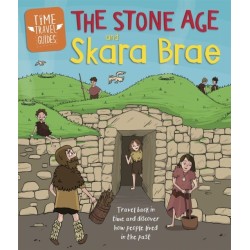
The Time Travel Guides: The Stone Age and Skara Brae (Bog, Paperback / softback, Engelsk)
Explore the past and discover history with a time travel guidebook
Levering: 6 - 9 hverdage -
-
Mochlos IIC: Period IV. The Mycenaean Settlement and Cemetery: The Human Remains and Other Finds (Bog, Hardback, Engelsk)
Rarely in Crete are a settlement and its cemetery both preserved. Excavations carried out at the Late Minoan... Læs mere
Levering: 6 - 9 hverdage