for at udvide
kategorilisten.
for at udvide
kategorilisten.
- Afrikanske sprog
- Afroasiatiske sprog
- Amerikanske urfolks sprog
- Emojis
- Indiske, østindoeuropæiske og dravidiske sprog
- Indoeuropæiske sprog
- Oceanesiske- og austronesiske sprog
- Punktskrift og andre taktile alfabeter
- Sign / Signed languages
- Uralske sprog, altaiske sprog, palæosibiriske sprog
- Øst- og sydøstasiatiske sprog
- Øvrige sprog
Sprogkvalifikatorer
Visning: Type : Alle | Sprog : Alle | Format : Alle

-
Flattery in Seneca the Younger: Theory & Practice (Bog, Hardback, Engelsk)
Flattery in Seneca the Younger explores the discourse of flattery in Seneca's philosophical texts, and analyses the extent to which Seneca developed a theory of adulation. Martina Russo maps a phenomenology of flattery, tracing its external manifestations in Senecan philosophy.
Levering: Print on Demand (forvent 14 - 30 hverdage) -
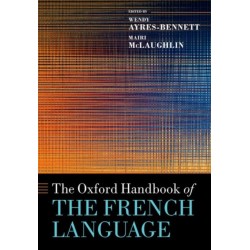
The Oxford Handbook of the French Language (Bog, Hardback, Engelsk)
This volume provides the first comprehensive reference work in English on the French language in all its facets. It offers a wide-ranging approach to the rich,... Læs mere
Levering: Skaffevare (forvent 14 - 30 hverdage) -
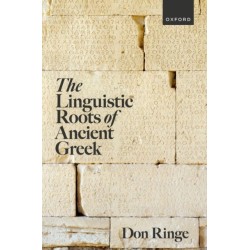
The Linguistic Roots of Ancient Greek (Bog, Hardback, Engelsk)
This book traces the development of Greek from Proto-Indo-European to around the 5th century BC, drawing on all the tools of scientific historical and comparative... Læs mere
Levering: 6 - 9 hverdage -
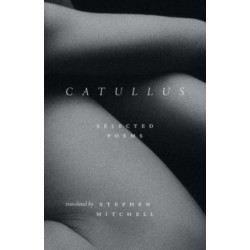
Catullus: Selected Poems (Bog, Hardback, Engelsk)
A vivid and musical rendering of the poetry of Catullus, whose passionate verses have captivated readers for centuries
Levering: 6 - 9 hverdage -
Pudd'nhead Wilson: The Authoritative Edition, with Those Extraordinary Twins (Bog, Hardback, Engelsk)Levering: Skaffevare (forvent 14 - 30 hverdage)
-
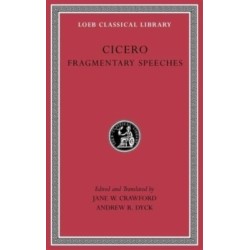
Fragmentary Speeches (Bog, Hardback, Engelsk)
Although Cicero’s oratory is well attested—of 106 known speeches, fifty-eight survive intact or in large part—the sixteen speeches that survive only in quotations by later authors... Læs mere
Levering: 6 - 9 hverdage -
The Great Gatsby: The 1926 Broadway Script (Bog, Hardback, Engelsk)
The first-ever print edition of the script for the 1926 Broadway adaptation of The Great Gatsby. Owen Davis, 1923 Pulitzer Prize winner, and George Cukor, later... Læs mere
Levering: 6 - 9 hverdage -
Teaching English as an International Language (Bog, Hardback, Engelsk)
This Element offers a comprehensive account of the unprecedented spread of English as a global language by taking historical, sociolinguistic, and... Læs mere
Levering: Print on Demand (forvent 14 - 30 hverdage) -
Monotheism and Narrative Development of the Divine Character in the Hebrew Bible (Bog, Hardback, Engelsk)
The development of a divine character through the course of a sustained narrative with a sequential plot aided the move... Læs mere
Levering: Print on Demand (forvent 14 - 30 hverdage) -
Peer Assessment in Writing Instruction (Bog, Hardback, Engelsk)
This Element traces the evolution of peer assessment in writing instruction and illustrates how peer assessment can be used to promote the teaching and learning of writing in various sociocultural and educational contexts.
Levering: Print on Demand (forvent 14 - 30 hverdage) -
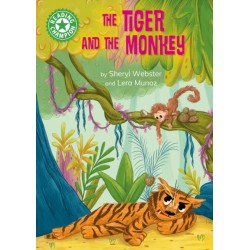
Reading Champion: The Tiger and the Monkey: Independent Reading Green 5 (Bog, Hardback, Engelsk)
This story is part of Reading Champion, a series carefully linked to book bands to encourage independent reading skills, developed with Dr Sue Bodman and Glen Franklin of UCL Institute of Education (IOE)
Levering: 6 - 9 hverdage -
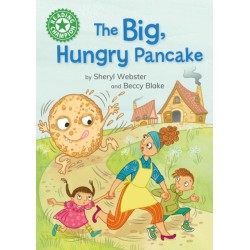
Reading Champion: The Big, Hungry Pancake: Independent reading Green 5 (Bog, Hardback, Engelsk)
This story is part of Reading Champion, a series carefully linked to book bands to encourage independent reading skills, developed with Dr Sue Bodman and Glen Franklin of UCL Institute of Education (IOE)
Levering: 6 - 9 hverdage