Oldgræsk
Visning: Type : Alle | Sprog : Alle | Format : Alle

-
Bemærk: Kan ikke leveres før jul.
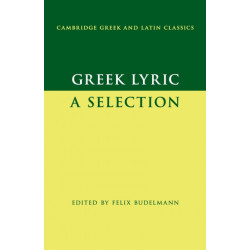
Greek Lyric: A Selection (Bog, Paperback / softback, Engelsk)Provides a varied selection from the attractive corpus of Greek lyric, including well-known as well as some lesser studied poems. The original Greek text is accompanied by a... Læs mere
Levering: 6 - 9 hverdage -
Bemærk: Kan ikke leveres før jul.
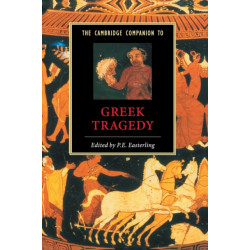
The Cambridge Companion to Greek Tragedy (Bog, Paperback / softback, Engelsk)The twelve essays in this distinguished collection consider the importance of ancient Greek tragedy as a creative medium. The three main emphases are on tragedy... Læs mere
Levering: Print on Demand (forvent 14 - 30 hverdage) -
Bemærk: Kan ikke leveres før jul.
Three Plays by Aristophanes: Staging Women (Bog, Paperback / softback, Engelsk)Levering: Skaffevare (forvent 14 - 30 hverdage) -
Bemærk: Kan ikke leveres før jul.
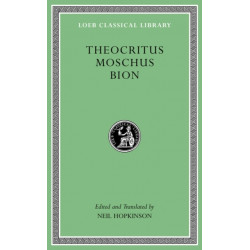
Theocritus. Moschus. Bion (Bog, Hardback, Engelsk)Theocritus (early third century BC) was the inventor of the bucolic genre, also known as pastoral. The present edition of his work, along with that of his successors Moschus (fl.... Læs mere
Levering: 6 - 9 hverdage -
Bemærk: Kan ikke leveres før jul.
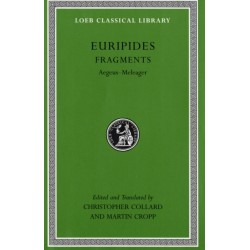
Fragments: Aegeus–Meleager (Bog, Hardback, Engelsk)Euripides (ca. 485–406 BC) has been prized in every age for his emotional and intellectual drama. Eighteen of his ninety or so plays survive complete, including Medea,... Læs mere
Levering: 6 - 9 hverdage -
Bemærk: Kan ikke leveres før jul.
Origins of the Greek Verb (Bog, Hardback, Engelsk)By applying various techniques of linguistic reconstruction to a wide range of philological data, Origins of the Greek Verb presents a completely new and uniquely detailed... Læs mere
Levering: Print on Demand (forvent 14 - 30 hverdage) -
Bemærk: Kan ikke leveres før jul.
Aristophanes: Frogs (Bog, Paperback / softback, Engelsk)Treating ancient plays as living drama.
Levering: 6 - 9 hverdage -
Bemærk: Kan ikke leveres før jul.
Greek to GCSE: Part 2: Revised edition for OCR GCSE Classical Greek (9–1) (Bog, Paperback / softback, Engelsk)Levering: 6 - 9 hverdage -
Bemærk: Kan ikke leveres før jul.
Sophocles: Antigone and other Tragedies: Antigone, Deianeira, Electra (Bog, Hardback, Engelsk)These original and distinctive verse translations convey the vitality of Sophocles' poetry and the vigour of the plays in performance, doing justice to both the sound of the poetry and the theatricality of the tragedies.
Levering: Skaffevare (forvent 14 - 30 hverdage) -
Bemærk: Kan ikke leveres før jul.
Scribes and Scholars: A Guide to the Transmission of Greek and Latin Literature (Bog, Paperback / softback, Engelsk)It explores how the texts from classical Greece and Rome have survived and gives an account of the reasons why it was... Læs mere
Levering: Print on Demand (forvent 14 - 30 hverdage) -
Bemærk: Kan ikke leveres før jul.
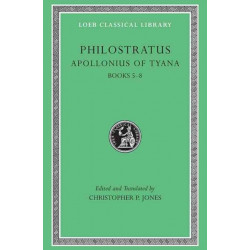
Apollonius of Tyana, Volume II: Books 5–8 (Bog, Hardback, Engelsk)In his Life of Apollonius Philostratus (second to third century AD) chronicles the miracles of first-century AD teacher, religious reformer, and perceived rival to Jesus of Nazareth, Apollonius of Tyana.
Levering: 6 - 9 hverdage