Der er 1 underkategori
 for at udvide
kategorilisten.
for at udvide
kategorilisten.
Italiensk

-
Bemærk: Kan ikke leveres før jul.
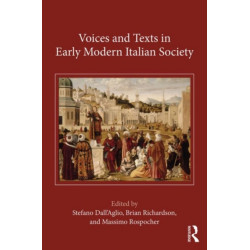
Voices and Texts in Early Modern Italian Society (Bog, Hardback, Engelsk)Levering: Skaffevare (forvent 14 - 30 hverdage) -
Bemærk: Kan ikke leveres før jul.
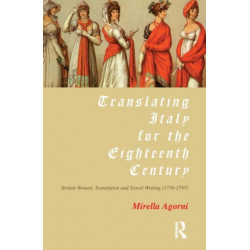
Translating Italy for the Eighteenth Century: British Women, Translation and Travel Writing (1739-1797) (Bog, Paperback / softback, Engelsk)Translating Italy in the Eighteenth Century offers a historical analysis of the role played by translation in that complex redefinition of women's writing that was taking place in Britain in the second half of the eighteenth century
Levering: Skaffevare (forvent 14 - 30 hverdage) -
Bemærk: Kan ikke leveres før jul.
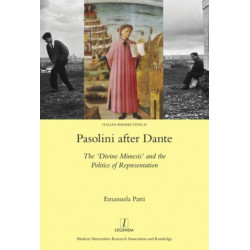
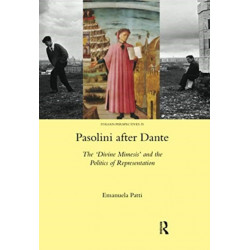
Pasolini after Dante: The 'Divine Mimesis' and the Politics of Representation (Bog, Hardback, Engelsk)What role did Dante play in the work of Pier Paolo Pasolini (1922-1975)?
Levering: Skaffevare (forvent 14 - 30 hverdage) -
Bemærk: Kan ikke leveres før jul.
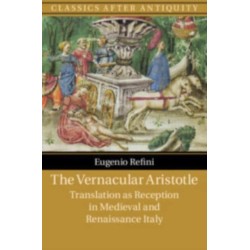
The Vernacular Aristotle: Translation as Reception in Medieval and Renaissance Italy (Bog, Paperback / softback, Engelsk)Explores the ways in which Aristotle's legacy was appropriated and reshaped by vernacular readers in Medieval and... Læs mere
Levering: Print on Demand (forvent 14 - 30 hverdage) -
Bemærk: Kan ikke leveres før jul.
Female Cultural Production in Modern Italy: Literature, Art and Intellectual History (Bog, Hardback, Engelsk)This book is the first critical interdisciplinary examination in English of Italian women’s contributions to intellectual, artistic, and cultural production in modern Italy.
Levering: Skaffevare (forvent 14 - 30 hverdage) -
Bemærk: Kan ikke leveres før jul.
The Poetry of Dante's Paradiso: Lives Almost Divine, Spirits that Matter (Bog, Hardback, Engelsk)This book argues that Paradiso – Dante’s vision of Heaven – is not simply affirmative. The book highlights and addresses a... Læs mere
Levering: Skaffevare (forvent 14 - 30 hverdage) -
Bemærk: Kan ikke leveres før jul.
The Routledge Introduction to Italian Linguistics (Bog, Hardback, Engelsk)The Routledge Introduction to Italian Linguistics offers a systematic and comprehensive overview of the linguistic structure of the Italian language, including phonetics and phonology, morphology and morphosyntax, syntax, semantics, and sociolinguistics.
Levering: Skaffevare (forvent 14 - 30 hverdage) -
Bemærk: Kan ikke leveres før jul.
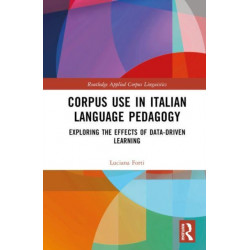
Corpus Use in Italian Language Pedagogy: Exploring the Effects of Data-Driven Learning (Bog, Hardback, Engelsk)This volume provides a comprehensive overview of corpus use in Italian L2 Pedagogy and shows how corpora can be used... Læs mere
Levering: Skaffevare (forvent 14 - 30 hverdage) -
Bemærk: Kan leveres før jul.
-
Bemærk: Kan ikke leveres før jul.
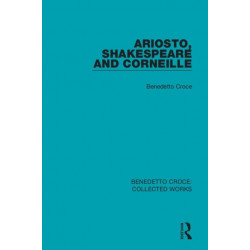
Ariosto, Shakespeare and Corneille (Bog, Hardback, Engelsk)Originally published in 1921 this volume consists of the first of Croce’s literary criticisms to be published in English and as well as a section on Shakespeare, it contains unique essays on Ariosto and Corneille which together inaugurated a new era in literary criticism.
Levering: Skaffevare (forvent 14 - 30 hverdage) -
Bemærk: Kan ikke leveres før jul.
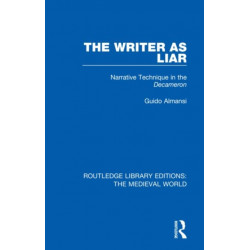
The Writer as Liar: Narrative Technique in the Decameron (Bog, Hardback, Engelsk)Originally published in 1975, The Writer as Liar examines the Decameron and argues that Boccaccio’s story telling depends for its success not on... Læs mere
Levering: Skaffevare (forvent 14 - 30 hverdage) -
Bemærk: Kan ikke leveres før jul.
Pasolini after Dante: The 'Divine Mimesis' and the Politics of Representation (Bog, Paperback / softback, Engelsk)What role did Dante play in the work of Pier Paolo Pasolini (1922-1975)?
Levering: Skaffevare (forvent 14 - 30 hverdage)