Bertrand Russell Forfatter
-
Freedom and Organisation, 1814-1914 (Bog, Hardback, Engelsk)
Charts the struggle between freedom and control, two determining forces in nineteenth century history, from the defeat of Napoleon and the Congress of Vienna to the lead-up to the First World War.
Levering: Skaffevare (forvent 14 - 30 hverdage) -
Mortals and Others, Volume II: American Essays 1931-1935 (Bog, Hardback, Engelsk)
Presents a further selection of essays, ranging from the politically correct, to the perfectly obscure: from The Prospects of Democracy to Men Versus Insects.
Levering: Skaffevare (forvent 14 - 30 hverdage) -
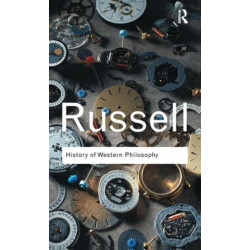
History of Western Philosophy (Bog, Hardback, Engelsk)
History Of Western Philosophy was published in 1946. A dazzlingly ambitious project, it remains unchallenged to this day as the ultimate introduction to Western philosophy.
Levering: Skaffevare (forvent 14 - 30 hverdage) -
My Philosophical Development (Bog, Hardback, Engelsk)
An ideal philosophical companion volume to Russell's own Autobiography, My Philosophical Development is testament to one of the greatest minds of the 20th century. This Routledge Classics edition includes a new Foreword by Nicholas Griffin.
Levering: Skaffevare (forvent 14 - 30 hverdage) -
The Analysis of Mind (Bog, Hardback, Engelsk)
A vital book for understanding Russell's philosophy, which explores fundamental questions about the mind, including desire and feeling; psychological and physical laws; sensations... Læs mere
Levering: Skaffevare (forvent 14 - 30 hverdage) -
The Analysis of Matter (Bog, Hardback, Engelsk)
The Analysis of Matter is the product of thirty years of thinking by one of the twentieth century's best-known philosophers. This Routledge Classics edition includes the 1992 Introduction by John G. Slater.
Levering: Skaffevare (forvent 14 - 30 hverdage) -
Introduction to Mathematical Philosophy (Bog, Hardback, Engelsk)
First published in 1919, Introduction to Mathematical Philosophy shows Russell drawing on his formidable knowledge of philosophy and mathematics to write a brilliant introduction to the subject. This Routledge Classics edition includes a new Foreword by Michael Potter.
Levering: Skaffevare (forvent 14 - 30 hverdage) -
An Essay on the Foundations of Geometry (Bog, Hardback, Engelsk)
An Essay on the Foundations of Geometry was first published in 1897 and marks Bertrand Russell's first foray into analytic philosophy, a movement in which Russell... Læs mere
Levering: Skaffevare (forvent 14 - 30 hverdage) -
The Scientific Outlook (Bog, Hardback, Engelsk)
Russell's thinking on the promise and threat of scientific progress. Considers questions fundamental to an understanding of science and includes brilliant discussions of scientific figures, including Aristotle, Galileo and Darwin.
Levering: Skaffevare (forvent 14 - 30 hverdage) -
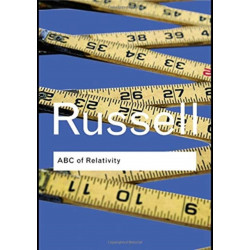
ABC of Relativity (Bog, Hardback, Engelsk)
As relevant today as it was on first publication, the ABC of Relativity is a masterwork of scientific popularisation and an accessible introduction to Einstein’s theory of relativity.
Levering: Skaffevare (forvent 14 - 30 hverdage) -
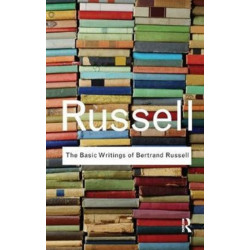
The Basic Writings of Bertrand Russell (Bog, Hardback, Engelsk)
"Basic Writings of Bertrand Russell".
Levering: Skaffevare (forvent 14 - 30 hverdage) -
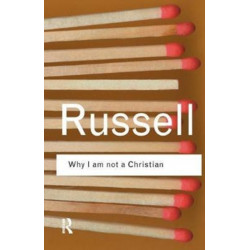
Why I am not a Christian: and Other Essays on Religion and Related Subjects (Bog, Hardback, Engelsk)
Why I am not a Christian is considered one of the most blasphemous philosophical documents ever written, and at a time when we have faith schools and wars over religious beliefs, its message today couldn't be more relevant.
Levering: Skaffevare (forvent 14 - 30 hverdage)