Bertrand Russell Forfatter
Visning: Type : Alle | Sprog : Alle | Format : Alle
-
The Collected Papers of Bertrand Russell, Volume 14: Pacifism and Revolution, 1916-18 (Bog, Hardback, Engelsk)
During World War I, Russell was political commentator for "The Tribune", a publication of the No-Conscription Fellowship. This volume contains many short papers from the period reflecting his response to the growing crisis.
Levering: Skaffevare (forvent 14 - 30 hverdage) -
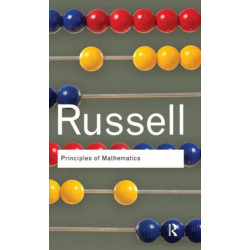
Principles of Mathematics (Bog, Hardback, Engelsk)
A precursor to Russell’s famous Principa Mathematica, this is one of the most original and comprehensive treatises on the logical foundation of mathematics available today.
Levering: Skaffevare (forvent 14 - 30 hverdage) -
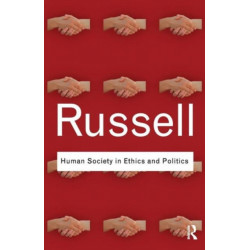
Human Society in Ethics and Politics (Bog, Paperback / softback, Engelsk)
Ethics are necessary because of the conflict between intelligence and impulse – if one were without the other, there would be no place for ethics. This is Russell’s account of his political position and an absorbing exploration of the ways individuals become socially purposeful.
Levering: 6 - 9 hverdage -
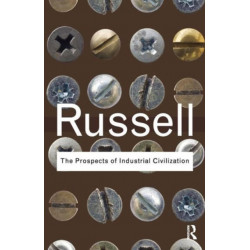
The Prospects of Industrial Civilization (Bog, Paperback / softback, Engelsk)
Considered to be one of his most ambitious works, Russell argues that industrialism is a threat to human freedom, since it is fundamentally linked with nationalism. This is rare glimpse into often-ignored subtleties of Russell’s political thought.
Levering: Skaffevare (forvent 14 - 30 hverdage) -
Mortals and Others, Volume I: American Essays 1931-1935 (Bog, Paperback / softback, Engelsk)
A collection of essays and journalism covering a wide range of topics from balancing prosperity and public expenditure to the mental differences between boys and girls, revealing the humourous aspect of Russell's personality.
Levering: Skaffevare (forvent 14 - 30 hverdage) -
On Education: Especially in Early Childhood (Bog, Paperback / softback, Engelsk)Levering: Skaffevare (forvent 14 - 30 hverdage)
-
Human Society in Ethics and Politics (Bog, Paperback / softback, Engelsk)
In this book Russell gives a logical analysis of ethical concepts and principles. He goes on to relate his ethical conclusions to politics and religion. It is his only extended statement of his later views on ethics.
Levering: Skaffevare (forvent 14 - 30 hverdage) -
Freedom and Organisation, 1814-1914 (Bog, Hardback, Engelsk)
Charts the struggle between freedom and control, two determining forces in nineteenth century history, from the defeat of Napoleon and the Congress of Vienna to the lead-up to the First World War.
Levering: Skaffevare (forvent 14 - 30 hverdage) -
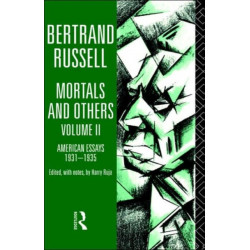
Mortals and Others, Volume II: American Essays 1931-1935 (Bog, Hardback, Engelsk)
Presents a further selection of essays, ranging from the politically correct, to the perfectly obscure: from The Prospects of Democracy to Men Versus Insects.
Levering: Skaffevare (forvent 14 - 30 hverdage) -
Why Men Fight (Bog, Paperback / softback, Engelsk)
This formidable work - also published under the title of Principals of Social Reconstruction - discusses war, pacifism, reason, impulse and personal liberty, and greatly contributed to Russell’s fame as a formidable social critic and anti-war activist.
Levering: 6 - 9 hverdage -
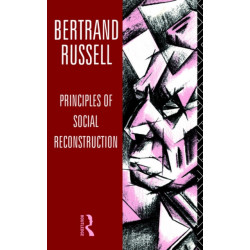
Principles of Social Reconstruction (Bog, Paperback / softback, Engelsk)
Originally entitled Why Men Fight, this work is generally seen as the fullest expression of Russell's political philosophy. The ideas laid out here greatly contributed to Russell's fame as a social critic and anti-war activist.
Levering: Skaffevare (forvent 14 - 30 hverdage) -
Authority and the Individual (Bog, Paperback / softback, Engelsk)
In the first of the BBC's famous Reith Lectures, Russell tackles what is still one of the most hotly debated issues of the twentieth century: the conflict between law, order and authority and the rights of each individual man and woman.
Levering: Skaffevare (forvent 14 - 30 hverdage)