C. G. Jung Forfatter
Visning: Type : Alle | Sprog : Alle | Format : Alle
-
The Freud/Jung Letters (Bog, Hardback, Engelsk)
Unavailable for many years the famous Freud/Jung Letters reveal two of the twentieth century's greatest minds at work.
Levering: Skaffevare (forvent 14 - 30 hverdage) -
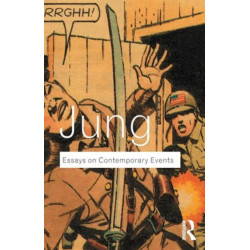
Essays on Contemporary Events: 1936-1946 (Bog, Paperback / softback, Engelsk)
Psychological reflections about dictatorship and its supporters are urgently needed today and Jung explores the problems for psychotherapists at such times and shows how they can help in the process of renewal and reconstruction.
Levering: 6 - 9 hverdage -
Jung on the East (Bog, Paperback / softback, Engelsk)
Jung was deeply interested in Eastern ideas and texts. John Clarke's selection and illuminating introduction will enable the reader to get the most out of Jung's writings in this highly popular area.
Levering: Skaffevare (forvent 14 - 30 hverdage) -
The Practice of Psychotherapy: Second Edition (Bog, Hardback, Engelsk)
The Practice of Psychotherapy brings together Jung's essays on general questions of analytic therapy and dream analysis. It also contains his profoundly interesting parallel between the transference phenomena and alchemical processes.
Levering: Skaffevare (forvent 14 - 30 hverdage) -
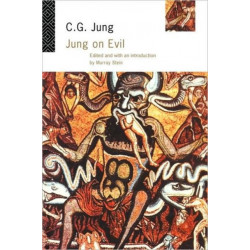
Jung on Evil (Bog, Paperback / softback, Engelsk)
Murray Stein's selection of Jung's writings on evil and his clear and concise introduction provides an accessible account of Jung's thoughts on the topic.
Levering: Skaffevare (forvent 14 - 30 hverdage) -
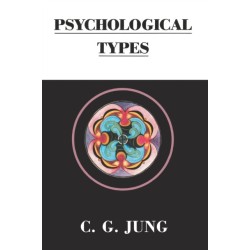
Psychological Types (Bog, Paperback / softback, Engelsk)
Essential reading for anyone requiring a proper understanding of Jung's psychology, this was the work in which Jung set out his theory of psychological types as a means of understanding ourselves and the world around us.
Levering: 6 - 9 hverdage -
Psychological Types (Bog, Hardback, Engelsk)
Essential reading for anyone requiring a proper understanding of Jung's psychology, this was the work in which Jung set out his theory of psychological types as a means of understanding ourselves and the world around us.
Levering: Skaffevare (forvent 14 - 30 hverdage) -
Letters of C. G. Jung: Volume 2, 1951-1961 (Bog, Hardback, Engelsk)
From some 1,600 letters written by Jung between the years 1906-1961, the editors have selected over 1,000. Volume 2 contains 460 letters written between 1951 and 1961, during the last years of Jung's life.
Levering: Skaffevare (forvent 14 - 30 hverdage) -
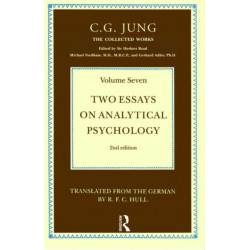
Two Essays on Analytical Psychology (Bog, Hardback, Engelsk)
This volume from the Collected Works of C.G. Jung has become known as perhaps the best introduction to Jung's work. In these famous essays he presented the essential core of his system.
Levering: Skaffevare (forvent 14 - 30 hverdage) -
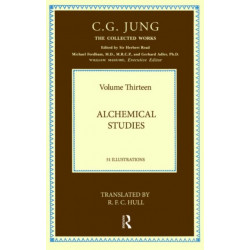
Collected Works of C.G. Jung: Alchemical Studies (Volume 13) (Bog, Hardback, Engelsk)
The psychological and religious implications of alchemy were Jung's major preoccupation during the last thirty years of his life. This collection of shorter Alchemial Studies has special value as an introduction to Jung's work on alchemy.
Levering: Skaffevare (forvent 14 - 30 hverdage) -
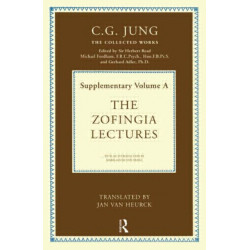
The Zofingia Lectures: Supplementary Volume A (Bog, Hardback, Engelsk)
The Zofingia Club was a discussion group to which C.G. Jung belonged as a medical student: in 1897 he became Chairman, and gave five lectures. These have survived and are published here in a supplementary volume to the Collected Works.
Levering: Skaffevare (forvent 14 - 30 hverdage) -
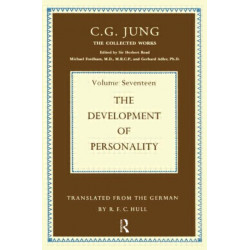
The Development of Personality (Bog, Hardback, Engelsk)
A unique contribution to the psychology of childhood in which Jung outlined his theory of child development and individuation, stressing the importance of the psychology of parents and teachers in a child's development.
Levering: Skaffevare (forvent 14 - 30 hverdage)