C. G. Jung Forfatter
Visning: Type : Alle | Sprog : Alle | Format : Alle
-
The Collected Works of C.G. Jung (Bog, Hardback, Engelsk)
Features essays on aspects of analytical therapy, specifically the transference, abreaction, and dream analysis. This title contains an additional essay, "The Realities of Practical Psychotherapy", found among C G Jung's posthumous papers.
Levering: Skaffevare (forvent 14 - 30 hverdage) -
Psychology of Yoga and Meditation: Lectures Delivered at ETH Zurich, Volume 6: 1938–1940 (Bog, Hardback, Engelsk)
Jung's lectures on the psychology of Eastern spirituality - now available for the first time
Levering: 6 - 9 hverdage -
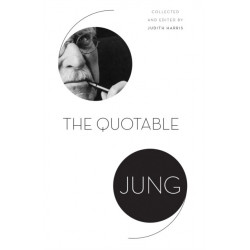
The Quotable Jung (Bog, Hardback, Engelsk)
The definitive one-volume collection of Jung quotations
Levering: Skaffevare (forvent 14 - 30 hverdage) -
Collected Works of C.G. Jung, Volume 15: Spirit in Man, Art, And Literature (Bog, Hardback, Engelsk)
Features nine essays, written between 1922 and 1941, on Paracelsus, Freud, Picasso, the sinologist Richard Wilhelm, Joyce's "Ulysses", artistic creativity generally, and the source of artistic creativity in archetypal structures.
Levering: Skaffevare (forvent 14 - 30 hverdage) -
The Zofingia Lectures: (Supplementary Volume A of the Collected Works of C.G. Jung) (Bog, Hardback, Engelsk)
During his undergraduate years (1896-1899) at Basel University, C G Jung delivered lectures to his student fraternity, the Zofingia. Dwelling on theology, psychology, spiritism, and philosophy, this title illuminates Jung's later thought.
Levering: Skaffevare (forvent 14 - 30 hverdage) -
The Collected Works of C.G. Jung (Bog, Paperback, Engelsk)
Offers a complete revision of "Psychology of the Unconscious" (original, 1911-12).
Levering: Skaffevare (forvent 14 - 30 hverdage) -
The Collected Works of C.G. Jung (Bog, Paperback, Engelsk)
Includes nine essays, written between 1922 and 1941, on Paracelsus, Freud, Picasso, the sinologist Richard Wilhelm, Joyce's "Ulysses", artistic creativity generally, and the source of artistic creativity in archetypal structures.
Levering: Skaffevare (forvent 14 - 30 hverdage) -
The Gnostic Jung: Selections From The Writings of C.G. Jung and His Critics (Bog, Paperback, Engelsk)
Gnosticism, together with alchemy, was for C G Jung the chief prefiguration of his analytical psychology. Jung did not simply... Læs mere
Levering: Skaffevare (forvent 14 - 30 hverdage) -
Jung on Evil (Bog, Paperback, Engelsk)
Well-known for his articulation of the 'shadow side' of human individuality and culture, C G Jung wrote a great deal about the question of evil throughout his life. This title views the... Læs mere
Levering: Skaffevare (forvent 14 - 30 hverdage) -
The Collected Works of C.G. Jung (Bog, Hardback, Engelsk)
A comprehensive index by paragraph numbers. It treats certain subjects in separate sub-indexes within the General Index, including alchemy, animals, the Bible, colors, Freud, Jung, and numbers.
Levering: Skaffevare (forvent 14 - 30 hverdage) -
Jung on Christianity (Bog, Paperback, Engelsk)
CG Jung, son of a Swiss Reformed pastor, used his Christian background throughout his career to illuminate the psychological roots of all religions. This work relates Jung's... Læs mere
Levering: Skaffevare (forvent 14 - 30 hverdage) -
The Collected Works of C.G. Jung (Bog, Paperback, Engelsk)
A work in the domain of practical psychology. It discusses various aspects of consciousness, the various attitudes the conscious mind might take toward the world, and thus constitutes a psychology of consciousness regarded from what might be called a clinical angle.
Levering: Skaffevare (forvent 14 - 30 hverdage)