Friedrich Nietzsche Forfatter
-
-
Ecce Homo: How One Becomes What One is (Bog, Paperback / softback, Engelsk)
In late 1888, only weeks before his final collapse into madness, Nietzsche (1844-1900) set out to compose his autobiography, and 'Ecce Homo' remains one of the most intriguing yet bizarre examples of the genre ever written.
Levering: 6 - 9 hverdage -
The Birth of Tragedy (Bog, Paperback / softback, Engelsk)
Philosopher's classic study declares that Greek tragedy achieved greatness through a fusion of elements of Apollonian restraint and control with Dionysian components of passion and the irrational.
Levering: 6 - 9 hverdage -
The Antichrist (Bog, Paperback / softback, Engelsk)
One of philosophy's most accessible and easily understood works, this denunciation of Christianity and organized religion consists of 62 brief chapters, each an aphorism that advances the philosopher's argument.
Levering: 6 - 9 hverdage -
Human, All Too Human (Bog, Paperback / softback, Engelsk)
A series of 638 aphorisms and discourses on subjects ranging from art, arrogance and boredom to passion, science, vanity, women and youth. Nietzsche himself described this work as "the monument of a crisis", since it was written at a time of major upheaval in his life.
Levering: 6 - 9 hverdage -
Richard Wagner: I. Richard Wagner i Bayreuth II. Tilfældet Wagner III. Nietzsche kontra Wagner (Bog, Hæftet, Dansk)
Bogen indeholder den første samlede danske udgivelse af Friedrich Nietzsches tre essays om Richard Wagner, oversat af Jacob Jonia.Nietzsche mødte første gang Wagner ved en middag den 17.... Læs mere
Levering: 2 - 5 hverdageNedsat pris! -
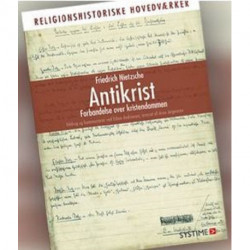
Antikrist - Forbandelse over kristendommen: Religionshistoriske hovedværker i uddrag (Bog, Hæftet, Dansk)
Nietzsches Antikrist er det klassiske eksempel på kristendomskritikken, som har påvirket ateisme-debatten lige siden bogens udgivelse i 1895. Den gengiver i... Læs mere
Levering: 2 - 5 hverdage -
Richard Wagner. Et musikantproblem (Bog, Hæftet, Dansk)
Den verdensberømte filosof Friedrich Nietzsches angreb på komponisten Richard Wagner, der ifølge Nietzsche havde involveret sig selv for meget i den populistiske... Læs mere
Status: Print on Demand - Forvent op til 20 dages leveringstid.Nedsat pris! -
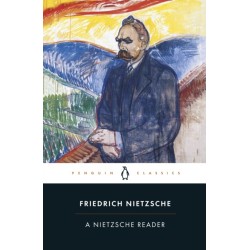
A Nietzsche Reader (Bog, Paperback / softback, Engelsk)
The literary career of Friedrich Nietzsche (1844-1900) spanned less than twenty years, but no area of intellectual inquiry was left untouched by his iconoclastic genius. This title offers a selection of Nietzsche's writings.
Levering: 6 - 9 hverdage -
Nietzsche: Writings from the Late Notebooks (Bog, Paperback / softback, Engelsk)
This volume offers, for the first time, accurate translations of a selection of writings from Nietzsche's late notebooks, dating from his last productive years... Læs mere
Levering: Print on Demand (forvent 14 - 30 hverdage) -
Gay Science (Bog, Paperback / softback, Engelsk)
The largest collection of Nietzsche's published poetry, this volume also offers an extensive, sophisticated treatment of his core philosophical themes and views as well as his most influential ideas.
Levering: 6 - 9 hverdage -
The Use and Abuse of History (Bog, Paperback / softback, Engelsk)
In this essay, the philosopher presents a complex, many-faceted argument that cautions against an uncritical devotion to the study of history and excessive devotion to any country's past greatness.
Levering: 6 - 9 hverdage