Niccolò Machiavelli Forfatter
-
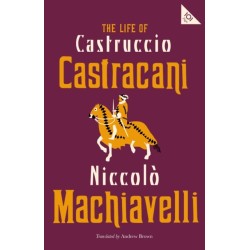
The Life of Castruccio Castracani (Bog, Paperback / softback, Engelsk)
Written in Machiavelli's characteristically lucid and terse style, Life of Castruccio Castracani is a revealing account of the political ferment and fractious factionalism of fourteenth-century Italy.
Levering: 6 - 9 hverdage -
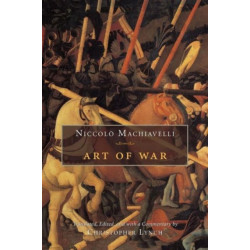
Art of War (Bog, Paperback / softback, Engelsk)
To help readers better appreciate Art of War, Lynch provides an insightful introduction and a substantial interpretive essay discussing the military, political, and philosophical aspects of the work, in addition to maps, an index of names, and a glossary.
Levering: 6 - 9 hverdage -
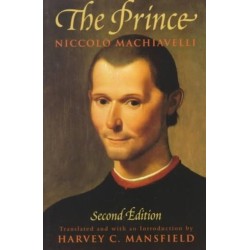
The Prince: Second Edition (Bog, Paperback / softback, Engelsk)
Initially denounced as a collection of sinister maxims and a recommendation of tyranny, this text has more recently been defended as the first scientific treatment of politics, challenging the traditions of ancient and medieval thought and morality.
Levering: 6 - 9 hverdage -
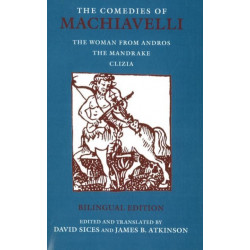
The Comedies of Machiavelli: The Woman from Andros- The Mandrake- Clizia (Bog, Paperback / softback, Engelsk)
Features translations of "The Woman From Andros"; "The Mandrake"; and "Clizia", a work inspired by Plautus' "Casin". This work... Læs mere
Levering: 6 - 9 hverdage -
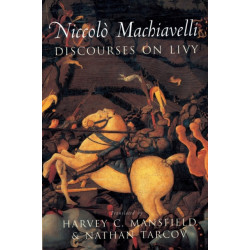
Discourses on Livy (Bog, Paperback / softback, Engelsk)
"Discourses on Livy" is the founding document of modern republicanism and this English translation remains faithful to the original text. With explanatory notes, a glossary of key... Læs mere
Levering: 6 - 9 hverdage -
The Prince: Newly Translated and Annotated (Alma Classics Evergreens) (Bog, Paperback / softback, Engelsk)
New translation of a classic from Italian literature. This edition contains a new translation of G.W.F. Hegel's 'Machiavelli's The Prince and Italy', notes and apparatus on Machiavelli's life... Læs mere
Levering: 6 - 9 hverdage -
The Prince (Bog, Paperback / softback, Engelsk)
HarperCollins is proud to present its incredible range of best-loved, essential classics.
Levering: 6 - 9 hverdage -
The Art of War (Bog, Paperback / softback, Engelsk)
Florentine statesman, writer, and political theorist, Niccolò Machiavelli (1469-1527) considered The Art of War his most important work. Five centuries later, after serving as a guide to... Læs mere
Levering: 6 - 9 hverdage -
Machiavelli: Selected Political Writings (Bog, Paperback / softback, Engelsk)Levering: 6 - 9 hverdage
-
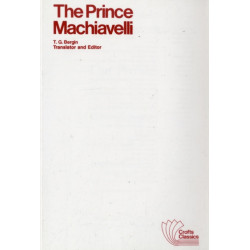
The Prince (Bog, Paperback / softback, Engelsk)
What makes this well-annotated translation stand out from others is an insightful introduction by editor Thomas G. Bergin especially helpful for achieving a better understanding of the times and the political scene in which Machiavelli worked, lived, and wrote.
Levering: Skaffevare (forvent 14 - 30 hverdage) -
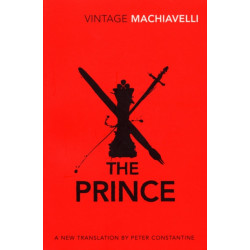
The Prince (Bog, Paperback / softback, Engelsk)
Machiavelli’s highly influential treatise on political power 'It is far safer to be feared than loved...' The Prince shocked Europe on publication with its advocacy of ruthless tactics for gaining absolute power and its abandonment of conventional morality.
Levering: 6 - 9 hverdage -
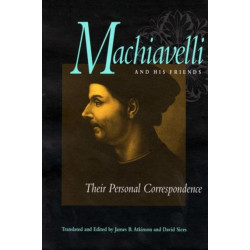
Machiavelli and His Friends: Their Personal Correspondence (Bog, Paperback / softback, Engelsk)Levering: Skaffevare (forvent 14 - 30 hverdage)