Petter Gottschalk Forfatter
Visning: Type : Alle | Sprog : Alle | Format : Alle
-
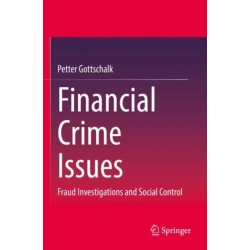
Financial Crime Issues: Fraud Investigations and Social Control (Bog, Hardback, Engelsk)
This book presents several case studies where fraud examiners reviewed the legal license, while the social license was ignored, distinguishing between punishment from violations of the legal license and punishment from violations of the social license to operate.
Levering: Skaffevare (forvent 14 - 30 hverdage) -
Fraud Examiners in White-Collar Crime Investigations (Bog, Hardback, Engelsk)
Peter Gottschalk examines and evaluates the investigative processes used to combat white-collar crime. He also presents a general theory regarding the economic, organizational, and behavioral dimensions of its perpetrators.
Levering: Skaffevare (forvent 14 - 30 hverdage) -
Corporate Compliance: Crime, Convenience and Control (Bog, Hardback, Engelsk)
Compliance has long been identified by scholars of white-collar crime as a key strategic control device in the regulation of corporations and complex organisations.
Levering: Skaffevare (forvent 14 - 30 hverdage) -
White-Collar Crime Online: Deviance, Organizational Behaviour and Risk (Bog, Paperback / softback, Engelsk)
Using convenience theory within a comparative analysis which includes case-studies, the book explores both European and American... Læs mere
Levering: Skaffevare (forvent 14 - 30 hverdage) -
The Convenience of Corporate Crime: Financial Motive – Organizational Opportunity – Executive Willingness (Bog, Paperback / softback, Engelsk)Levering: 6 - 9 hverdage
-
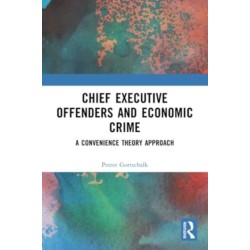
Chief Executive Offenders and Economic Crime: A Convenience Theory Approach (Bog, Paperback / softback, Engelsk)
This book examines the role of Chief Executives in white collar crime from a convenience theory perspective. The work will be a... Læs mere
Levering: Skaffevare (forvent 14 - 30 hverdage) -
White-Collar Crime Online: Deviance, Organizational Behaviour and Risk (Bog, Hardback, Engelsk)
Using convenience theory within a comparative analysis which includes case-studies, the book explores both European and American... Læs mere
Levering: Skaffevare (forvent 14 - 30 hverdage) -
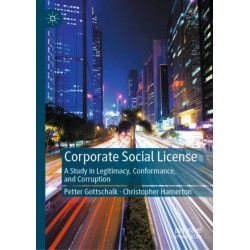
Corporate Social License: A Study in Legitimacy, Conformance, and Corruption (Bog, Hardback, Engelsk)
This book makes a distinctive and innovative contribution to the study of white-collar and corporate crime through detailed examination of the use, affect, and violation of the corporate social license – a concept frequently extended to a license to operate.
Levering: Skaffevare (forvent 14 - 30 hverdage) -
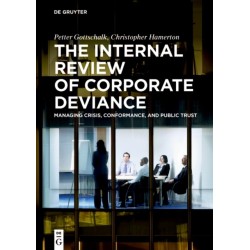
The Internal Review of Corporate Deviance: Managing Crisis, Conformance, and Public Trust (Bog, Hardback, Engelsk)Levering: 6 - 9 hverdage
-
Financial Crime Issues: Fraud Investigations and Social Control (Bog, Paperback / softback, Engelsk)
This book presents several case studies where fraud examiners reviewed the legal license, while the social license was ignored, distinguishing between punishment from violations of the legal license and punishment from violations of the social license to operate.
Levering: Skaffevare (forvent 14 - 30 hverdage) -
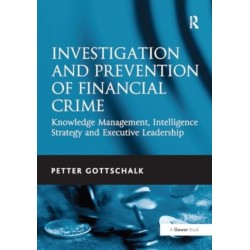
Investigation and Prevention of Financial Crime: Knowledge Management, Intelligence Strategy and Executive Leadership (Bog, Paperback / softback, Engelsk)
Petter Gottschalk considers how, in some competitive environments, goals can... Læs mere
Levering: Skaffevare (forvent 14 - 30 hverdage) -
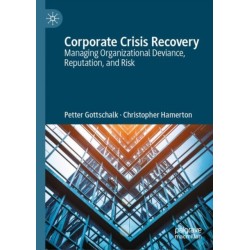
Corporate Crisis Recovery: Managing Organizational Deviance, Reputation, and Risk (Bog, Hardback, Engelsk)
The principal aim of Corporate Crisis Recovery: Managing Organizational Deviance, Reputation, and Risk is to complement and expand criminological discourse on the concept of the social license to operate as a means of influencing the behaviour of corporations.
Levering: Skaffevare (forvent 14 - 30 hverdage)