Academic Studies Press Forlag
Visning: Type : Alle | Sprog : Alle | Format : Alle
-
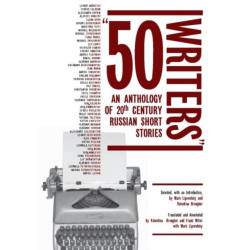
50 Writers: An Anthology of 20th Century Russian Short Stories (Bog, Hardback, Engelsk)
Brings together significant, representative stories from every decade of the 20th century. It includes the prose of officially recognised... Læs mere
Levering: Skaffevare (forvent 14 - 30 hverdage) -
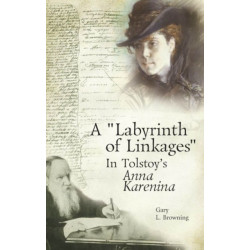
A "Labyrinth of Linkages" in Tolstoy's Anna Karenina (Bog, Hardback, Engelsk)
Identifies and analyses previously unnoticed or only briefly mentioned “linkages and keystones” found in two highly developed clusters of symbols,... Læs mere
Levering: Skaffevare (forvent 14 - 30 hverdage) -
Ahad Ha-am: Selected Essays (Bog, Hardback, Engelsk)Levering: Skaffevare (forvent 14 - 30 hverdage)
-
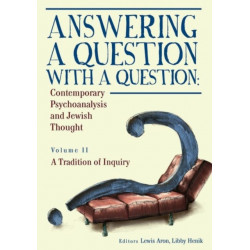
Answering a Question with a Question (Vol II): Contemporary Psychoanalysis and Jewish Thought. A Tradition of Inquiry (Bog, Hardback, Engelsk)
The themes taken up in this book are universal: trauma, traumatic re-enactment,... Læs mere
Levering: Skaffevare (forvent 14 - 30 hverdage) -
A World Apart: A Memoir of Jewish Life in Nineteenth Century Galicia (Bog, Hardback, Engelsk)
In 1936, Joseph Margoshes (1866-1955), a writer for the New York Yiddish daily Morgen Journal, published a memoir of his youth in... Læs mere
Levering: Skaffevare (forvent 14 - 30 hverdage) -
A Roadmap to the Heavens: An Anthropological Study of Hegemony among Priests, Sages, and Laymen (Bog, Hardback, Engelsk)
Allows you to rethink prevailing ideas about the social map of Jewish society during the rabbinic period in Israel. This book explores the complex relationships among the sages, priests, and laymen who competed in social, cultural, and political arenas for hegemony.
Levering: Skaffevare (forvent 14 - 30 hverdage) -
Rabbi Abraham Ibn Ezra's Commentary on the First Book of Psalms: Chapters 1-41 (Bog, Hardback, Engelsk)
Rabbi Abraham ibn Ezra, poet, philosopher, mathematician, was one of the outstanding personalities produced by medieval Jewry. His chief claim to fame, however, is his commentary on the Bible. This work is suitable for students of Scripture at all levels.
Levering: Skaffevare (forvent 14 - 30 hverdage) -
A Companion to Andrei Platonov's The Foundation Pit (Bog, Paperback / softback, Engelsk)
Written at the height of Stalin's first "five-year plan" for the industrialization of Soviet Russia and the parallel campaign to collectivize Soviet agriculture, Andrei Platonov's "The Foundation Pit" registers a dissonant mixture of utopian longings and despair.
Levering: Skaffevare (forvent 14 - 30 hverdage) -
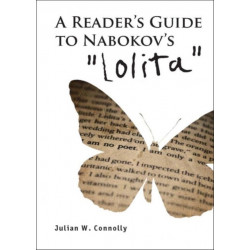
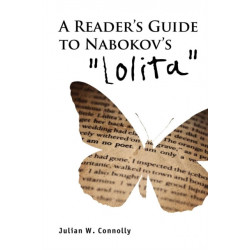
A Reader's Guide to Nabokov's 'Lolita' (Bog, Hardback, Engelsk)
One of the most controversial novels of the twentieth century, Vladimir Nabokov's "Lolita" is renowned for its innovative style and notorious for its subject matter... Læs mere
Levering: Skaffevare (forvent 14 - 30 hverdage) -
A Reader's Guide to Nabokov's 'Lolita' (Bog, Paperback / softback, Engelsk)
One of the most controversial novels of the twentieth century, Vladimir Nabokov's "Lolita" is renowned for its innovative style and notorious for its subject matter... Læs mere
Levering: Skaffevare (forvent 14 - 30 hverdage) -
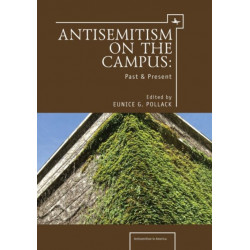
Anti-Semitism on the Campus: Past and Present (Bog, Hardback, Engelsk)
Twenty-one leading scholars explore the roots and manifestations of antisemitism and anti-Zionism and the efforts to combat them at American, British, and South African colleges and universities in the 20th and 21st centuries.
Levering: Skaffevare (forvent 14 - 30 hverdage) -
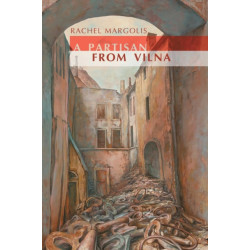
A Partisan from Vilna (Bog, Paperback / softback, Engelsk)
A memoir of Rachel Margolis, the sole survivor of her family, who escaped from the Vilna Ghetto with other members of the resistance movement, the FPO (United Partisan Organization), and joined the Soviet partisans in the forests of Lithuania to sabotage the Nazis.
Levering: Skaffevare (forvent 14 - 30 hverdage)