Amsterdam University Press Forlag
-
Japanese Reflections on World War II and the American Occupation (Bog, Paperback / softback, Engelsk)
This book presents an unforgettable up-close account of the effects of World War II and the subsequent American occupation on Oita prefecture.
Status: Skaffevare (forvent 3 - 8 uger) -
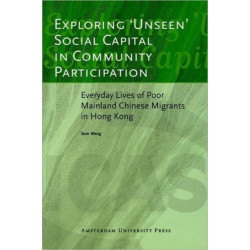
Exploring 'Unseen' Social Capital in Community Participation: Everyday Lives of Poor Mainland Chinese Migrants in Hong Kong (Bog, Paperback / softback, Engelsk)
Using ethnographic and participatory methods, this timely volume calls for an exploration of ‘unseen’ social capital
Status: Skaffevare (forvent 3 - 8 uger) -
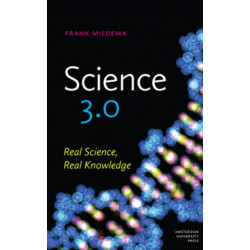
Science 3.0: Real Science, Real Knowledge (Bog, Paperback / softback, Engelsk)
In the knowledge economy, life sciences drive innovation, involving vast resources. Frank Miedema critiques the romanticized view of science as altruistic,... Læs mere
Status: Skaffevare (forvent 3 - 8 uger) -
Communicate as a Professional (Bog, Paperback / softback, Engelsk)
'Communicate as a Professional' offers a solid foundation for developing the communication knowledge and skills that students need, both when working as a professional after they have graduated, and when following an educational program that prepares them for this future.
Status: Skaffevare (forvent 3 - 8 uger) -
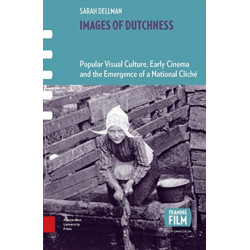
Images of Dutchness: Popular Visual Culture, Early Cinema and the Emergence of a National Cliche, 1800-1914 (Bog, Paperback / softback, Engelsk)
This book investigates the roots of Dutch visual clichés in popular visual media, offring new insights into the emergance of national clichés and the study of stereotypical thinking.
Status: Skaffevare (forvent 3 - 8 uger) -
History and Philosophy of the Humanities: An Introduction (Bog, Paperback / softback, Engelsk)
Explores what unites diverse humanities disciplines like literary theory, linguistics, history, and philosophy, examining how the tripartite division between natural sciences, social sciences, and humanities emerged in the 19th century and remains contested today.
Levering: 6 - 9 hverdage -
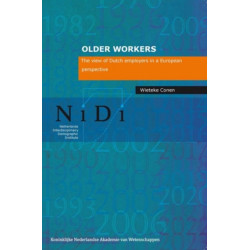
Older Workers: The View of Dutch Employers in a European Perspective (Bog, Paperback / softback, Engelsk)
This study addresses the employers' perspective on an ageing workforce, considering and comparing the attitudes and behaviour of Dutch employers with those of employers in Denmark, France, Germany, Italy, Poland, Sweden and the UK.
Status: Skaffevare (forvent 3 - 8 uger) -
Electrifying Europe: The power of Europe in the construction of electricity networks (Bog, Paperback / softback, Engelsk)
Nowadays most consumers are aware of the European dimensions of their electricity supply , by focusing on transnational and European actors, this book is a valuable addition to existing national histories of electrification.
Status: Skaffevare (forvent 3 - 8 uger) -
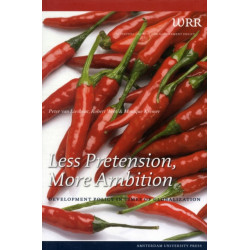
Less Pretension, More Ambition: Development Policy in Times of Globalization (Bog, Paperback / softback, Engelsk)
The Dutch Scientific Council for Government Policy (WRR) to examined what form development aid should take in the era of globalization. This book is based on the WRR report of over 500 interviews in 2010.
Status: Skaffevare (forvent 3 - 8 uger) -
Kyiv, Ukraine - Revised Edition: The City of Domes and Demons from the Collapse of Socialism to the Mass Uprising of 2013-2014 (Bog, Paperback / softback, Engelsk)
This thoroughly revised edition brings Cybriwsky's account of events and their ramifications fully up to date, offering the clearest picture we've had yet of what has happened - and what is likely still to come - in Ukraine.
Status: Skaffevare (forvent 3 - 8 uger) -
Shipwreck & Survival in Oman, 1763: The Fate of the Amstelveen and Thirty Castaways on the South Coast of Arabia (Bog, Paperback / softback, Engelsk)
Richly illustrated reconstruction - equal parts social history, anthropology, and survival chronicle - of the journey of 30 castaways from the Dutch ship Amstelveen.
Status: Skaffevare (forvent 3 - 8 uger) -
The Meaning of Music (Bog, Paperback / softback, Engelsk)
What is music, and what does it mean to humans? How do we process it, and how do we create it? Musician Leo Samama discusses these and many other questions while shaping a vibrant picture of music's importance in human lives both past and present.
Status: Skaffevare (forvent 3 - 8 uger)