Amsterdam University Press Forlag
Visning: Type : Alle | Sprog : Alle | Format : Alle
-
Women, Art and Observant Franciscan Piety: Caterina Vigri and the Poor Clares in Early Modern Ferrara (Bog, Hardback, Engelsk)
This book, grounded in archival research and close examination of artworks from The Poor Clares convent of Corpus Domini, explores the visual culture and social history of an early modern Franciscan women’s community.
Status: Skaffevare (forvent 3 - 8 uger) -
The Heritage Turn in China: The Reinvention, Dissemination and Consumption of Heritage (Bog, Hardback, Engelsk)
This book examines China's heritage practices since the 1990s heritage turn through diverse case studies using multiple disciplinary approaches
Levering: Skaffevare (forvent 14 - 30 hverdage) -
The Chinese Communist Youth League: Juniority and Responsiveness in a Party Youth Organization (Bog, Hardback, Engelsk)
This original investigation of the hitherto-unexamined organization 'Chinese Communist Youth League' uses a... Læs mere
Levering: Skaffevare (forvent 14 - 30 hverdage) -
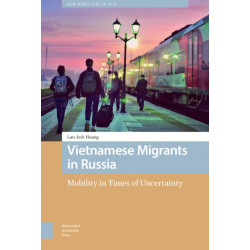
Vietnamese Migrants in Russia: Mobility in Times of Uncertainty (Bog, Hardback, Engelsk)
Drawing on ethnographic research conducted at Moscow's wholesale markets from 2013 to 2016, Vietnamese Migrants in Russia: Mobility in Times... Læs mere
Status: Skaffevare (forvent 3 - 8 uger) -
The Uncanny Child in Transnational Cinema: Ghosts of Futurity at the Turn of the Twenty-first Century (Bog, Hardback, Engelsk)
The Uncanny Child in Transnational Cinema illustrates how global horror film depictions of children re-conceptualised childhood at the beginning of the twenty-first century, and considers the cultural conditions surrounding their emergence.
Status: Skaffevare (forvent 3 - 8 uger) -
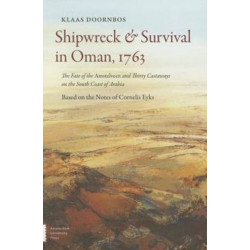
Shipwreck & Survival in Oman, 1763: The Fate of the Amstelveen and Thirty Castaways on the South Coast of Arabia (Bog, Paperback / softback, Engelsk)
Richly illustrated reconstruction - equal parts social history, anthropology, and survival chronicle - of the journey of 30 castaways from the Dutch ship Amstelveen.
Status: Skaffevare (forvent 3 - 8 uger) -
The Meaning of Music (Bog, Paperback / softback, Engelsk)
What is music, and what does it mean to humans? How do we process it, and how do we create it? Musician Leo Samama discusses these and many other questions while shaping a vibrant picture of music's importance in human lives both past and present.
Status: Skaffevare (forvent 3 - 8 uger) -
Towards a Political Aesthetics of Cinema: The Outside of Film (Bog, Hardback, Engelsk)
This book is a contribution to an aesthetics of cinema rooted in Marxist theory. Rather than focusing on the role that certain films, or the... Læs mere
Status: Skaffevare (forvent 3 - 8 uger) -
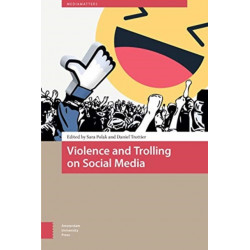
Violence and Trolling on Social Media: History, Affect, and Effects of Online Vitriol (Bog, Hardback, Engelsk)
Violence and Trolling on Social Media: History, Affect, and Effects of Online Vitriol unpacks discourses, metaphors, dynamics, and framing on social media. This book... Læs mere
Levering: Skaffevare (forvent 14 - 30 hverdage) -
Women in the Silent Cinema: Histories of Fame and Fate (Bog, Paperback / softback, Engelsk)
This book offers the most comprehensive accounts yet of professional itineraries of three women in the silent film in the Netherlands, France and North America.
Status: Skaffevare (forvent 3 - 8 uger) -
Waddenland Outstanding: History, Landscape and Cultural Heritage of the Wadden Sea Region (Bog, Hardback, Engelsk)
This book encompasses the contributions presented at the scientific symposium of prominent scientists who gathered in 2016 in Husum, Germany, a landmark event in sharing knowledge on the common history, landscape, cultural heritage of the Wadden Sea Region.
Status: Skaffevare (forvent 3 - 8 uger) -
Topographic Memory and Victorian Travellers in the Dolomite Mountains: Peaks of Venice (Bog, Hardback, Engelsk)
This work reframes the Victorian encounter with the Dolomites through the lens of Grand Tour memories, revealing a distinctive Silver Age of Mountaineering defined by ethnographic rather than imperialistic approaches.
Status: Skaffevare (forvent 3 - 8 uger)