Archaeopress Forlag
-
Drawings in Greek and Roman Architecture (Bog, Paperback / softback, Engelsk)
This book is an essay on architectural drawings of the Greek and Roman world.
Levering: 6 - 9 hverdage -
Bridging Science and Heritage in the Balkans: Studies in Archaeometry and Cultural Heritage Restoration and Conservation (Bog, Paperback / softback, Engelsk)
In a period when the study of archaeological remains is enriched through new... Læs mere
Levering: 6 - 9 hverdage -
Mortuary Variability and Social Diversity in Ancient Greece: Studies on Ancient Greek Death and Burial (Bog, Paperback / softback, Engelsk)
This volume brings together early career scholars working on funerary customs in Greece from the... Læs mere
Levering: 6 - 9 hverdage -
Cloth Seals: An Illustrated Guide to the Identification of Lead Seals Attached to Cloth (Bog, Paperback / softback, Engelsk)
This book is intended to be a repository of the salient information currently available on the identification of cloth seals, and a source of new material that extends our understanding of these important indicators of post medieval and early modern industry and trade
Levering: 6 - 9 hverdage -
Anglo-Saxon Crops and Weeds: A Case Study in Quantitative Archaeobotany (Bog, Paperback / softback, Engelsk)
Farming practices underwent momentous transformations in the Mid Saxon period, between the 7th and 9th centuries AD. This study... Læs mere
Levering: 6 - 9 hverdage -
La ceramica bassomedievale a Pisa e San Genesio (San Miniato-Pi): citta e campagna a confronto (Bog, Paperback / softback, Italiensk)
This book presents the study of pottery in two medieval contexts, Pisa (a city) and San Genesio (a central place in the Arno Valley).
Levering: 6 - 9 hverdage -
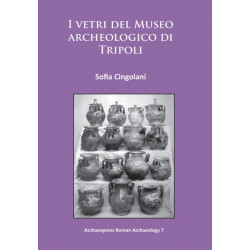
I vetri del Museo archeologico di Tripoli (Bog, Paperback / softback, Italiensk)
This volume is focused on the cataloguing of glass conserved in the Archaeological Museum of Tripoli. This is so far an unpublished corpus of objects identified from investigations into the necropolis and other burials in Tripoli and its suburbs.
Levering: 6 - 9 hverdage -
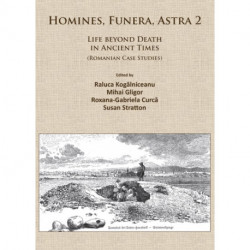
Homines, Funera, Astra 2: Life Beyond Death in Ancient Times (Romanian Case Studies) (Bog, Paperback / softback, Engelsk)
This volume presents papers from the second Homines, Funera, Astra Symposium on Funerary Anthropology that took place in 2012. The study of human funerary behaviour represents the most important aspect of this volume.
Levering: 6 - 9 hverdage -
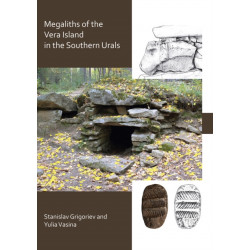
The Megaliths of Vera Island in the Southern Urals (Bog, Paperback / softback, Engelsk)
The largest and brightest megalithic complex in Russia’s Ural Mountains is located on Vera Island, represented by three chambered megaliths and... Læs mere
Levering: 6 - 9 hverdage -
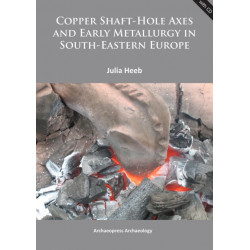
Copper Shaft-Hole Axes and Early Metallurgy in South-Eastern Europe: An Integrated Approach (Bog, Paperback / softback, Engelsk)
Although the copper axes with central shaft-hole from south-eastern Europe have a long history of research, they... Læs mere
Levering: 6 - 9 hverdage -
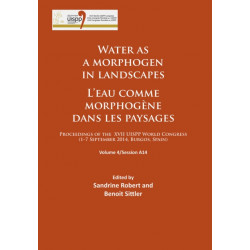
Water as a morphogen in landscapes/L’eau comme morphogene dans les paysages: Proceedings of the XVII UISPP World Congress (1–7 September 2014, Burgos, Spain) Volume 4/Session A14 (Bog, Paperback / softback, Fransk)
Water as generator of networks was the core topic of the second session organized by the commission Theory and Methods in Landscape Archaeology: Archeogeography that began in 2011 on occasion of the Florianopolis Congress.
Levering: 6 - 9 hverdage -
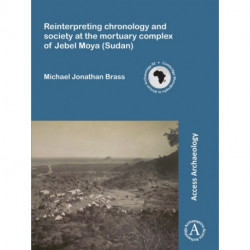
Reinterpreting chronology and society at the mortuary complex of Jebel Moya (Sudan) (Bog, Paperback / softback, Engelsk)
Jebel Moya (south-central Sudan) is the largest known pastoral cemetery in sub- Saharan Africa with more than 3100 excavated human burials. This research revises our understanding of Jebel Moya and its context.
Levering: 6 - 9 hverdage