Archaeopress Forlag
Visning: Type : Alle | Sprog : Engelsk | Format : Paperback / softback Der vises kun varer på engelsk
-
An Urban Geography of the Roman World, 100 BC to AD 300 (Bog, Paperback / softback, Engelsk)
This book provides a new account of the urbanism of the Roman world between 100 BC and AD 300. To do so, it draws on a combination of textual... Læs mere
Levering: 6 - 9 hverdage -
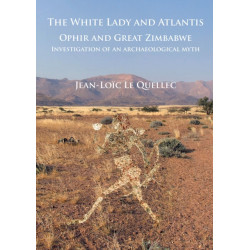
The White Lady and Atlantis: Ophir and Great Zimbabwe: Investigation of an archaeological myth (Bog, Paperback / softback, Engelsk)
This meticulous investigation, based around a famous rock image, the ‘White Lady’, makes it possible to take stock of the mythical presuppositions that infuse a great deal of scientific research, especially in the case of rock art studies.
Levering: 6 - 9 hverdage -
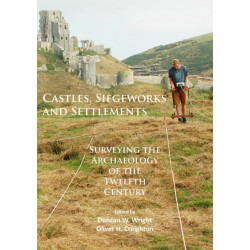
Castles, Siegeworks and Settlements: Surveying the Archaeology of the Twelfth Century (Bog, Paperback / softback, Engelsk)
This volume comprises thirteen reports detailing fieldwork undertaken by a research project which sought to assess the archaeological evidence of the period of conflict that took place in mid-twelfth-century England popularly known as ‘the Anarchy’.
Levering: 6 - 9 hverdage -
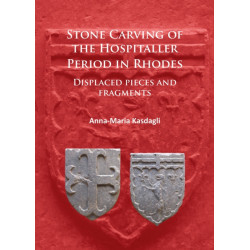
Stone Carving of the Hospitaller Period in Rhodes: Displaced pieces and fragments (Bog, Paperback / softback, Engelsk)
The work presents 230 stone carvings of the Hospitaller period in Rhodes (1309-1522), which for various reasons are no longer in their original setting.
Levering: 6 - 9 hverdage -
Forensic Archaeology: The Application of Comparative Excavation Methods and Recording Systems (Bog, Paperback / softback, Engelsk)
This book evaluates current archaeological excavation methods and recording systems in relation to their use in providing forensic evidence, and their ability to satisfy the admissibility tests introduced by the Law Commission, and other internationally recognised bodies.
Levering: 6 - 9 hverdage -
Archaeology with Art (Bog, Paperback / softback, Engelsk)
Based on a 2013 Theoretical Archaeology Group (TAG) conference session, this book aims to merge the perspectives of artists and archaeologists on making art. It explores the... Læs mere
Levering: 6 - 9 hverdage -
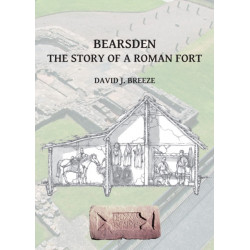
Bearsden: The Story of a Roman Fort (Bog, Paperback / softback, Engelsk)
This accessible account of the discoveries at the Roman fort at Bearsden examines the process of archaeological excavation, the life of the soldiers at the fort based on the results of the excavation as well as material from elsewhere in the Roman Empire.
Levering: 6 - 9 hverdage -
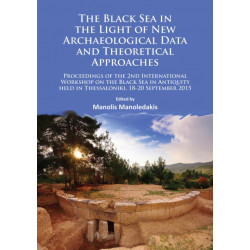
The Black Sea in the Light of New Archaeological Data and Theoretical Approaches: Proceedings of the 2nd International Workshop on the Black Sea in Antiquity held in Thessaloniki, 18-20 September 2015 (Bog, Paperback / softback, Engelsk)
The Black Sea in the Light of New Archaeological Data and Theoretical Approaches contains 19 papers on the archaeology and ancient history of the Black Sea region, covering a vast period of time, from the Early Iron Age until the Late Roman – Early Byzantine Periods.
Levering: 6 - 9 hverdage -
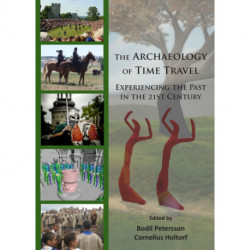
The Archaeology of Time Travel: Experiencing the Past in the 21st Century (Bog, Paperback / softback, Engelsk)
This volume explores the relevance of time travel as a characteristic contemporary way to approach the past. Papers explore... Læs mere
Levering: 6 - 9 hverdage -
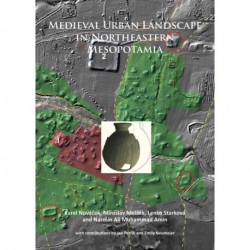
Medieval Urban Landscape in Northeastern Mesopotamia (Bog, Paperback / softback, Engelsk)
Investigates the sites which formed an urban network from 6th to 19th centuries in the region of northeastern Mesopotamia, bounded by the rivers Great Zab, Little Zab and Tigris.
Levering: 6 - 9 hverdage -
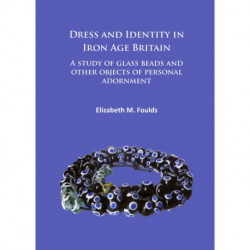
Dress and Identity in Iron Age Britain: A study of glass beads and other objects of personal adornment (Bog, Paperback / softback, Engelsk)
Through an analysis of glass beads from four key study regions in Britain, the book aims to explore the role that this object played within the networks and relationships that constructed Iron Age society.
Levering: 6 - 9 hverdage -
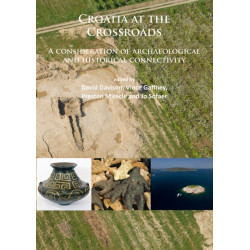
Croatia at the Crossroads: A consideration of archaeological and historical connectivity: Proceedings of conference held at Europe House, Smith Square, London, 24–25 June 2013 to mark the accession of Croatia to the European Union (Bog, Paperback / softback, Engelsk)
Papers focus on Croatia’s particular interconnectedness in terms of social and cultural relationships with the wider region as the starting point for exploring issues across a broad chronological range, from human origins to modernity.
Levering: 6 - 9 hverdage