Archaeopress Forlag
Visning: Type : Alle | Sprog : Engelsk | Format : Paperback / softback Der vises kun varer på engelsk
-
Myths on the Edge of Empire: How Classical Mythology Spread throughout Roman Britain (Bog, Paperback / softback, Engelsk)
This study traces the spread of classical mythology in Roman Britain through detailed case studies of gods and heroes,... Læs mere
Levering: 6 - 9 hverdage -
Excavating Ancient Egypt: Fifty Years of Archaeological Memories (Bog, Paperback / softback, Engelsk)
This book reveals the behind-the-scenes logistics of archaeological digs in Egypt, from admin and supplies to transport and housing. It also shares discoveries, excavation challenges, and insights into rural village life and local culture in the Nile Delta.
Levering: 6 - 9 hverdage -
The Domesticity of Their Darkness: Snapshots of the Enslaved in Roman Art (Bog, Paperback / softback, Engelsk)
This book explores how Roman art depicted enslaved individuals, emphasizing fragmented, non-linear "snapshots" rather than a full... Læs mere
Levering: 6 - 9 hverdage -
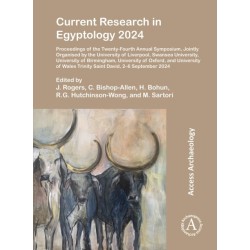
Current Research in Egyptology 2024: Proceedings of the Twenty-Fourth Annual Symposium, Jointly Organised by the University of Liverpool, Swansea University, University of Birmingham, University of Oxford, and University of Wales Trinity Saint David, 2– (Bog, Paperback / softback, Engelsk)
23 selected papers from the twenty-fourth Current Research in Egyptology... Læs mere
Levering: 6 - 9 hverdage -
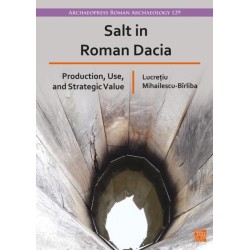
Salt in Roman Dacia: Production, Use, and Strategic Value (Bog, Paperback / softback, Engelsk)
This volume examines salt exploitation in Roman Dacia, a topic often overlooked compared to other resources. It analyses archaeological and... Læs mere
Levering: 6 - 9 hverdage -
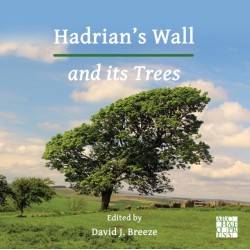
Hadrian’s Wall and its Trees (Bog, Paperback / softback, Engelsk)
A richly illustrated celebration of the trees that line Hadrian’s Wall, exploring their role in Roman life, art, and modern conservation. Scholars and artists reveal how wood and woodland have shaped this remarkable frontier — and how its trees continue to inspire today.
Levering: 6 - 9 hverdage -
Travels through Prehistoric Spain: A Guide (Bog, Paperback / softback, Engelsk)
This guide opens up Spain’s rich prehistoric past, highlighting over 220 sites, museums and landscapes across the country. From cave art to dolmen and Iron Age... Læs mere
Levering: 6 - 9 hverdage -
The Neolithic in Jersey (Bog, Paperback / softback, Engelsk)
This second volume in Jersey’s Archaeological Research Framework offers a detailed study of the island’s Neolithic period, its links to the Channel Islands and NW France, and... Læs mere
Levering: 6 - 9 hverdage -
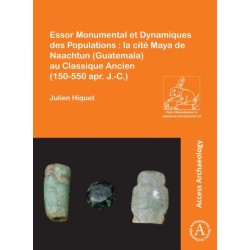
Essor Monumental et Dynamiques des Populations : la cite Maya de Naachtun (Guatemala) au Classique Ancien (150-550 apr. J.-C.) (Bog, Paperback / softback, Engelsk)
Naachtun was a major Maya capital during the Early Classic period (150–550 CE), marked by impressive monumental architecture. This book explores how such construction influenced urban demographics, showing that architectural grandeur attracted and anchored a growing population.
Levering: 6 - 9 hverdage -
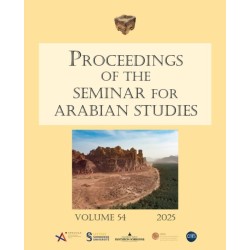
Proceedings of the Seminar for Arabian Studies Volume 54 2025: Papers from the fifty-seventh meeting of the Seminar for Arabian Studies held at the Institut national d’histoire de l’art, Paris, 27–29 June 2024 (Bog, Paperback / softback, Engelsk)
The 57th Seminar for Arabian Studies (Paris 2024) brought together... Læs mere
Levering: 6 - 9 hverdage -
Reporting Heritage Destruction (Bog, Paperback / softback, Engelsk)
This volume from Oxford’s ECHGS Hub explores how heritage destruction is reported, its impacts, and ethical concerns. Covering Africa, Asia, and the Middle East, it ends... Læs mere
Levering: 6 - 9 hverdage -
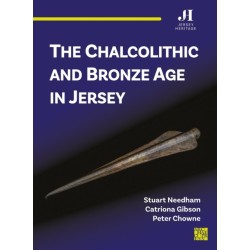
The Chalcolithic and Bronze Age in Jersey (Bog, Paperback / softback, Engelsk)
This volume, part of Jersey’s Archaeological Research Framework, assesses the Chalcolithic and Bronze Age in relation to the Channel Islands and NW France. It outlines current knowledge and sets research goals to guide heritage protection and future archaeological studies.
Levering: 6 - 9 hverdage