Archaeopress Forlag
-
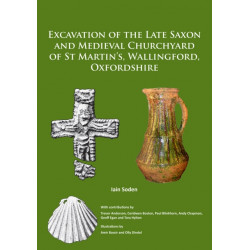
Excavation of the Late Saxon and Medieval Churchyard of St Martin’s, Wallingford, Oxfordshire (Bog, Paperback / softback, Engelsk)
This volume presents the results of excavations by MOLA (Museum of London Archaeology) undertaken in 2003-4 at the former St Martin’s churchyard, Wallingford, Oxfordshire.
Levering: 6 - 9 hverdage -
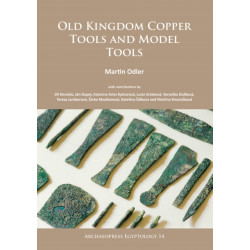
Old Kingdom Copper Tools and Model Tools (Bog, Paperback / softback, Engelsk)
This volume gathers the textual, iconographic and palaeographic evidence and examines artefacts in order to revise the common view on the use of copper alloy tools and model tools in the Old Kingdom.
Levering: 6 - 9 hverdage -
In Pursuit of Ancient Cyrenaica...: Two hundred years of exploration set against the history of archaeology in Europe (1706–1911) (Bog, Paperback / softback, Engelsk)
This work examines travellers' accounts of their journeys to Cyrenaica, focusing in the main on an analysis of these accounts within the context of their significance to topographic surveys of the region.
Levering: 6 - 9 hverdage -
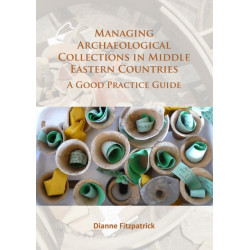
Managing Archaeological Collections in Middle Eastern Countries: A Good Practice Guide (Bog, Paperback / softback, Engelsk)
In this guide, archaeologist Dianne Fitzpatrick sees archaeological collections management as a means of integrating achievable good-practice strategies into research designs and site management plans from the outset.
Levering: 6 - 9 hverdage -
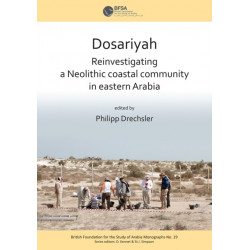
Dosariyah: An Arabian Neolithic Coastal Community in the Central Gulf (Bog, Paperback / softback, Engelsk)
Describes the work carried out by the joint German-Saudi Dosariyah Archaeological Research Project (DARP) between 2010 and 2014 at Dosariyah, located in the Eastern Province of Saudi Arabia.
Levering: 6 - 9 hverdage -
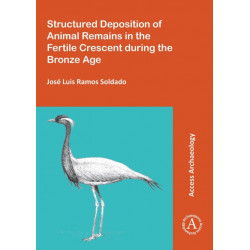
Structured Deposition of Animal Remains in the Fertile Crescent during the Bronze Age (Bog, Paperback / softback, Engelsk)
The aim of this research is to draw up a literature review of the structured deposits of animal remains during the third and second millennia BC in the Ancient Near East for its subsequent classification and detailed interpretation.
Levering: 6 - 9 hverdage -
Languages of Southern Arabia: Supplement to the Proceedings of the Seminar for Arabian Studies Volume 44 2014 (Bog, Paperback / softback, Engelsk)
The special session in 2013, Languages of Southern Arabia, was the fifth in the Seminar for Arabian Studies special session series.
Levering: 6 - 9 hverdage -
The Archaeology of Anglo-Jewry in England and Wales 1656–c.1880 (Bog, Paperback / softback, Engelsk)
This volume presents a comprehensive study of the urban topography of Anglo-Jewry in the period before the mass immigration of 1881. The... Læs mere
Levering: 6 - 9 hverdage -
Journal of Greek Archaeology Volume 2 2017 (Bog, Paperback / softback, Engelsk)
Volume Two maintains the journal's mission to publish across the whole time range of Greek Archaeology, with articles from the Palaeolithic to the Early Modern... Læs mere
Levering: 6 - 9 hverdage -
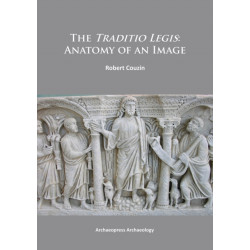
The Traditio Legis: Anatomy of an Image (Bog, Paperback / softback, Engelsk)
This monograph engages in a close reading of the traditio legis, highlighting its novelty and complexity to early Christian viewers. The image is analyzed as a conflation of two distinct forms of representation, each constructed of unusual and potentially multivalent elements.
Levering: 6 - 9 hverdage -
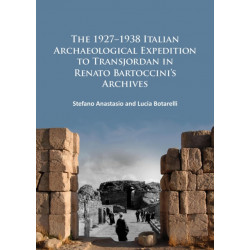
The 1927–1938 Italian Archaeological Expedition to Transjordan in Renato Bartoccini’s Archives (Bog, Paperback / softback, Engelsk)
This volume presents extensive photo-archives from the Italian excavations and surveys carried out in Transjordan between 1927 and 1938.
Levering: 6 - 9 hverdage -
Knossos and the Near East: A contextual approach to imports and imitations in Early Iron Age tombs (Bog, Paperback / softback, Engelsk)
In this book, Dr Vyron Antoniadis presents a contextual study of the Near Eastern imports which reached Crete during the Early Iron Age and were deposited in the Knossian tombs.
Levering: 6 - 9 hverdage