Archaeopress Forlag
-
South-Eastern Anatolia at a Crossroads: A Multicultural Mediterranean Area from the Hellenistic to the Early Byzantine Period (Bog, Paperback / softback, Engelsk)
This volume analyzes South-Eastern Anatolia's role as a cultural crossroads from the Hellenization phase to the Byzantine age, highlighting its strategic position and interactions with Cyprus and northern Syria.
Levering: 6 - 9 hverdage -
Les ateliers de ceramique de la Byzacene du Sud-Ouest (Bog, Paperback / softback, Fransk)
Over 30 years of research on ceramic workshop dumps in South-West Byzacena uncovered seven sites. The study traced local vs. imported production, explored new centers, and analyzed materials to map distribution. It also revealed historical, spatial, and chronological patterns.
Levering: 6 - 9 hverdage -
D’Ammaedara a Haidra: Approche archeologique et historique (Bog, Hardback, Fransk)
This study explores Haïdra’s rich history—from antiquity to today—through archival research and architectural archaeology. Situated on Tunisia’s... Læs mere
Levering: 6 - 9 hverdage -
Early Christianity on the Margins (?): The PIAC Excavations in Adulis, Eritrea (2017-2020) (Bog, Paperback / softback, Engelsk)
This five-year project led by the Pontificio Istituto di Archeologia Cristiana (PIAC) in Rome focused on excavating... Læs mere
Levering: 6 - 9 hverdage -
Documenting Activism, Creating Change: Archaeology and the Legacy of -MeToo (Bog, Paperback / softback, Engelsk)
This volume documents feminist, intersectional activism in archaeology since 2010, highlighting online and transient spaces. It... Læs mere
Levering: 6 - 9 hverdage -
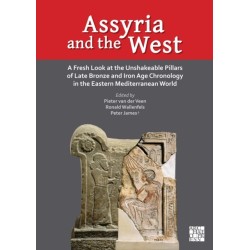
Assyria and the West: A Fresh Look at the Unshakeable Pillars of Late Bronze and Iron Age Chronology in the Eastern Mediterranean World (Bog, Hardback, Engelsk)
This volume re-examines key chronological anchors of the Late Bronze and... Læs mere
Levering: 6 - 9 hverdage -
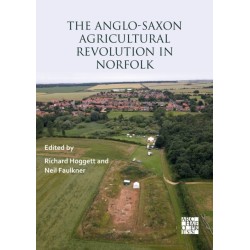
The Anglo-Saxon Agricultural Revolution in Norfolk: Proceedings of a Conference to Mark the 25th Anniversary of the Sedgeford Historical and Archaeological Research Project (Bog, Paperback / softback, Engelsk)
This volume brings together insights from a 2020 conference celebrating... Læs mere
Levering: 6 - 9 hverdage -
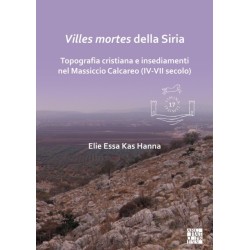
Villes mortes della Siria: Topografia cristiana e insediamenti del Massiccio Calcareo (IV-VII secolo) (Bog, Paperback / softback, Italiensk)
This book explores the Dead Cities region in Syria, its development in the Early Byzantine Empire, and its transformation under Muslim rule. It includes archaeological research, historical context, and unpublished photos of sites, some now damaged by war.
Levering: 6 - 9 hverdage -
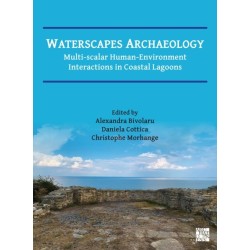
Waterscapes Archaeology: Multi-Scalar Human-Environment Interactions in Coastal Lagoons (Bog, Paperback / softback, Engelsk)
This volume explores human-environment interactions in coastal lagoons through case studies from the Mediterranean,... Læs mere
Levering: 6 - 9 hverdage -
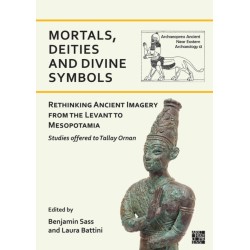
Mortals, Deities and Divine Symbols: Rethinking Ancient Images from the Levant to Mesopotamia: Studies Offered to Tallay Ornan (Bog, Paperback / softback, Engelsk)
Dedicated to Tallay Ornan, a scholar distinguished in ancient Western Asian... Læs mere
Levering: 6 - 9 hverdage -
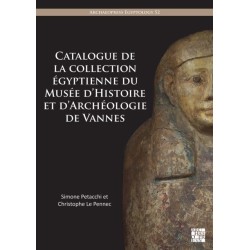
Catalogue de la collection egyptienne du Musee d’Histoire et d’Archeologie de Vannes (Bog, Paperback / softback, Fransk)
This catalogue studies the Egyptian collection at the Musée d'Histoire et d'Archéologie in Vannes, featuring... Læs mere
Levering: 6 - 9 hverdage -
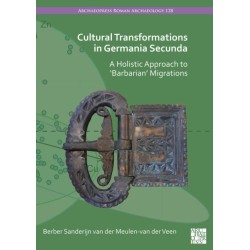
Cultural Transformations in Germania Secunda: A Holistic Approach to 'Barbarian' Migrations (Bog, Paperback / softback, Engelsk)
This book uses a multi-variate approach to study the Late Roman Lower German frontier, challenging the role of... Læs mere
Levering: 6 - 9 hverdage