BAI NV Forlag
-
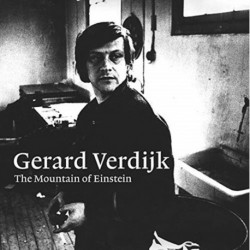
Gerard Verdijk: The Mountain of Einstein (Bog, Hardback, Engelsk)
Even though Gerard Verdijk (1934-2005) passed away at the beginning of this century, many still remember him as a striking and versatile artist. The life and works of Gerard Verdijk, meticulously documented by his wife Josephine Sloet.
Levering: Skaffevare (forvent 14 - 30 hverdage) -
Axel Enthoven (Bog, Hardback, Engelsk)
Designed by Axel Enthoven. Day after day he proves that elegance still exists today. He demonstrates that statements, sloganesque formulations, cutting corners, taking an obtuse attitude to people are not his thing.
Levering: Skaffevare (forvent 14 - 30 hverdage) -
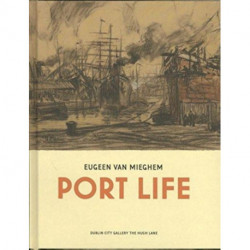
Eugeen van Mieghem: Port Life (Bog, Hardback, Engelsk)
Antwerp artist Eugeen Van Mieghem (1875-1930) documents the pulsating life around the port of Antwerp at the turn of the twentieth century.
Levering: Skaffevare (forvent 14 - 30 hverdage) -
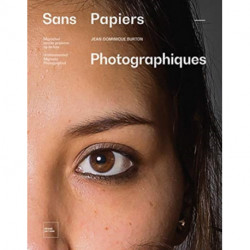
Jean-Dominique Burton: Undocumented Migrants Photographed (Bog, Hardback, Engelsk)
The photographer and videographer, Jean-Dominique Burton, offers us another viewpoint relating to refugees and what they represent: a viewpoint which is beyond stereotypes. Text in English, French, and Dutch.
Levering: Skaffevare (forvent 14 - 30 hverdage) -
The Normandy Coast and Landing Beaches (Bog, Hardback, Engelsk)
A view of 90 km of coastline, military details and pictures of the landing on D-Day. Text in English, French, and Dutch.
Levering: Skaffevare (forvent 14 - 30 hverdage) -
Nick Claeskens: Bus Stop (Bog, Hardback, Engelsk)
Larger firms buy small, authentic companies, the small companies that want to keep doing what they do, and don't want to be bought by larger firms, struggle to compete, eventually they disappear. My view on this phenomenon is displayed in my first book 'Bus Stop'.
Levering: Skaffevare (forvent 14 - 30 hverdage) -
Ancient Glass: Collection (Bog, Hardback, Engelsk)
Published as part of the Glass in MAS project, a multidisciplinary research project on the glass collection of the MAS collection Vleeshuis (Antwerp, Belgium).
Levering: Skaffevare (forvent 14 - 30 hverdage) -
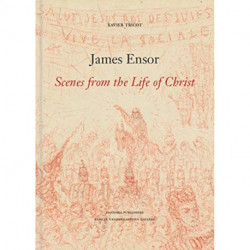
James Ensor: Scenes from the Life of Christ (Bog, Hardback, Engelsk)
In 1912-1913, James Ensor produced a series of 32 drawings in coloured pencil titled Scènes de la vie du Christ [Scenes from the life of Christ].
Levering: 6 - 9 hverdage -
James Joyce in Ostend (Bog, Paperback / softback, Engelsk)
James Joyce, one of the greatest writers of the 20th century, spent several weeks in Ostend during the summer of 1926.
Levering: Skaffevare (forvent 14 - 30 hverdage) -
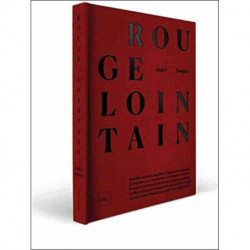
Rouge Lointain: Andre Soupart (Bog, Hardback, Engelsk)
Rouge lointain is first and foremost a book of photographs that is in line with the resolutely contemporary trend of preserving traces of places and activities that are in danger of disappearing. Text in English and French.
Levering: Skaffevare (forvent 14 - 30 hverdage) -
Let Me Be Your Guide: Collection Guide (Bog, Paperback / softback, Engelsk)
With the help of 100 artworks, this book guides you through the collection of the Stedelijk Museum Amsterdam. Learn more about Kazimir Malevich's groundbreaking... Læs mere
Levering: Skaffevare (forvent 14 - 30 hverdage) -
On the Road With Plantin: Travel in the 16th Century (Bog, Hardback, Engelsk)
On the Road With Plantin looks at how travel distances and travel times differ from journeys in the 16th century
Levering: Skaffevare (forvent 14 - 30 hverdage)