Baker Publishing Group Forlag
Visning: Type : Alle | Sprog : Alle | Format : Alle
-
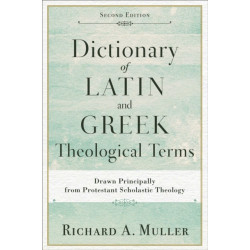
Dictionary of Latin and Greek Theological Terms – Drawn Principally from Protestant Scholastic Theology: Drawn Principally from Protestant Scholastic Theology (Bog, Paperback / softback, Engelsk)
This indispensable companion to key post-Reformation theological texts offers clear and precise definitions of Latin and Greek terms. Now updated and revised throughout.
Levering: Skaffevare (forvent 14 - 30 hverdage) -
I Suffer Not a Woman – Rethinking I Timothy 2:11–15 in Light of Ancient Evidence: Rethinking I Timothy 2:11-15 in Light of Ancient Evidence (Bog, Paperback / softback, Engelsk)
Solid scriptural and archaeological evidence refutes the traditional interpretation used to bar women from leadership.
Levering: Skaffevare (forvent 14 - 30 hverdage) -
Flawed Families of the Bible – How God`s Grace Works through Imperfect Relationships: How God's Grace Works through Imperfect Relationships (Bog, Paperback / softback, Engelsk)
An intriguing study of what families of the Bible, which were far from perfect, can tell contemporary readers about today's imperfect families.
Levering: Skaffevare (forvent 14 - 30 hverdage) -
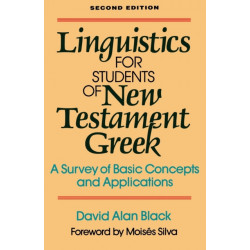
Linguistics for Students of New Testament Greek – A Survey of Basic Concepts and Applications: A Survey of Basic Concepts and Applications (Bog, Paperback / softback, Engelsk)
Introduces Greek students to the field of linguistics and shows how its findings can increase their understanding of the New Testament.
Levering: Skaffevare (forvent 14 - 30 hverdage) -
The Genius of Luther`s Theology – A Wittenberg Way of Thinking for the Contemporary Church: A Wittenberg Way of Thinking for the Contemporary Church (Bog, Paperback / softback, Engelsk)
Leading Luther scholars offer students and other non-specialists an accessible way to engage the big ideas of Luther's thinking.
Levering: Skaffevare (forvent 14 - 30 hverdage) -
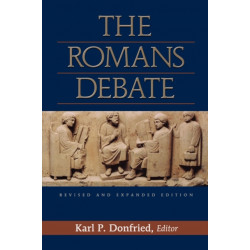
The Romans Debate (Bog, Paperback / softback, Engelsk)
Spanning the spectrum of interpretation, these essays challenge opposing views, complement points of consensus, and above all contribute to our understanding of Paul's controversial letter to the Romans.
Levering: Skaffevare (forvent 14 - 30 hverdage) -
Principles of Biblical Interpretation (Bog, Paperback / softback, Engelsk)
A textbook covering the history of hermeneutical principles, the proper conception of the Bible, grammatical interpretation, and historical and theological interpretation.
Levering: Skaffevare (forvent 14 - 30 hverdage) -
An Untamed Heart (Bog, Paperback / softback, Engelsk)
Ingeborg Strand dreams more of becoming a midwife than of finding a husband--until she meets university student Nils Aarvidson. Could Nils be the man God intends her to marry, or is He leading her toward an entirely different path?
Levering: Skaffevare (forvent 14 - 30 hverdage) -
Interpreting the Book of Acts (Bog, Paperback / softback, Engelsk)
Tools to help students understand the purpose, structure, themes, and cultural background of the book of Acts.
Levering: Skaffevare (forvent 14 - 30 hverdage) -
Modern Theological German – A Reader and Dictionary: A Reader and Dictionary (Bog, Paperback / softback, Engelsk)
Contains selections from the German Bible and theologians such as Luther, Barth, Thielicke, and Riesner. The dictionary defines over 20,000 terms.
Levering: Skaffevare (forvent 14 - 30 hverdage) -
Still Sovereign – Contemporary Perspectives on Election, Foreknowledge, and Grace: Contemporary Perspectives on Election, Foreknowledge, and Grace (Bog, Paperback / softback, Engelsk)
Explains and defends the doctrine of God's sovereignty and the biblical, theological, and practical applications that this teaching affords.
Levering: Skaffevare (forvent 14 - 30 hverdage) -
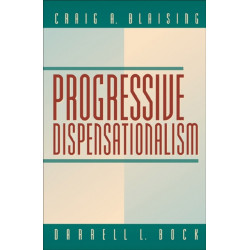
Progressive Dispensationalism (Bog, Paperback / softback, Engelsk)
Thoughtful and accessible. An up-to-date, comprehensive overview of the most important issues in dispensationalism, underpinned with accurate scholarship and summarized with clarity.
Levering: Skaffevare (forvent 14 - 30 hverdage)