British Museum Press Forlag
-
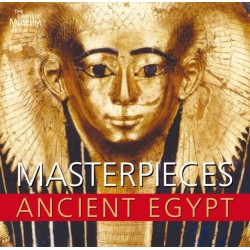
Masterpieces of Ancient Egypt (Bog, Paperback / softback, Engelsk)
The British Museum has the largest and finest collection of antiquities from Egypt and the Sudan outside of those countries. Packed with information and insights, this... Læs mere
Levering: Skaffevare (forvent 14 - 30 hverdage) -
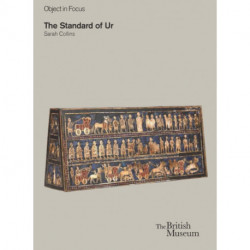
The Object in Focus: The Standard of Ur (Bog, Paperback / softback, Engelsk)
The Standard of Ur is one of the most famous objects to be discovered from ancient Mesopotamia. It was un earthed in a tomb in 1927 by Leonard Woolley during his archaeological... Læs mere
Levering: 6 - 9 hverdage -
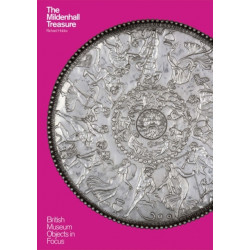
The Object in Focus: The Mildenhall Treasure (Bog, Paperback / softback, Engelsk)
In 1942, while ploughing a field near Mildenhall in Suffolk, eastern England, Gordon Butcher stumbled upon a hoard of 34 silver objects that he turned over to his boss and owner... Læs mere
Levering: 6 - 9 hverdage -
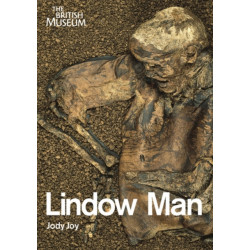
Object in Focus: Lindow Man (Bog, Paperback / softback, Engelsk)
This compact book, packed with glorious colour photography joins a series on the stand out holdings of the British Museum. It describes the discovery, conservation and analysis of the corpse of Lindow Man, Britain's best preserved bog body, dating to the late Iron Age.
Levering: 6 - 9 hverdage -
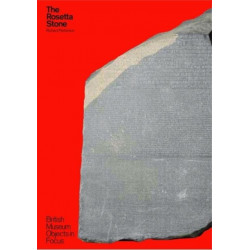
The Object in Focus: The Rosetta Stone (Bog, Paperback / softback, Engelsk)
This book tells the fascinating story of one of archaeology's icons, from its creation in the second century BC, to its discovery in 1799 during Napoleon's Egyptian campaign, to the subsequent race to decipher its hieroglyphic text.
Levering: 6 - 9 hverdage -
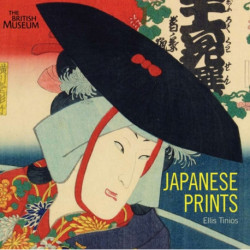
Japanese Prints: Ukiyo-e in Edo, 1700-1900 (Bog, Paperback / softback, Engelsk)
Japanese woodblock prints of the Edo period (1615-1868) were the products of a highly commercialised and competitive publishing industry. Their content was... Læs mere
Levering: 6 - 9 hverdage -
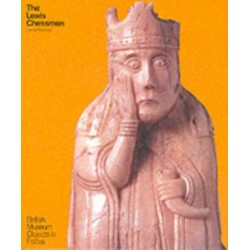
The Object in Focus: The Lewis Chessmen (Bog, Paperback / softback, Engelsk)
This lively book considers the various fascinating stories which have evolved to explain the ownership, concealment and discovery of the pieces whilst also placing them in the wider context of the ancient game of chess and secular art of the middle Ages.
Levering: 6 - 9 hverdage -
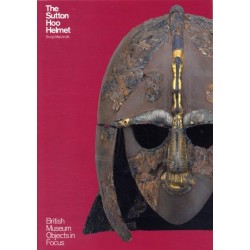
The Object in Focus: The Sutton Hoo Helmet (Bog, Paperback / softback, Engelsk)
A warriors face the strong brows inlaid with red garnets, the nose and mouth gilded and its surface tinned a silvery colour this is how the Sutton Hoo helmet once appeared to those... Læs mere
Levering: 6 - 9 hverdage -
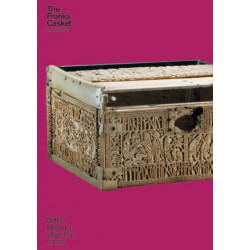
The Object in Focus: The Franks Casket (Bog, Paperback / softback, Engelsk)
This concise, beautifully illustrated guide explores the enigmatic Franks Casket, carved from whalebone in 8th century northern England, and decorated with scenes from tales both pagan and Christian, as well as runic inscriptions.
Levering: 6 - 9 hverdage -
Arabic Calligraphy: Naskh Script for Beginners (Bog, Paperback / softback, Engelsk)
The first stroke-by-stroke guide ever produced for learning to write Naskh, one of the six major cursive Arabic scripts.
Levering: 6 - 9 hverdage -
Charles Masson: Collections from Begram and Kabul Bazaar, Afghanistan 1833–1838 (Bog, Paperback / softback, Engelsk)
The book discusses and catalogues Charles Masson’s 1833–8 collections from the urban site of Begram and Kabul bazaar now in the British Museum, supplemented by illustrated coins recorded in Masson's archival manuscripts and in H.H. Wilson, but no longer in the collection.
Levering: 6 - 9 hverdage -
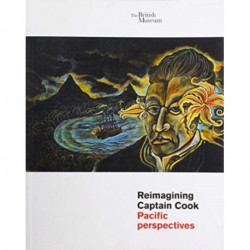
Reimagining Captain Cook: Pacific Perspectives (Bog, Paperback / softback, Engelsk)
Published on the 250th anniversary of Captain James Cook’s extraordinary voyages of exploration, this publication reflects on and charts the enduring legacies of his encounters with Pacific peoples.
Levering: Skaffevare (forvent 14 - 30 hverdage)