Central European University Press Forlag
-
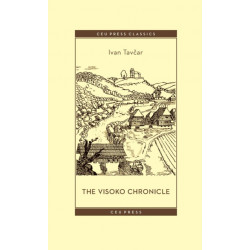
The Visoko Chronicle (Bog, Paperback / softback, Engelsk)
This historical novel follows 2 generations of owners of the Visoko estate in the Habsburg Empire's Duchy of Carniola during the 17th century, culminating in the nation's transition from Habsburg rule to the new Kingdom of Serbs, Croats, and Slovenes by the novel's 1919 release.
Levering: Skaffevare (forvent 14 - 30 hverdage) -
The Passport as Home: Comfort in Rootlessness (Bog, Paperback / softback, Engelsk)
This narrative follows the journey of a Romanian-born, Hungarian-speaking Jewish professor who emigrates from Vienna to Columbia and Harvard, navigating a... Læs mere
Levering: 6 - 9 hverdage -
The War in Ukraine’s Donbas: Origins, Contexts, and the Future (Bog, Paperback / softback, Engelsk)
This collective work analyzes the ongoing conflict in Ukraine, providing a coherent picture of Ukraine and Eastern Europe in the period 2013-2020.
Levering: Skaffevare (forvent 14 - 30 hverdage) -
Open Society Unresolved: The Contemporary Relevance of a Contested Idea (Bog, Paperback / softback, Engelsk)
Fifteen essays from diverse geographical, cultural, and academic backgrounds examine whether the concept of open society remains relevant in the 21st century, addressing contemporary challenges while exploring the theory's continuing usefulness for current problems.
Levering: Skaffevare (forvent 14 - 30 hverdage) -
The Triumph of Uncertainty: Science and Self in the Postmodern Age (Bog, Paperback / softback, Engelsk)
Tauber, a leading figure in history and philosophy of science, offers a unique autobiographical overview of how science as a discipline of thought has been characterized by philosophers and historians over the past century
Levering: 6 - 9 hverdage -
People in Spite of History: Stories Found in an Attorney Archive in the Banat Region (Bog, Paperback / softback, Engelsk)
Three generations of the Várady family have run a law firm founded in 1893 in Becskerek and their documents are used to demonstrate how the legal profession permits and in... Læs mere
Levering: Skaffevare (forvent 14 - 30 hverdage) -
The Making of Mamaliga: Transimperial Recipes for a Romanian National Dish (Bog, Paperback / softback, Engelsk)
Drawing on a rich array of sources and with many new findings, Drace-Francis shows how the making of m?m?lig? has been shaped by... Læs mere
Levering: 6 - 9 hverdage -
Brilliance in Exile: The Diaspora of Hungarian Scientists from John von Neumann to Katalin Kariko (Bog, Paperback / softback, Engelsk)
Analysis of success of Hungarian emigrant scientists during waves of emigration from the early 20th... Læs mere
Levering: 6 - 9 hverdage -
Traveler, Scholar, Political Adventurer: A Transylvanian Baron at the Birth of Albanian Independence: The memoirs of Franz Nopcsa (Bog, Paperback / softback, Engelsk)
This book presents the memoirs of Baron Franz Nopcsa (1877-1933), an Austro-Hungarian aristocrat from Transylvania who was a remarkable multi-faceted figure combining scientific expertise with adventurous exploration and political involvement in Southeast Europe.
Levering: Skaffevare (forvent 14 - 30 hverdage) -
From Socialism to Capitalism: Eight Essays (Bog, Paperback / softback, Engelsk)
Examines the interconnected themes of socialism, capitalism, democracy, and systemic change, with a central focus on the capitalism/socialism opposition that... Læs mere
Levering: Skaffevare (forvent 14 - 30 hverdage) -
Ten Years After: A History of Roma School Desegregation in Central and Eastern Europe (Bog, Paperback / softback, Engelsk)
Presents results from a fact-finding project that examines legal documents and policy statements from national authorities and the international community regarding Roma issues, along with a critical overview of Roma-specific political campaigns at national and European levels.
Levering: Skaffevare (forvent 14 - 30 hverdage) -
Hungary in the Cold War, 1945-1956: Between the United States and the Soviet Union (Bog, Paperback / softback, Engelsk)
Based on new archival evidence, examines Soviet Empire building in Hungary and the American response to it.
Levering: Skaffevare (forvent 14 - 30 hverdage)