Central European University Press Forlag
Visning: Type : Alle | Sprog : Alle | Format : Alle
-
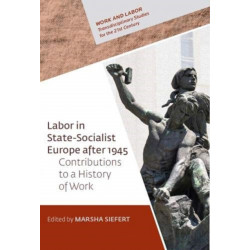
Labor in State-Socialist Europe, 1945-1989: Contributions to a History of Work (Bog, Hardback, Engelsk)
This collection of sixteen essays examines the complex, shifting, and ambiguous labor regimes under communism in East-Central... Læs mere
Levering: Skaffevare (forvent 14 - 30 hverdage) -
Ten Years After: A History of Roma School Desegregation in Central and Eastern Europe (Bog, Hardback, Engelsk)
Presents results from a fact-finding project that examines legal documents and policy statements from national authorities and the international community regarding Roma issues, along with a critical overview of Roma-specific political campaigns at national and European levels.
Levering: Skaffevare (forvent 14 - 30 hverdage) -
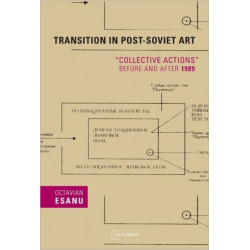
Transition in Post-Soviet Art: The Collective Actions Group Before and After 1989 (Bog, Hardback, Engelsk)
Examines the evolution of the Moscow-based conceptual artist group Collective Actions as a case study for understanding... Læs mere
Levering: Skaffevare (forvent 14 - 30 hverdage) -
Uranium Matters: Central European Uranium in International Politics, 19001960 (Bog, Hardback, Engelsk)
Examines the impact of the Czechoslovak and East German uranium industries on local politics and on societies, particularly in the decade or so after the end of the Second World War.
Levering: Skaffevare (forvent 14 - 30 hverdage) -
Traveler, Scholar, Political Adventurer: A Transylvanian Baron at the Birth of Albanian Independence: The memoirs of Franz Nopcsa (Bog, Hardback, Engelsk)
This book presents the memoirs of Baron Franz Nopcsa (1877-1933), an Austro-Hungarian aristocrat from Transylvania who was a remarkable multi-faceted figure combining scientific expertise with adventurous exploration and political involvement in Southeast Europe.
Levering: Skaffevare (forvent 14 - 30 hverdage) -
The Lettered Knight: Knowledge and aristocratic behaviour in the twelfth and thirteenth centuries (Bog, Hardback, Engelsk)
This book explores the seemingly paradoxical encounter between knighthood and intellectual pursuits during the crucial Twelfth-Century Renaissance, examining how this intersection fundamentally transformed Western civilization.
Levering: Skaffevare (forvent 14 - 30 hverdage) -
Physicians, Peasants and Modern Medicine: Imagining Rurality in Romania, 1860-1910 (Bog, Hardback, Engelsk)
This book provides a historical narrative about Romania’s modernization. It focuses on one group of the country’s elites... Læs mere
Levering: Skaffevare (forvent 14 - 30 hverdage) -
Poland's Memory Wars: Essays on Illiberalism (Bog, Hardback, Engelsk)
This volume of essays and interviews by Polish, British, and American academics and journalists provides an overview of current Polish politics for both... Læs mere
Levering: Skaffevare (forvent 14 - 30 hverdage) -
Explaining Economic Backwardness: Post-1945 Polish Historians on Eastern Europe (Bog, Hardback, Engelsk)
This monograph is about an exciting episode in the intellectual history of Europe: the vigorous debate among leading Polish historians on the sources of the economic development and non-development, including the origins of economic divisions within Europe.
Levering: Skaffevare (forvent 14 - 30 hverdage) -
The Three Cs of Higher Education: Competition, Collaboration and Complementarity (Bog, Paperback / softback, Engelsk)
Examines 3 key aspects of higher education—competition, collaboration, and complementarity—primarily in Europe but also in the United States, analyzing how these dynamics operate both at the policy level and in their practical impact on students and staff.
Levering: Skaffevare (forvent 14 - 30 hverdage) -
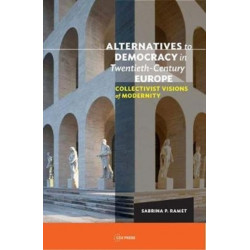
Alternatives to Democracy in Twentieth-Century Europe: Collectivist Visions of Modernity (Bog, Paperback / softback, Engelsk)
This book examines the historical examples of Soviet Communism, Italian Fascism, German Nazism, and Spanish Anarchism, suggesting that, in spite of their differences, they had some key features in common.
Levering: Skaffevare (forvent 14 - 30 hverdage) -
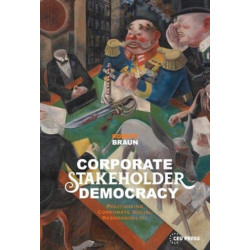
Corporate Stakeholder Democracy: Politicizing Corporate Social Responsibility (Bog, Hardback, Engelsk)
Presents a political understanding of corporate social responsibility (CSR) that goes beyond the typical view of CSR as... Læs mere
Levering: Skaffevare (forvent 14 - 30 hverdage)