Central European University Press Forlag
Visning: Type : Alle | Sprog : Alle | Format : Alle
-
The End and the Beginning: The Revolutions of 1989 and the Resurgence of History (Bog, Hardback, Engelsk)
This book offers a fresh interpretation of the 1989 revolutions that led to the demise of communist regimes, providing a... Læs mere
Levering: Skaffevare (forvent 14 - 30 hverdage) -
With Their Backs to the Mountains: A History of Carpathian Rus' and Carpatho-Rusyns (Bog, Hardback, Engelsk)
Presents the history of the stateless Carpatho-Rusyns and their historic homeland of Carpathian Rus' in central Europe,... Læs mere
Levering: Skaffevare (forvent 14 - 30 hverdage) -
Modern Hungarian Society in the Making: The Unfinished Experience (Bog, Hardback, Engelsk)
Illuminates the problems connected with Hungary's transition to a civil society while providing insights into the development of political culture and the rise of civil and national consequences.
Levering: Skaffevare (forvent 14 - 30 hverdage) -
The Smell of Humans: A Memoir of the Holocaust in Hungary (Bog, Hardback, Engelsk)
Memoir that serves as both creative autobiographical writing and an important Holocaust document, describing Jewish life in German-occupied Budapest's ghetto and the author's nineteen-day internment in a labor camp during the extremist Arrow Cross regime in 1944.
Levering: Skaffevare (forvent 14 - 30 hverdage) -
Trimming the Sails: The Comparative Political Economy of Expansionary Fiscal Consolidations (Bog, Hardback, Engelsk)
The book provides a clear, multidisciplinary and systematic analysis of the relatively new concept of the so-called expansionary fiscal consolidations.
Levering: Skaffevare (forvent 14 - 30 hverdage) -
Disinflation in Transition Economies: Experience of the Economies in Transition (Bog, Hardback, Engelsk)
This volume covers all the key factors of disinflation in transition economies: changes in money supply and money demand;... Læs mere
Levering: Skaffevare (forvent 14 - 30 hverdage) -
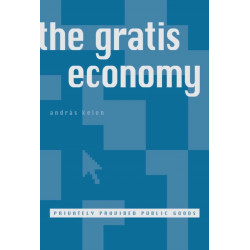
The Gratis Economy: Privately Provided Public Goods (Bog, Hardback, Engelsk)
A work in the relatively new field of economic sociology, the author claims that the publicity-driven "Gratis Economy", perhaps the greatest wealth creator in history, is integrating into the conventional non-profit sector.
Levering: Skaffevare (forvent 14 - 30 hverdage) -
Tell Your Life Story: Creating Dialogue among Jews and Germans, Israelis and Palestinians (Bog, Hardback, Engelsk)
Describes Dan Bar-On's method of using storytelling as both a qualitative biographical research method and as an intervention, to bring people from opposite sides of an abyss to a dialogue.
Levering: Skaffevare (forvent 14 - 30 hverdage) -
Secrets and Truths: Ethnography in the Archive of Romania's Secret Police (Bog, Paperback / softback, Engelsk)
Presents a historical ethnography of Romania's secret police (Securitate) based on newly opened archives and personal memories,... Læs mere
Levering: Skaffevare (forvent 14 - 30 hverdage) -
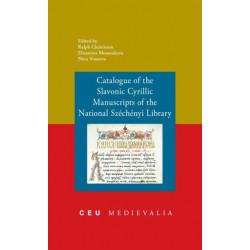
Catalogue of the Slavonic Cyrillic Manuscripts of the National Szechenyi Library (Bog, Paperback / softback, Engelsk)
Provides an introduction to the Cyrillic collection, and contains descriptions of the fifty-six Slavonic Cyrillic codices or fragments thereof held by the National Szechenyi Library in Budapest.
Levering: Skaffevare (forvent 14 - 30 hverdage) -
Eurasian Integration and the Russian World: Regionalism as an Identitiary Enterprise (Bog, Hardback, Engelsk)
Examines Russian discourses of regionalism as identity construction practices, demonstrating that post-Soviet Russia's... Læs mere
Levering: Skaffevare (forvent 14 - 30 hverdage) -
Yugoslavia's Sunny Side: A History of Tourism in Socialism (1950s-1980s) (Bog, Hardback, Engelsk)
Ths book undertakes a critical analysis of the history of domestic tourism in Yugoslavia under Commumism. The story evolved from the popularization of tourism and holidaymaking among Yugoslav citizens in the 1950s and 1960s to the consumer practices of the 1970s and 1980s.
Levering: 6 - 9 hverdage