Columbia University Press Forlag
Visning: Type : Alle | Sprog : Alle | Format : Alle
-
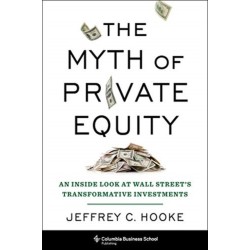
The Myth of Private Equity: An Inside Look at Wall Street’s Transformative Investments (Bog, Hardback, Engelsk)
The Myth of Private Equity is a hard-hitting and meticulous exposé from an insider’s viewpoint. Jeffrey C. Hooke—a... Læs mere
Levering: 6 - 9 hverdage -
Critique and Praxis (Bog, Paperback / softback, Engelsk)
Bernard E. Harcourt calls for moving beyond the complacency of decades of philosophical detours and to harness critical thought to the need for action. Critique and Praxis advocates... Læs mere
Levering: 6 - 9 hverdage -
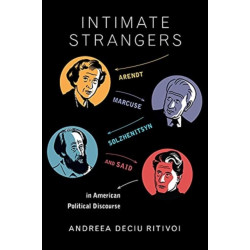
Intimate Strangers: Arendt, Marcuse, Solzhenitsyn, and Said in American Political Discourse (Bog, Paperback / softback, Engelsk)
Hannah Arendt, Herbert Marcuse, Alexander Solzhenitsyn, and Edward Said each steered major intellectual and... Læs mere
Levering: 6 - 9 hverdage -
Women in the Mosque: A History of Legal Thought and Social Practice (Bog, Paperback / softback, Engelsk)
Juxtaposing Muslim scholars' debates over women’s attendance in mosques with historical descriptions of women’s activities within... Læs mere
Levering: Skaffevare (forvent 14 - 30 hverdage) -
Who Ate Up All the Shinga?: An Autobiographical Novel (Bog, Paperback / softback, Engelsk)
Park Wan-suh’s Who Ate Up All the Shinga? is an extraordinary account of growing up during the Japanese occupation of Korea and the Korean War, a time... Læs mere
Levering: 6 - 9 hverdage -
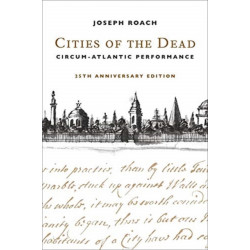
Cities of the Dead: Circum-Atlantic Performance (Bog, Paperback / softback, Engelsk)
Joseph Roach reveals how performance can revise the unwritten past, comparing patterns of remembrance and forgetting in how communities forge their... Læs mere
Levering: 6 - 9 hverdage -
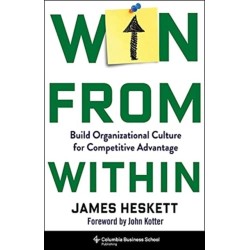
Win from Within: Build Organizational Culture for Competitive Advantage (Bog, Hardback, Engelsk)
Win from Within offers a playbook for developing and deploying organizational culture that enables outsized results. It is a groundbreaking demonstration of culture’s role as a foundation for strategic success—and its measurable impact on the bottom line.
Levering: Skaffevare (forvent 14 - 30 hverdage) -
Music in Cinema (Bog, Paperback / softback, Engelsk)
Michel Chion is renowned for his explorations of the significance of frequently overlooked elements of cinema, particularly the role of sound. In this inventive and inviting book, Chion... Læs mere
Levering: 6 - 9 hverdage -
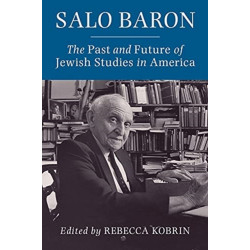
Salo Baron: The Past and Future of Jewish Studies in America (Bog, Paperback / softback, Engelsk)
In 1930, Columbia University appointed Salo Baron to be the Nathan L. Miller Professor of Jewish History, Literature, and Institutions. This book brings together leading scholars to consider how Baron transformed the course of Jewish studies in the United States.
Levering: 6 - 9 hverdage -
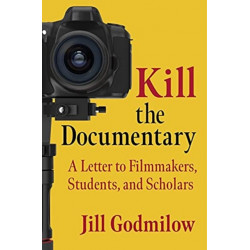
Kill the Documentary: A Letter to Filmmakers, Students, and Scholars (Bog, Paperback / softback, Engelsk)
In Kill the Documentary, the award-winning director Jill Godmilow issues an urgent call for a new kind of nonfiction filmmaking. In place of the conventional documentary, she advocates for a “postrealist” cinema.
Levering: 6 - 9 hverdage -
The Wuhan Lockdown (Bog, Hardback, Engelsk)
This book tells the dramatic story of the Wuhan lockdown in the voices of the city’s own people. Using a vast archive of more than 6,000 diaries, the sociologist Guobin Yang vividly depicts how the city coped during the crisis.
Levering: 6 - 9 hverdage -
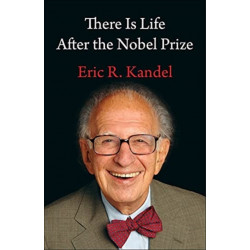
There Is Life After the Nobel Prize (Bog, Hardback, Engelsk)
Neuroscientist Eric R. Kandel recounts his remarkable career since receiving the Nobel in 2000. He takes readers through his lab’s scientific advances as well as his efforts to promote public understanding of science and to put brain science and art into conversation.
Levering: 6 - 9 hverdage