Columbia University Press Forlag
Visning: Type : Alle | Sprog : Alle | Format : Alle
-
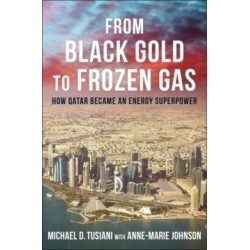
From Black Gold to Frozen Gas: How Qatar Became an Energy Superpower (Bog, Hardback, Engelsk)
This book explores how Qatar became a major player in the global energy market. Part historical analysis, part in-the-room narrative, it is the definitive account of oil and gas development in Qatar.
Levering: 6 - 9 hverdage -
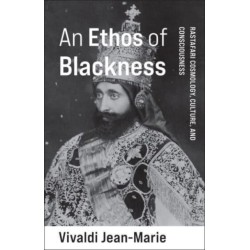
An An Ethos of Blackness: Rastafari Cosmology, Culture, and Consciousness (Bog, Paperback / softback, Engelsk)
This book is a groundbreaking account of Rastafari, demonstrating that it provides a normative conception of Blackness for people of African descent that resists Eurocentric and colonial ideas.
Levering: 6 - 9 hverdage -
Let There Be Light: How Electricity Made Modern Hong Kong (Bog, Paperback / softback, Engelsk)
Let There Be Light is a groundbreaking history of electrification in Hong Kong. Mark L. Clifford traces how a power company and its visionary founder jumpstarted the British colony’s postwar economic rise and set in motion far-reaching political and social change.
Levering: 6 - 9 hverdage -
What to Believe?: Twelve Brief Lessons in Radical Theology (Bog, Paperback / softback, Engelsk)
In this lively and accessible book, addressed to believers, “recovering” believers, disbelievers, nonbelievers, and “nones” alike—to anyone in... Læs mere
Levering: 6 - 9 hverdage -
Leveling the Learning Curve: Creating a More Inclusive and Connected University (Bog, Hardback, Engelsk)
Built on interviews with more than fifty leading practitioners from major universities and ed-tech firms, Leveling the Learning Curve is an indispensable guide to the inner workings of digital education.
Levering: 6 - 9 hverdage -
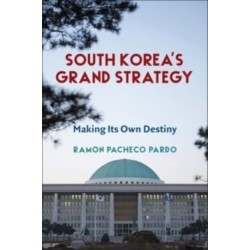
South Korea's Grand Strategy: Making Its Own Destiny (Bog, Paperback / softback, Engelsk)
Ramon Pacheco Pardo provides a groundbreaking analysis of South Korea’s foreign policy from its transition to democracy in the late 1980s through the present day, arguing that the country’s approach to the world constitutes a grand strategy.
Levering: 6 - 9 hverdage -
Sports Entrepreneurship: Beyond the Big Leagues (Bog, Hardback, Engelsk)
This book is for anyone who dreams of starting a sports business. Christopher Mumford explores the state of the game in data analytics, sports betting, eSports, youth sports, fitness, and the fan experience.
Levering: 6 - 9 hverdage -
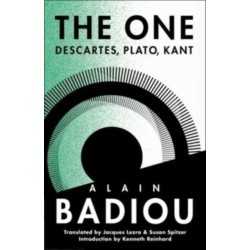
The The One: Descartes, Plato, Kant (Bog, Hardback, Engelsk)
Alain Badiou’s 1983–1984 lecture series focuses on the philosophical concept of oneness in the works of Descartes, Plato, and Kant—a crucial foil for his signature metaphysical concept, the multiple.
Levering: Print on Demand (forvent 14 - 30 hverdage) -
Smoke on the Water: Incineration at Sea and the Birth of a Transatlantic Environmental Movement (Bog, Paperback / softback, Engelsk)
Smoke on the Water traces the rise and fall of ocean incineration, showing how a transnational environmental movement tested the limits of U.S. political and economic power.
Levering: 6 - 9 hverdage -
The The Women of the Far Right: Social Media Influencers and Online Radicalization (Bog, Paperback / softback, Engelsk)
Eviane Leidig offers an in-depth look into the world of far-right women influencers, exploring the digital lives they cultivate as they seek new recruits for white nationalism.
Levering: 6 - 9 hverdage -
Plants in Place: A Phenomenology of the Vegetal (Bog, Paperback / softback, Engelsk)
Plants in Place is a collaborative study of vegetal phenomenology at the intersection of Edward S. Casey’s phenomenology of place and Michael Marder’s plant-thinking.
Levering: 6 - 9 hverdage -
Beyond the Water’s Edge: How Partisanship Corrupts U.S. Foreign Policy (Bog, Hardback, Engelsk)
Paul R. Pillar examines how and why partisanship has undermined U.S. foreign policy, especially over the past three decades.
Levering: 6 - 9 hverdage