Edinburgh University Press Forlag
-
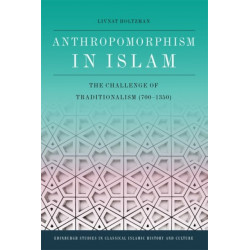
Anthropomorphism in Islam: The Challenge of Traditionalism (700-1350) (Bog, Hardback, Engelsk)
Through a close, contextualized, and interdisciplinary reading in Hadith compilations, theological treatises, and historical sources,... Læs mere
Levering: Skaffevare (forvent 14 - 30 hverdage) -
A Critical Introduction to Queer Theory: Second Edition (Bog, Hardback, Engelsk)
Provides readers with concise, accessible critical overviews of topics that are central to the expanding field of Queer Studies.
Levering: Kan forudbestilles (Forventes d. 31-01-2027) -
Arab Christians in British Mandate Palestine: Communalism and Nationalism, 1917-1948 (Bog, Hardback, Engelsk)
Focuses on the relationship between Arab Christians and the nationalist movement in Palestine during the British... Læs mere
Levering: Skaffevare (forvent 14 - 30 hverdage) -
The American Left: Its Impact on Politics and Society since 1900 (Bog, Hardback, Engelsk)
Details the achievements of left-wing politics in the USA, from effective opposition to militarism to the winning of racial justice and from the socialists of the 1960s to President Barack Obama.
Levering: Skaffevare (forvent 14 - 30 hverdage) -
The Acts of Alexander III King of Scots 1249 -1286: Regesta Regum Scottorum Vol 4 Part 1 (Bog, Hardback, Engelsk)
The volume brings together 330 documents from the reign of King Alexander III of Scotland, a key period in the history of the medieval kingdom, in one scholarly and accessible edition.
Levering: Skaffevare (forvent 14 - 30 hverdage) -
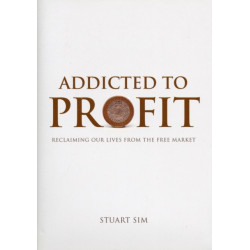
Addicted to Profit: Reclaiming Our Lives from the Free Market (Bog, Hardback, Engelsk)
In what is both a critique and a manifesto for cultural change, Stuart Sim explains what we could be doing to cure our addiction to profit, why we ought to be doing it, and how to set about achieving it. Life needn't all be about profit.
Levering: Skaffevare (forvent 14 - 30 hverdage) -
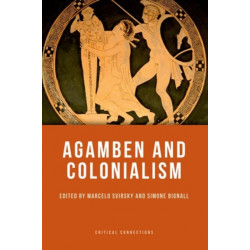
Agamben and Colonialism (Bog, Hardback, Engelsk)
This collection of essays evaluates Agamben's work from a postcolonial perspective. Svirsky and Bignall assemble leading figures to explore the rich philosophical linkages and the political concerns shared by Agamben and postcolonial theory.
Levering: Skaffevare (forvent 14 - 30 hverdage) -
A Legend of the Wars of Montrose (Bog, Hardback, Engelsk)
Against the background of Montrose’s campaign of 1644-5, this spirited novel centres on one of Scott’s most memorable creations - Sir Dugald Dalgetty of Drumthwacket.
Levering: Skaffevare (forvent 14 - 30 hverdage) -
The Antiquary (Bog, Hardback, Engelsk)
The third of the Waverley Novels is dominated by two old men, Jonathan Oldbuck (the Antiquary of the title) and the beggar Edie Ochiltree.
Levering: Skaffevare (forvent 14 - 30 hverdage) -
The Abbot (Bog, Hardback, Engelsk)
The Abbot concludes the fiction begun in The Monastery. Scott follows the fortunes of young Roland Graeme as he emerges from rural obscurity to become an attendant of Mary Queen of Scots during her captivity in Lochleven Castle.
Status: Skaffevare (forvent 3 - 8 uger) -
Anne of Geierstein (Bog, Hardback, Engelsk)
Anne of Geierstein (1829) is set in Central Europe in the fifteenth century, but it is a remarkably modern novel, for the central issues are the political instability and violence that arise from the mix of peoples and the fluidity of European boundaries.
Levering: Skaffevare (forvent 14 - 30 hverdage) -
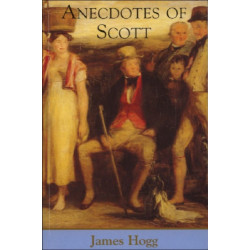
Anecdotes of Scott (Bog, Hardback, Engelsk)
James Hogg knew Sir Walter Scott well, and after Scott's death in 1832 he wrote an affectionate but frank account of their long friendship.
Levering: Skaffevare (forvent 14 - 30 hverdage)